
Introduction
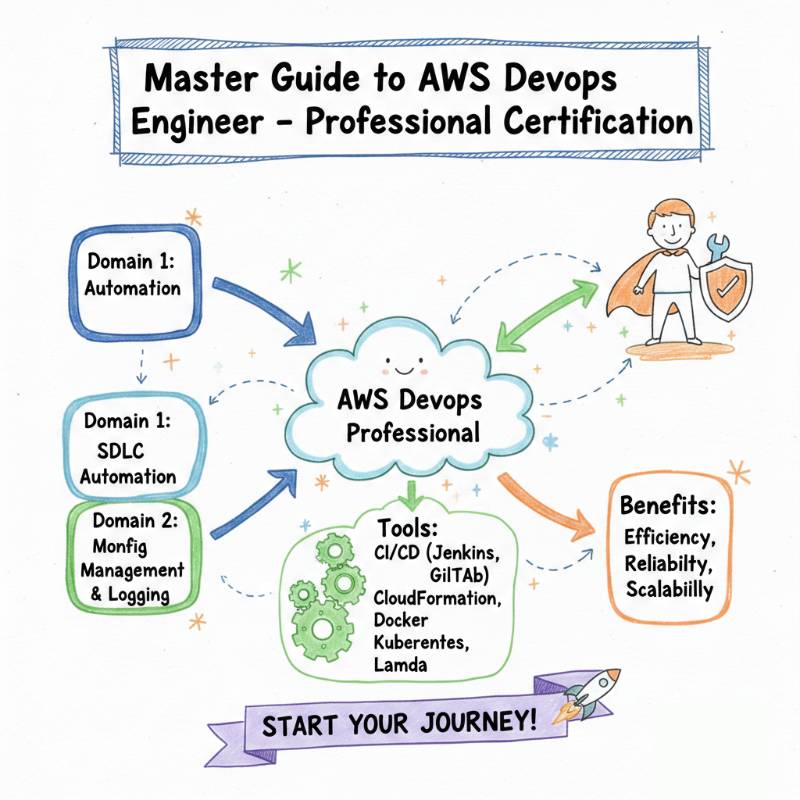
The AWS DevOps Engineer – Professional certification is one of the most sought-after credentials in the cloud computing and DevOps fields. It validates advanced skills in designing and managing continuous delivery systems and automating the processes in AWS environments. Whether you are a software engineer, cloud engineer, or an engineering manager, this certification demonstrates your expertise in AWS DevOps best practices and makes you highly competitive in the job market.
In this guide, we will walk through everything you need to know about the AWS DevOps Engineer – Professional certification, from preparation to career benefits.
What is AWS DevOps Engineer – Professional?
The AWS DevOps Engineer – Professional certification is designed to validate the skills required to implement and manage continuous delivery systems and methodologies on AWS. It covers automating the deployment, monitoring, and maintenance of AWS infrastructure. This certification is a stepping stone for DevOps professionals looking to improve their cloud computing skills, boost their career, and achieve mastery in AWS services.
Who Should Take This Certification?
- DevOps Engineers
- Cloud Engineers
- Software Engineers
- Engineering Managers
- Platform Engineers
This certification is aimed at professionals who want to level up their expertise in AWS DevOps processes, cloud infrastructure, automation, and security best practices.
Skills You’ll Gain
- Cloud Infrastructure Management
- Continuous Delivery & Automation
- Infrastructure as Code (IaC)
- Security Best Practices in Cloud
- Monitoring and Logging Tools
- CI/CD Pipeline Management
- Scalable and Reliable Systems Design
Real-World Projects You Should Be Able to Do
After completing this certification, you should be able to:
- Design and implement CI/CD pipelines using AWS tools like CodePipeline and CodeDeploy.
- Automate infrastructure provisioning using CloudFormation and Terraform.
- Optimize AWS infrastructure for scalability, security, and cost-efficiency.
- Set up monitoring and logging systems using AWS CloudWatch and X-Ray.
- Secure AWS environments by managing encryption, IAM roles, and security policies.
Preparation Plan
7-14 Days (Quick Overview)
- Focus on exam guides and practice tests.
- Review key AWS services used in DevOps.
- Study monitoring tools like AWS CloudWatch.
30 Days (Intermediate Plan)
- Dive into CloudFormation and infrastructure as code.
- Focus on real-world case studies of AWS DevOps implementations.
- Set up and practice CI/CD pipelines on AWS.
60 Days (Deep Dive)
- Focus on advanced automation techniques and scalable systems design.
- Work on hands-on labs for high-availability architectures.
- Take mock exams and assess areas for improvement.
Common Mistakes
- Skipping IAM Security: Failing to apply proper role-based access and permissions in AWS.
- Not Automating Enough: Relying too heavily on manual processes instead of leveraging IaC and CI/CD.
- Neglecting Monitoring: Overlooking CloudWatch, X-Ray, and other monitoring tools in real-world applications.
- Underestimating Networking: Ignoring networking components such as VPCs and security groups.
- Skipping the Exam Practice: Not practicing enough with mock exams and AWS lab environments.
Best Next Certifications After This
- AWS Certified Solutions Architect – Professional
- Certified Kubernetes Administrator (CKA)
- Google Cloud Professional DevOps Engineer
Choose Your Path
As a certified AWS DevOps Engineer, you have multiple learning paths to choose from, based on your career goals and interests.
DevOps Learning Path
- Master CI/CD, containerization, and automation in cloud environments.
DevSecOps Learning Path
- Focus on integrating security within your DevOps pipelines and cloud architectures.
SRE (Site Reliability Engineering) Learning Path
- Learn to design scalable and reliable cloud systems using best practices.
AIOps/MLOps Learning Path
- Automate AI and machine learning model deployments and cloud operations.
DataOps Learning Path
- Focus on data pipelines, security, and scalability in cloud data environments.
FinOps Learning Path
- Learn how to manage cloud finances and optimize AWS costs while ensuring financial efficiency.
Role → Recommended Certifications
| Role | Recommended Certifications |
|---|---|
| DevOps Engineer | AWS DevOps Engineer – Professional, AWS Solutions Architect |
| SRE | Google Cloud Professional DevOps, Kubernetes Certification |
| Platform Engineer | AWS Certified DevOps Engineer – Professional, Kubernetes |
| Cloud Engineer | AWS Certified Solutions Architect, AWS DevOps Engineer |
| Security Engineer | AWS Certified Security Specialty, AWS DevOps Engineer |
| Data Engineer | AWS Certified Big Data Specialty, AWS DevOps Engineer |
| FinOps Practitioner | AWS Certified Cloud Financial Management, AWS DevOps Engineer |
| Engineering Manager | AWS Certified Solutions Architect, AWS DevOps Engineer |
Frequently Asked Questions
1. How difficult is the AWS DevOps Engineer – Professional exam?
The exam is tough and designed for professionals with hands-on experience in AWS and DevOps practices.
2. How long should I prepare for the AWS DevOps Engineer exam?
Most candidates spend 1-2 months preparing for the exam, depending on their experience level.
3. Are there any prerequisites for this certification?
While not mandatory, it’s recommended to have AWS Developer or SysOps Administrator certification before taking this exam.
4. What’s the passing score for the exam?
You need at least 750 out of 1000 points to pass the exam.
5. What are the most common mistakes candidates make in this exam?
Skipping IAM security, underestimating the complexity of monitoring tools, and neglecting hands-on practice are some common pitfalls.
6. How often is the AWS DevOps Engineer exam updated?
The exam is updated regularly to include new services and features on AWS.
7. Can I take the exam online?
Yes, the exam can be taken online through remote proctoring.
8. How long is the exam?
The exam consists of 75 multiple-choice questions, and you have 180 minutes to complete it.
9. What resources should I use to prepare for the exam?
AWS whitepapers, practice exams, and hands-on labs are great resources to prepare.
10. What happens if I fail the exam?
You can retake the exam after 14 days from the first attempt.
11. Is this certification worth it?
Yes, the AWS DevOps Engineer – Professional certification is highly valued by employers and helps advance your career.
12. What are the career benefits of this certification?
It improves your job prospects and gives you the expertise to manage cloud operations, automation, and scaling on AWS.
Frequently Asked Questions on AWS DevOps Engineer – Professional
1. What is the difficulty level of the AWS DevOps Engineer – Professional exam?
The AWS DevOps Engineer – Professional exam is considered advanced and highly challenging. It requires extensive hands-on experience with AWS services, DevOps practices, and continuous delivery tools. Candidates are expected to have a deep understanding of cloud architecture, security, automation, and CI/CD pipelines.
2. How much time should I allocate for preparing for the AWS DevOps Engineer – Professional exam?
The preparation time varies based on your experience and familiarity with AWS DevOps. For most candidates, a preparation time of 1-2 months (30-60 days) is recommended. If you’re starting with limited knowledge, consider a longer study period with hands-on practice.
3. Are there any prerequisites for taking the AWS DevOps Engineer – Professional exam?
While there are no formal prerequisites for this certification, AWS recommends that candidates have experience with AWS Developer or AWS SysOps Administrator certifications before attempting the DevOps Engineer – Professional exam. Additionally, having practical experience with AWS and DevOps concepts is highly beneficial.
4. What are the key skills covered in the AWS DevOps Engineer – Professional certification?
The key skills covered include:
- Continuous integration and delivery (CI/CD)
- Infrastructure as Code (IaC) with AWS CloudFormation
- Automation of deployment and infrastructure provisioning
- Monitoring and logging with AWS CloudWatch
- Security best practices within the DevOps lifecycle
- Cost management and performance optimization in AWS
5. What are the most common mistakes candidates make while preparing for the AWS DevOps Engineer exam?
- Ignoring IAM security practices: Failing to understand AWS Identity and Access Management (IAM) can lead to gaps in security.
- Not practicing enough with hands-on labs: Real-world experience is crucial for passing the exam. Theoretical knowledge alone is not sufficient.
- Skipping monitoring and logging services: Tools like AWS CloudWatch and X-Ray are vital for tracking performance and security.
6. How long is the AWS DevOps Engineer – Professional exam?
The exam consists of 75 multiple-choice questions and lasts for 180 minutes. It is designed to test both theoretical knowledge and practical expertise in AWS DevOps environments.
7. What resources should I use for preparing for the AWS DevOps Engineer exam?
- AWS whitepapers: Review official AWS documentation to understand best practices and services.
- Practice exams: Take mock exams to get familiar with the exam format and question types.
- Hands-on labs: Set up AWS environments to practice deploying, managing, and automating applications.
- AWS training resources: AWS offers various learning paths, including free and paid resources for DevOps Engineers.
8. What is the next certification to take after completing AWS DevOps Engineer – Professional?
- AWS Certified Solutions Architect – Professional: This is a natural progression, as it builds on your knowledge of AWS infrastructure and cloud architecture.
- Certified Kubernetes Administrator (CKA): For those interested in containerized environments and Kubernetes, this certification is highly valuable.
- AWS Certified Advanced Networking – Specialty: This is ideal if you want to specialize in network architecture, security, and design for cloud systems.
Next Certifications to Take
Same Track:
- AWS Certified Solutions Architect – Professional
Cross-Track:
- Certified Kubernetes Administrator (CKA)
Leadership Track:
- AWS Certified Advanced Networking – Specialty
Top Institutions Offering AWS DevOps Engineer – Professional Training
DevOpsSchool
DevOpsSchool provides expert-led training specifically designed to help professionals prepare for the AWS DevOps Engineer – Professional certification. Their curriculum includes hands-on labs, live instructor sessions, and real-world project work, ensuring students gain practical experience for the exam.
Cotocus
Cotocus offers comprehensive AWS DevOps training, focusing on real-world applications and scenarios. Their courses are designed to prepare students for the AWS certification with hands-on exercises, mock exams, and expert-led sessions.
ScmGalaxy
ScmGalaxy delivers AWS DevOps Engineer – Professional certification training with a practical approach, including live sessions, assignments, and mock exams. Their program focuses on cloud infrastructure automation, CI/CD pipelines, and security, ensuring thorough exam preparation.
BestDevOps
BestDevOps specializes in AWS DevOps training, providing both instructor-led and self-paced options. Their courses are designed to equip learners with the necessary skills to manage and automate AWS cloud environments, preparing them for the certification exam.
devsecopsschool.com
DevSecOpsSchool integrates security into DevOps training, preparing students for both the AWS DevOps Engineer – Professional certification and secure DevOps practices. They focus on securing cloud infrastructures, pipelines, and application delivery workflows.
sreschool.com
SRESchool offers training that combines DevOps principles with Site Reliability Engineering (SRE). Their curriculum helps students develop expertise in AWS cloud automation, high availability, and reliability, focusing on the skills required for AWS DevOps certification.
aiopsschool.com
AIOpsSchool focuses on automating cloud operations using AI and machine learning, in combination with traditional DevOps practices. Their AWS DevOps certification training includes AI-driven automation strategies to improve cloud performance and reliability.
dataopsschool.com
DataOpsSchool specializes in DevOps practices for data-intensive applications. Their training includes managing data pipelines, automating data workflows, and ensuring the security and scalability of data systems on AWS, preparing students for the AWS DevOps Engineer certification.
finopsschool.com
FinOpsSchool offers training that merges AWS DevOps with cloud financial management. Their courses focus on cloud cost optimization, budget control, and financial efficiency within AWS environments, preparing professionals for the AWS DevOps Engineer – Professional certification.
Conclusion
Earning the AWS DevOps Engineer – Professional certification is a pivotal step for any professional aiming to advance their career in cloud computing and DevOps. This certification not only demonstrates your ability to manage complex AWS environments, automate processes, and implement continuous delivery systems, but it also enhances your profile for higher-level roles in the cloud and DevOps fields.
With the help of renowned training providers like DevOpsSchool, Cotocus, ScmGalaxy, and others, you can gain the practical knowledge and hands-on experience necessary to excel in the certification exam. These institutions offer a structured learning path, expert-led sessions, and real-world projects that align with the certification’s requirements.

This guide does a great job connecting the AWS DevOps Engineer Professional skills with real practices that matter in production. I’ve implemented CI/CD and automation on AWS myself, and the way you explain it mirrors the challenges I’ve faced. Thanks for the practical and clear insights!