
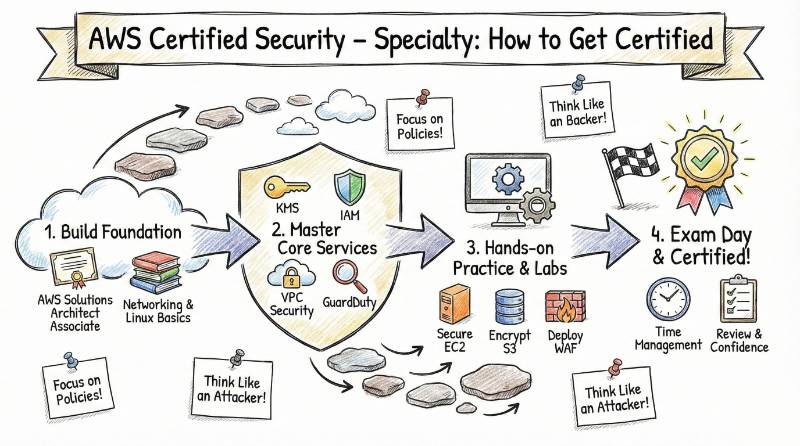
Introduction
As organizations increasingly move their infrastructure to the cloud, securing these environments becomes more critical than ever. AWS (Amazon Web Services) has become one of the most widely used cloud platforms, and securing AWS environments is a top priority for businesses globally. The AWS Certified Security – Specialty certification is designed to equip professionals with the advanced skills necessary to secure AWS cloud environments effectively.
In this guide, we will dive deep into the AWS Certified Security – Specialty certification, outlining what it covers, who should pursue it, the skills you’ll gain, and the preparation strategies that will set you up for success. Whether you are a Security Engineer, Cloud Architect, or DevSecOps professional, earning this certification will help you build a robust understanding of AWS security practices and enhance your career in cloud security.
What is AWS Certified Security – Specialty?
The AWS Certified Security – Specialty certification is a specialized certification that focuses on securing AWS cloud environments. This certification tests your ability to secure applications, systems, and data within AWS. The exam covers areas such as identity and access management (IAM), data protection, network security, incident response, and compliance within AWS services. It’s designed for individuals who are responsible for securing AWS resources and want to deepen their knowledge of cloud security.
Who Should Take This Certification?
The AWS Certified Security – Specialty certification is intended for professionals who are involved in securing AWS cloud infrastructure. This includes:
- Security Engineers
- Cloud Architects
- DevSecOps Engineers
- Compliance and Risk Managers
- AWS Cloud Professionals
If you’re already working with AWS and are responsible for security or cloud compliance, this certification will help you validate your skills and broaden your career prospects.
Skills You’ll Gain
By earning the AWS Certified Security – Specialty certification, you will gain critical security skills, such as:
- Identity and Access Management (IAM): Master the management of users, roles, and permissions to ensure secure access controls in AWS.
- Data Protection: Learn how to implement encryption, key management, and secure storage in AWS.
- Network Security: Gain expertise in configuring VPCs, subnets, firewalls, and security groups to secure network traffic.
- Incident Response: Develop processes for detecting, responding to, and recovering from security incidents within AWS.
- Compliance: Learn how to meet industry security standards such as SOC 2, PCI-DSS, and GDPR using AWS services.
- Monitoring and Logging: Use AWS tools like CloudTrail, GuardDuty, and CloudWatch to monitor security events and track activity across your AWS environment.
Real-World Projects You Should Be Able to Do
After completing this certification, you will be equipped to:
- Design and manage IAM policies to control access to AWS resources and services securely.
- Encrypt sensitive data using AWS KMS and ensure it’s protected in both transit and at rest.
- Configure secure networks by setting up VPCs, security groups, and firewalls to isolate and secure AWS environments.
- Detect and respond to security incidents by setting up automated workflows for threat detection and remediation using GuardDuty and CloudTrail.
- Ensure compliance by aligning AWS services with industry regulations and security frameworks.
- Set up continuous monitoring and logging using CloudWatch and CloudTrail to detect security threats in real time.
Preparation Plan
7-14 Days (Quick Overview)
- Understand IAM basics, encryption, and AWS compliance frameworks.
- Review AWS whitepapers on security best practices.
- Focus on basic data protection strategies like encryption and secure storage.
- Set up practice labs to implement IAM roles, encryption, and data protection policies.
30 Days (Intermediate Plan)
- Deepen your knowledge of network security by working with VPCs, security groups, and NACLs.
- Practice incident response using AWS tools like CloudTrail, GuardDuty, and AWS Config.
- Focus on monitoring and logging, setting up alerts and automated responses for security events.
60 Days (Comprehensive Study)
- Build mock AWS environments to practice implementing IAM, encryption, network security, and monitoring.
- Study real-world case studies and focus on security automation and incident management.
- Continue mock exams to assess your readiness and reinforce weak areas.
Common Mistakes
While preparing for the exam, avoid these common mistakes:
- Not understanding IAM deeply: IAM is essential for securing AWS services, so make sure you fully understand how to configure and manage permissions.
- Neglecting data protection: Always prioritize encryption and secure data storage practices.
- Skipping security monitoring: AWS provides powerful tools like GuardDuty and CloudTrail that can help you detect and mitigate security threats. Make sure to practice using them.
- Not getting enough hands-on experience: AWS security is best learned through real-world practice. Hands-on labs are crucial for gaining practical skills.
Best Next Certification After This
Once you complete the AWS Certified Security – Specialty, you can expand your skill set by pursuing the following certifications:
- AWS Certified Solutions Architect – Professional: Perfect for those who want to advance their AWS architecture skills and learn more about designing secure, scalable cloud solutions.
- Certified Cloud Security Professional (CCSP): A cross-cloud security certification that covers more than just AWS, offering a broader understanding of cloud security practices.
- AWS Certified Advanced Networking – Specialty: Ideal for those who want to specialize in securing and optimizing network infrastructures in AWS.
Choose Your Path
After completing the AWS Certified Security – Specialty certification, you can explore the following learning paths to further specialize your expertise:
DevOps Learning Path
- Learn how to automate security practices and integrate security into the CI/CD pipeline.
DevSecOps Learning Path
- Focus on building secure software development pipelines and automating security testing throughout the development lifecycle.
SRE Learning Path (Site Reliability Engineering)
- Learn to build reliable and secure systems while ensuring performance, security, and uptime across AWS environments.
AIOps/MLOps Learning Path
- Specialize in securing AI/ML models and implementing automated security operations in cloud environments.
DataOps Learning Path
- Secure and manage data pipelines while ensuring data privacy and regulatory compliance across cloud data environments.
FinOps Learning Path
- Learn how to manage cloud costs securely, balancing security needs with cost optimization in AWS environments.
Role → Recommended Certifications
| Role | Recommended Certifications |
|---|---|
| Security Engineer | AWS Certified Security – Specialty, AWS Solutions Architect |
| Cloud Engineer | AWS Certified Security – Specialty, AWS Developer |
| Platform Engineer | AWS Certified Security – Specialty, AWS SysOps Admin |
| DevSecOps Engineer | AWS Certified Security – Specialty, Certified Kubernetes Security Specialist |
| Data Engineer | AWS Certified Big Data Specialty, AWS Certified Security – Specialty |
| Engineering Manager | AWS Certified Security – Specialty, AWS Solutions Architect |
Frequently Asked Questions
1. How long is the AWS Certified Security – Specialty certification valid?
The certification is valid for three years. After this period, you will need to recertify either by taking the exam again or by earning a new AWS certification to maintain your status.
2. What are the core topics covered in the AWS Certified Security – Specialty exam?
The exam covers critical security areas such as identity and access management (IAM), data protection, network security, incident response, compliance, and monitoring within AWS services.
3. How much does the AWS Certified Security – Specialty exam cost?
The exam fee is $300 USD. Additional costs may apply for retakes or other associated services. It’s a good idea to check the AWS Certification website for any changes in fees or promotions.
4. What is the best way to prepare for the AWS Certified Security – Specialty exam?
To prepare effectively, utilize a mix of AWS documentation, security best practices, hands-on labs, and practice exams. Online training programs from providers like DevOpsSchool and ScmGalaxy can also help guide your learning path.
5. Is there a recommended order for taking AWS certifications?
It’s generally recommended to have a solid foundation in AWS services before pursuing the AWS Certified Security – Specialty certification. Starting with the AWS Certified Solutions Architect – Associate or AWS Certified Developer – Associate can help you build the necessary knowledge before diving into advanced security topics.
6. How can this certification impact my career?
The AWS Certified Security – Specialty certification will enhance your resume and increase your job prospects. It validates your ability to secure AWS environments, making you a valuable asset to organizations that rely on AWS for cloud infrastructure.
7. How long does the exam take to complete?
The exam consists of 65 multiple-choice questions, and you have 170 minutes to complete it. This provides enough time to carefully read through each question and manage your time effectively.
8. Can I take the AWS Certified Security – Specialty exam online?
Yes, the exam can be taken online through remote proctoring. You can schedule your exam and take it from the comfort of your home or office, provided you have a stable internet connection and meet the technical requirements.
09. How much time should I spend preparing for the exam?
Typically, candidates spend 1-2 months preparing for the exam. The time you need depends on your familiarity with AWS security services. However, spending time on hands-on labs and studying security best practices is key to success.
10. What resources should I use to prepare for the exam?
To prepare, you should use AWS documentation, AWS whitepapers, practice exams, and hands-on labs. Training courses from platforms like DevOpsSchool, ScmGalaxy, and Cotocus offer structured learning to guide you through the certification process.
11. How is the AWS Certified Security – Specialty exam structured?
The exam consists of 65 multiple-choice questions, and you have 170 minutes to complete it. The questions are based on AWS security topics such as IAM, network security, incident response, and compliance.
12. What happens if I fail the AWS Certified Security – Specialty exam?
If you fail, you can retake the exam after a 14-day waiting period. It’s recommended to review the areas where you struggled and focus on strengthening those weak spots before attempting the exam again.
Frequently Asked Questions on AWS Certified Security – Specialty
1. How long does the AWS Certified Security – Specialty exam take?
The exam consists of 65 multiple-choice questions and lasts 170 minutes, providing ample time to answer all questions and manage your time effectively.
2. Can I take the AWS Certified Security – Specialty exam online?
Yes, the exam can be taken remotely through online proctoring, allowing you to take the exam from home, provided you meet the technical and environmental requirements.
3. What is the passing score for the AWS Certified Security – Specialty exam?
The passing score for the AWS Certified Security – Specialty exam is 750 out of 1000. AWS does not disclose how the scoring works in detail, but a score of 750 or higher is required to pass.
4. Is it possible to fail the exam due to incorrect timing?
No, timing issues generally won’t cause you to fail unless you exceed the allotted 170 minutes. It’s important to manage your time well to complete all the questions.
5. What topics are most important to focus on for the exam?
Key topics to focus on include IAM (Identity and Access Management), VPC security, data encryption, network security, and compliance frameworks like SOC 2 and PCI-DSS.
6. How long does it take to receive results after the exam?
Once you complete the exam, your results will be available immediately on the screen. If you take the exam at a test center, you will receive your results on the same day.
7. How do I maintain my AWS Certified Security – Specialty certification?
The certification is valid for three years. To maintain it, you must recertify either by retaking the exam or earning another AWS certification to show your continued expertise.
8. What resources are available if I want to retake the exam?
If you fail the exam, you can review your weak areas by going through AWS documentation and AWS whitepapers. Additionally, training providers like DevOpsSchool offer remedial courses that can help you retake the exam with better preparation.
Next Certifications to Take
Same Track:
- AWS Certified Solutions Architect – Professional
Cross-Track:
- Certified Cloud Security Professional (CCSP)
Leadership Track:
- AWS Certified Advanced Networking – Specialty
Top Institutions Offering AWS Certified Security – Specialty Training
DevOpsSchool
DevOpsSchool offers a specialized AWS security certification training course that covers all key exam topics. Their program includes instructor‑led sessions, hands‑on labs, and real‑world scenarios. You’ll learn how to secure AWS services, manage access controls, implement encryption, and respond to security incidents effectively.
Cotocus
Cotocus provides an AWS Security certification course focused on real‑time case studies and scenario‑based learning. The training emphasizes security best practices, threat detection, network protection, and compliance. Learners get hands‑on exercises that closely simulate real AWS environments.
ScmGalaxy
ScmGalaxy’s training for AWS Certified Security – Specialty is known for its practical approach. Their curriculum combines expert explanations with hands‑on labs covering IAM policies, encryption, network security, CloudTrail, GuardDuty, and more. They also offer mock tests to prepare learners for actual exam conditions.
BestDevOps
BestDevOps provides flexible learning options for professionals, including instructor‑led and self‑paced courses. Their AWS security training covers key topics like data protection, access management, network hardening, and compliance. Students also get practical assignments to reinforce learning.
devsecopsschool.com
DevSecOpsSchool focuses on integrating security into DevOps workflows. Their AWS security course emphasizes secure coding practices, automated security testing, infrastructure hardening, and monitoring. The training blends DevSecOps principles with AWS security best practices to help learners secure cloud environments holistically.
sreschool.com
SRESchool offers AWS Certified Security – Specialty training that combines Site Reliability Engineering (SRE) principles with cloud security fundamentals. Learners explore secure automation, incident response, reliability strategies, and performance monitoring, all integrated into AWS security workflows.
aiopsschool.com
AIOpsSchool focuses on automating security operations using intelligent monitoring and analytics. Their training covers automated threat detection, security orchestration, AI‑driven incident response, and real‑time security monitoring. Students learn how to apply machine‑assisted security techniques in AWS.
dataopsschool.com
DataOpsSchool delivers training tailored to securing data workloads in the cloud. Their AWS security program includes protecting data pipelines, implementing encryption controls, ensuring compliance, and securing analytics platforms. The training is ideal for data professionals working with sensitive cloud data.
finopsschool.com
FinOpsSchool combines cloud financial management with security practices. Their AWS security training includes cost‑aware security design, secure budget planning, and risk‑based security prioritization. This unique approach helps learners understand how to secure AWS while optimizing costs.
Conclusion
The AWS Certified Security – Specialty certification is a valuable asset for professionals looking to advance their careers in cloud security. As cloud environments become more integral to businesses, the need for specialized knowledge in securing AWS infrastructures grows exponentially. This certification equips you with the skills and confidence needed to implement security best practices, protect sensitive data, and ensure compliance in AWS environments.
By pursuing this certification, you’re not only enhancing your credibility but also positioning yourself as an expert in one of the most sought-after domains in cloud computing. The training programs provided by institutions like DevOpsSchool, Cotocus, and ScmGalaxy are designed to give you hands-on experience and real-world expertise, ensuring you’re well-prepared for both the exam and real-world security challenges.

Really enjoyed this guide — the way you explain AWS security concepts and real‑world use cases makes the path to certification feel practical and achievable. I’ve worked on securing AWS workloads myself, and these insights reflect the skills I use daily. Thanks for the clear and helpful breakdown!