
Introduction
Commercial pilot training is the structured process of learning how to fly aircraft professionally and safely. It prepares students to earn a Commercial Pilot License, build strong aviation knowledge, develop flight skills, and start a career in the aviation industry.
For beginners, the journey may look confusing at first because it includes medical checks, ground school, flight training, exams, flying hours, and career planning. However, with the right guidance and a good pilot school, the process becomes easier to understand and follow.
What Is a Commercial Pilot?
A commercial pilot is a trained and licensed pilot who is allowed to fly aircraft for paid work. This may include airline flying, charter operations, cargo flights, corporate aviation, flight instruction, aerial survey, and other professional aviation services.
Unlike a private pilot, who usually flies for personal reasons, a commercial pilot can make aviation a career.
Why Choose Commercial Pilot Training?
Commercial pilot training is a popular choice for students who dream of flying professionally. It offers a career filled with responsibility, travel, technical learning, and personal growth.
Some major benefits include:
- Opportunity to work in airlines, charter companies, cargo operations, and private aviation
- A respected and skilled professional career
- Chance to travel and work in a dynamic environment
- Continuous learning and career progression
- Strong demand for trained aviation professionals in many regions
Basic Eligibility for Commercial Pilot Training
Before joining a flight school, beginners should understand the common eligibility requirements.
Most pilot schools generally look for:
- Minimum age requirement as per aviation authority rules
- Basic educational qualification
- Good command of English
- Valid aviation medical fitness certificate
- Basic understanding of mathematics and science
- Strong discipline and interest in aviation
Medical fitness is very important because pilots must meet physical and mental health standards for safe flying.
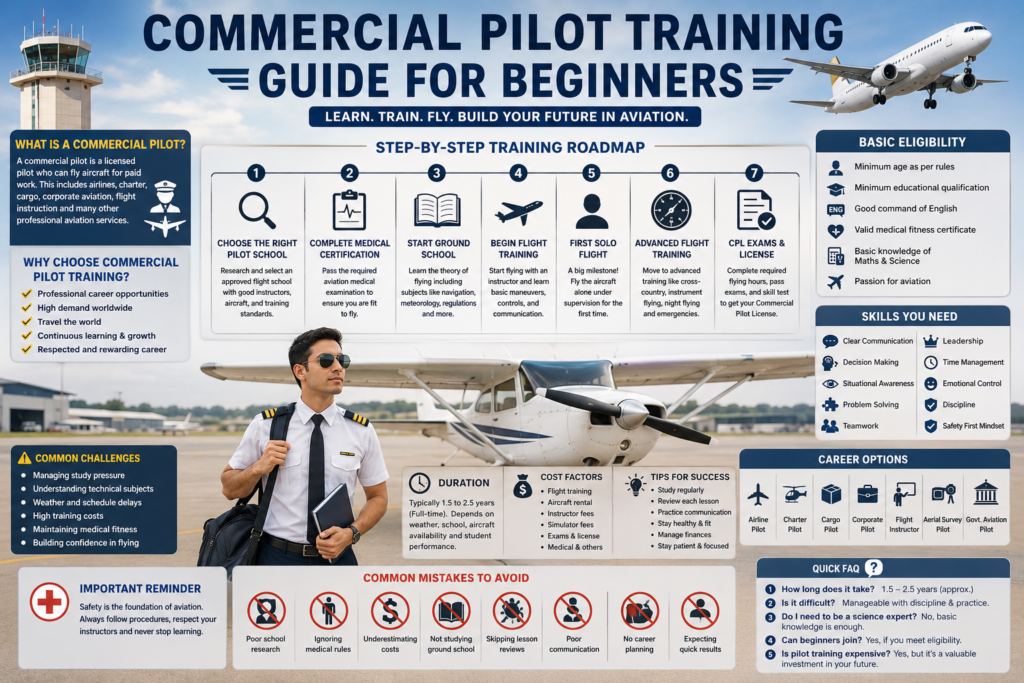
Step-by-Step Commercial Pilot Training Roadmap
1- Research and Choose the Right Pilot School
Choosing the right flight school is one of the most important decisions. A good pilot school should provide quality instructors, well-maintained aircraft, proper safety standards, structured training, and transparent fee details.
Students should check:
- Training approvals
- Instructor experience
- Aircraft fleet condition
- Simulator availability
- Student support
- Training schedule
- Past student success
2- Complete Aviation Medical Certification
Before starting serious flight training, students must complete the required medical examination. This confirms whether the student is physically fit to fly.
Medical checks usually include eyesight, hearing, general health, mental fitness, and other aviation-related health requirements.
3- Start Ground School
Ground school teaches the theory behind flying. It helps students understand aircraft, weather, navigation, rules, safety, and flight planning.
Common ground school subjects include:
- Aerodynamics
- Air Navigation
- Meteorology
- Aviation Regulations
- Aircraft Systems
- Radio Communication
- Human Performance
- Flight Planning
Ground school is important because a good pilot must understand not only how to fly, but also why an aircraft behaves in a certain way.
4- Begin Flight Training
Flight training is where students start learning in real aircraft with an instructor. At the beginning, students learn basic controls, aircraft handling, takeoff, landing, turns, climbs, descents, and communication.
Over time, training becomes more advanced and includes navigation, emergency handling, cross-country flying, and controlled airspace procedures.
5- First Solo Flight
The first solo flight is a major milestone for every student pilot. It means the instructor believes the student is ready to fly the aircraft alone for a basic training flight.
This moment builds confidence and marks real progress in the pilot training journey.
6- Advanced Flight Training
After basic flying skills are developed, students move into advanced training. This may include:
- Instrument flying
- Night flying
- Cross-country navigation
- Emergency procedures
- Precision landings
- Radio navigation
- Complex aircraft operations
Advanced training helps students become safer, more confident, and more professional.
7- Prepare for Commercial Pilot License Exams
To receive a Commercial Pilot License, students must complete required flying hours, pass written exams, and clear practical flight tests.
The final assessment usually checks:
- Aircraft handling
- Navigation skills
- Emergency decision-making
- Communication
- Safety awareness
- Professional flying standards
Skills Needed to Become a Commercial Pilot
A good commercial pilot needs more than flying ability. The career requires discipline, focus, and strong decision-making.
Important skills include:
- Clear communication
- Quick decision-making
- Situational awareness
- Problem-solving
- Teamwork
- Leadership
- Time management
- Emotional control
- Safety-first thinking
How Long Does Commercial Pilot Training Take?
The duration depends on the country, training structure, weather, aircraft availability, student performance, and whether the course is full-time or part-time.
Full-time students may complete training faster, while part-time students may take longer due to limited flying schedules.
Factors that affect training duration include:
- Weather delays
- Exam preparation
- Aircraft availability
- Instructor availability
- Student progress
- Financial planning
Commercial Pilot Training Cost
Pilot training is a major investment. Costs vary depending on location, flight school, aircraft type, simulator use, and total flying hours.
Common cost areas include:
- Ground school fees
- Flight training fees
- Aircraft rental
- Instructor fees
- Simulator fees
- Medical exams
- Study materials
- Exams and license fees
- Accommodation and living costs
Students should always ask for a clear fee breakdown before joining a pilot school.
Common Challenges During Pilot Training
Commercial pilot training can be exciting, but it also comes with challenges.
Common difficulties include:
- Managing study pressure
- Understanding technical subjects
- Handling weather delays
- Controlling training costs
- Maintaining medical fitness
- Building confidence in flying
- Balancing theory and practical training
These challenges are normal and can be managed with planning, discipline, and instructor support.
Tips for Success in Commercial Pilot Training
Beginners can improve their training journey by following simple habits:
- Study regularly instead of waiting for exams
- Ask questions during ground school
- Review every flight lesson
- Practice radio communication
- Stay physically and mentally fit
- Manage money carefully
- Choose a reliable flight school
- Learn from mistakes
- Stay patient during delays
- Focus on safety first
Career Options After Commercial Pilot Training
After completing commercial pilot training, students can explore many aviation career paths.
Common options include:
- Airline Pilot
- Charter Pilot
- Cargo Pilot
- Corporate Pilot
- Flight Instructor
- Aerial Survey Pilot
- Government Aviation Pilot
- Medical Air Transport Pilot
- Aviation Operations Role
Many pilots begin with entry-level flying roles and build experience before moving into larger aircraft or airline careers.
Common Mistakes Beginners Should Avoid
New students often make mistakes because they are excited to start quickly. Avoiding these mistakes can save time and money.
Common mistakes include:
- Choosing a school without proper research
- Ignoring medical requirements
- Underestimating training costs
- Not studying ground school seriously
- Flying without reviewing previous lessons
- Poor communication practice
- Not planning career steps early
- Expecting training to be easy
Frequently Asked Questions
1- How long does commercial pilot training take?
Commercial pilot training duration depends on the flight school, weather, student performance, aircraft availability, and training schedule. Full-time students usually complete training faster than part-time students.
2- Is commercial pilot training difficult?
It can be challenging, but it is manageable with discipline and regular study. Students must focus on both theory and practical flying skills.
3- What is a Commercial Pilot License?
A Commercial Pilot License is an aviation license that allows a pilot to fly professionally and get paid for flying services, depending on aviation authority rules.
4- Do I need to be very good at science?
A basic understanding of mathematics and physics helps in pilot training. However, many concepts are taught step by step during ground school.
5- Is medical fitness important?
Yes, medical fitness is essential. Pilots must meet aviation medical standards to ensure safe aircraft operation.
6- How do I choose the right pilot school?
Look for proper approvals, experienced instructors, good aircraft maintenance, transparent fees, structured training, and positive student feedback.
7- Can beginners join commercial pilot training?
Yes, commercial pilot training is designed for beginners who meet the required eligibility and medical standards.
8- What happens after getting a Commercial Pilot License?
After receiving a CPL, pilots may build flying experience, apply for aviation jobs, become flight instructors, or continue advanced training for airline roles.
9- Is pilot training expensive?
Yes, pilot training can be costly because it includes aircraft rental, instructor fees, fuel, exams, medical checks, and study materials. Financial planning is very important.
10- Is aviation a good career choice?
Aviation can be a rewarding career for students who are disciplined, safety-focused, hardworking, and passionate about flying.
Conclusion
Commercial pilot training is a structured journey that turns a beginner into a trained aviation professional. It includes ground school, flight training, solo flying, advanced lessons, exams, and licensing. While the journey requires time, money, discipline, and patience, it can lead to exciting career opportunities in airlines, charter flying, cargo operations, corporate aviation, and flight instruction. For beginners, the best approach is to choose the right pilot school, understand the training roadmap, prepare financially, stay medically fit, and remain focused on safety and learning. With proper guidance and consistent effort, becoming a commercial pilot can be a realistic and rewarding aviation career goal.
