
Introduction
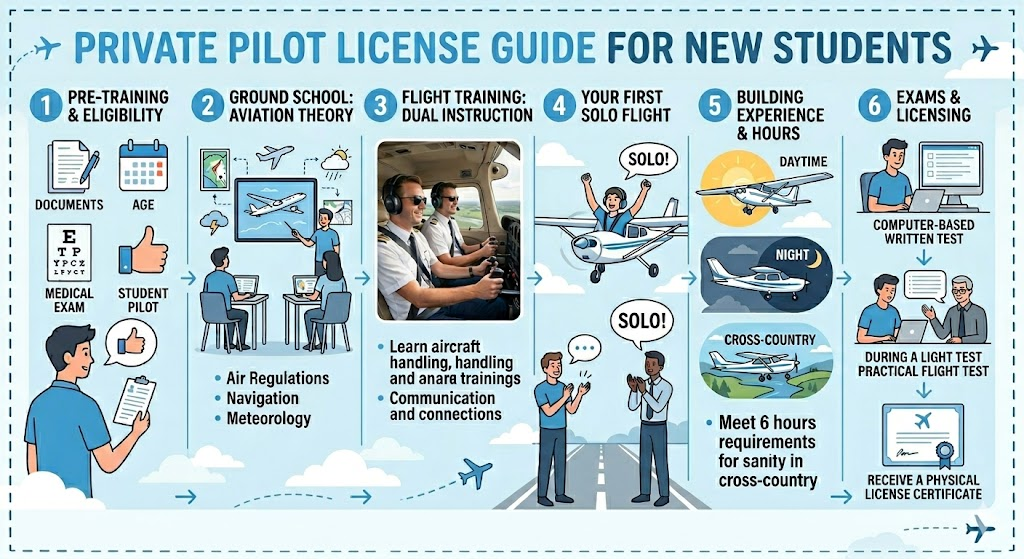
A Private Pilot License is one of the first major steps for students who want to enter the world of aviation. It gives beginners the opportunity to learn how aircraft fly, understand cockpit procedures, build confidence in the air, and experience the responsibility of becoming a pilot. For many students, a Private Pilot License is the starting point before moving toward advanced flight training or a professional aviation career. Even for those who want to fly only for personal interest, a PPL provides structured training, safety knowledge, and practical flying skills. Before joining a pilot school, new students should understand the eligibility requirements, medical checks, ground school subjects, flight training process, exams, costs, and future options. This guide explains the complete Private Pilot License journey in simple language so beginners can plan their training with clarity and confidence.
What Is a Private Pilot License?
A Private Pilot License, commonly known as PPL, is an aviation license that allows a person to fly an aircraft for private or non-commercial purposes. It is designed for students, aviation enthusiasts, and beginners who want to learn flying in a structured and professional way.
With a PPL, a pilot can operate an aircraft, carry passengers, and fly for personal travel or recreational flying, depending on the rules of the aviation authority in their country. However, a PPL does not usually allow a pilot to fly for paid commercial work.
This license helps students build strong flying basics, including aircraft control, navigation, communication, safety checks, weather understanding, and emergency handling.
Why Students Choose a Private Pilot License
Many students choose a Private Pilot License because it is the first serious step into aviation. It helps them understand whether flying is the right path for them before investing in advanced training.
Some students want to fly for personal passion, while others use PPL training as a foundation for becoming a commercial pilot. It also helps students develop discipline, confidence, decision-making skills, and technical understanding.
A PPL is valuable because it gives real cockpit experience and prepares students for more advanced aviation learning.
Basic Eligibility Requirements
Eligibility requirements may vary by country, but most aviation authorities follow similar basic standards. Students usually need to meet a minimum age requirement, have basic educational qualifications, understand English, and pass an aviation medical examination.
English is important because pilots must understand air traffic instructions, aviation communication, manuals, weather reports, and safety procedures.
Common documents required may include:
- Identity proof
- Educational documents
- Passport-size photographs
- Medical certificate
- Pilot school application form
- Address proof
- Any additional documents required by the aviation authority
Students should always check the latest requirements with their chosen pilot school or aviation authority before applying.
Medical Examination Before Training
Medical fitness is an important part of pilot training. Before starting flight lessons, students must complete an aviation medical examination from an approved medical examiner.
The medical test usually checks:
- Eyesight
- Hearing
- Blood pressure
- General fitness
- Heart health
- Mental alertness
- Overall physical condition
Pilots must be physically and mentally fit because flying requires focus, quick decision-making, and calm handling of different situations.
Students should complete the medical check early before spending heavily on training. Maintaining a healthy lifestyle, proper sleep, and regular fitness habits can help during the medical examination.
Ground School Training
Ground school is the classroom learning part of pilot training. It teaches students the theory behind flying and prepares them for written exams and practical flight lessons.
Important ground school subjects include:
- Air regulations
- Navigation
- Meteorology
- Aircraft systems
- Flight planning
- Aviation communication
- Principles of flight
- Human performance
- Safety procedures
Ground school is very important because a pilot must understand more than just aircraft controls. A good pilot needs knowledge of weather, airspace, maps, aircraft performance, communication rules, and emergency planning.
Students who take ground school seriously usually perform better during flight training.
Flight Training Overview
Flight training is the practical flying part of earning a Private Pilot License. During this stage, students fly with a certified flight instructor and learn how to operate an aircraft safely.
In the beginning, students learn:
- Aircraft familiarization
- Cockpit layout
- Pre-flight inspection
- Checklist usage
- Basic controls
- Taxiing
- Takeoff basics
- Straight and level flight
As training continues, students practice:
- Climbing and descending
- Turns
- Landing techniques
- Navigation flights
- Radio communication
- Emergency procedures
- Flight planning
- Situational awareness
Flight training helps students convert classroom knowledge into real flying skills.
First Solo Flight
The first solo flight is one of the most memorable moments in a student pilot’s journey. It happens when the instructor believes the student can safely operate the aircraft alone under controlled conditions.
Before a student is allowed to fly solo, they must show good control of the aircraft, safe takeoff and landing ability, proper communication, and understanding of emergency procedures.
A solo flight builds confidence and proves that the student has reached an important training milestone.
Flight Hour Requirements
A Private Pilot License requires a minimum number of flying hours. The exact requirement depends on the aviation authority and country.
Flight hours usually include:
- Dual flying with an instructor
- Solo flying
- Cross-country flying
- Navigation practice
- Emergency procedure practice
Some students complete training near the minimum required hours, while others need extra flying time to become confident and ready for the final test.
Students should focus on skill, safety, and confidence rather than only completing minimum hours.
Examinations and Assessments
To earn a Private Pilot License, students must pass theory exams and a practical flight test.
Written exams usually cover subjects such as:
- Air law
- Navigation
- Meteorology
- Aircraft technical knowledge
- Flight planning
- Aviation communication
The practical test checks whether the student can safely fly the aircraft, follow procedures, communicate properly, navigate, and handle emergency situations.
Good preparation, regular revision, and consistent flying practice are important for success.
Estimated Training Timeline
The time required to complete PPL training depends on many factors. A full-time student may complete training faster, while a part-time student may take longer.
Factors that affect training duration include:
- Student availability
- Weather conditions
- Aircraft availability
- Instructor schedule
- Learning speed
- Exam preparation
- Training consistency
Regular flying helps students progress faster. Long gaps between lessons may require extra revision flights and increase the total training time.
Cost of a Private Pilot License
The cost of a Private Pilot License depends on the training location, aircraft type, pilot school, flying hours, and additional practice required.
Common cost areas include:
- Flight training fees
- Instructor charges
- Aircraft rental
- Ground school fees
- Medical examination
- Study materials
- Written exam fees
- Practical test fees
- Licensing fees
Students should request a complete cost breakdown before joining a pilot school. It is also wise to keep an extra budget for additional flying hours, weather delays, or exam retakes.
How to Choose the Right Pilot School
Choosing the right pilot school is very important for safe and successful training. A good school provides experienced instructors, well-maintained aircraft, proper ground school, and strong student support.
Students should check:
- Instructor experience
- Aircraft fleet condition
- Safety record
- Training structure
- Ground school quality
- Student reviews
- Fee transparency
- Aircraft availability
- Exam support
- Licensing guidance
Students should not choose a school only because it has the lowest fee. In aviation, training quality and safety should always come first.
Common Challenges New Students Face
New student pilots may face different challenges during training. These challenges are normal and can be managed with patience and regular practice.
Common challenges include:
- Fear during initial flights
- Difficulty with radio communication
- Weather-related delays
- Managing study workload
- Landing practice challenges
- Budget planning
- Lack of confidence
- Irregular training schedule
- Exam pressure
A supportive instructor and consistent training routine can help students overcome these problems.
Tips for Success During PPL Training
Students can improve their training experience by staying focused, disciplined, and prepared.
Helpful tips include:
- Study theory regularly
- Review each lesson before flying
- Maintain good health
- Ask questions freely
- Practice aviation communication
- Follow checklists carefully
- Learn from mistakes
- Keep a flight training journal
- Fly regularly
- Respect safety rules
A good pilot is not only skilled but also responsible, calm, and safety-focused.
Career Path After a Private Pilot License
After earning a Private Pilot License, students can continue their aviation journey with advanced training and ratings.
Possible next steps include:
- Night rating
- Instrument rating
- Multi-engine rating
- Commercial Pilot License
- Flight instructor training
- Airline pilot pathway
For students who want to become professional pilots, a PPL is only the beginning. It creates a strong foundation for more advanced aviation training.
Common Mistakes to Avoid
New students should avoid mistakes that may delay training or increase costs.
Common mistakes include:
- Choosing a pilot school only based on price
- Ignoring medical eligibility
- Flying irregularly
- Not studying ground school subjects
- Poor exam preparation
- Not asking for instructor feedback
- Skipping pre-flight planning
- Underestimating total cost
- Losing confidence after mistakes
Avoiding these mistakes can make the PPL journey smoother and more successful.
FAQs
1- What is a Private Pilot License?
A Private Pilot License is an aviation license that allows a person to fly an aircraft for private or personal purposes. It is mainly used for recreational flying, personal travel, and as a foundation for advanced pilot training. A PPL does not usually allow a pilot to fly commercially for payment.
2- Is a Private Pilot License good for beginners?
Yes, a Private Pilot License is a good starting point for beginners who want to learn flying properly. It teaches basic aircraft handling, aviation theory, navigation, communication, and safety procedures. It also helps students decide whether they want to continue toward a professional pilot career.
3- Can I become a commercial pilot after getting a PPL?
Yes, many students start with a Private Pilot License and later move toward a Commercial Pilot License. A PPL builds the basic flying skills and aviation knowledge needed for advanced training. Students may also need additional ratings, flight hours, and exams depending on the aviation authority.
4- How long does it take to complete PPL training?
The training duration depends on the student’s schedule, weather, aircraft availability, instructor availability, and learning speed. Full-time students may complete it faster, while part-time students may take longer. Regular flying usually helps students complete training more efficiently.
5- Is ground school compulsory for PPL?
Ground school is an important part of PPL training because it teaches aviation theory. Students learn subjects like air regulations, navigation, meteorology, aircraft systems, and communication. This knowledge is required for written exams and safe flying.
6- What is the first solo flight in PPL training?
The first solo flight is when a student pilot flies the aircraft alone for the first time. It happens only after the instructor is confident that the student can take off, fly, communicate, and land safely. It is one of the most important milestones in pilot training.
7- How much does a Private Pilot License cost?
The cost of a PPL depends on the pilot school, aircraft type, location, number of flying hours, and additional practice required. Major costs include flight training, instructor fees, ground school, exams, medical checks, and licensing fees. Students should ask for a detailed fee structure before joining.
8- Do I need perfect eyesight to become a private pilot?
Perfect eyesight is not always required, but students must meet aviation medical standards. In many cases, corrected vision with glasses or contact lenses may be acceptable. Students should complete an official medical examination before starting training.
9- Can I carry passengers with a Private Pilot License?
In many countries, a PPL holder can carry passengers, but not for paid commercial flying. The exact rules depend on the aviation authority and license privileges. Students should always follow local aviation regulations before carrying passengers.
10- What should I check before choosing a pilot school?
Before choosing a pilot school, students should check instructor experience, aircraft condition, safety record, training quality, fee transparency, ground school support, and student reviews. A good pilot school should focus on safety, structured learning, and proper licensing guidance.
Conclusion
A Private Pilot License is an exciting and important step for new aviation students. It introduces beginners to aircraft handling, aviation theory, safety procedures, communication, navigation, and real flying experience. From medical checks and ground school to flight training, solo flying, exams, and licensing, every stage helps build a confident and responsible pilot. Students should choose a reliable pilot school, plan their budget carefully, stay consistent with studies, and practice regularly. Earning a PPL is not just about receiving a license; it is about developing discipline, confidence, and respect for aviation. For every new student, this license can become the first major milestone toward a future in the sky.
