
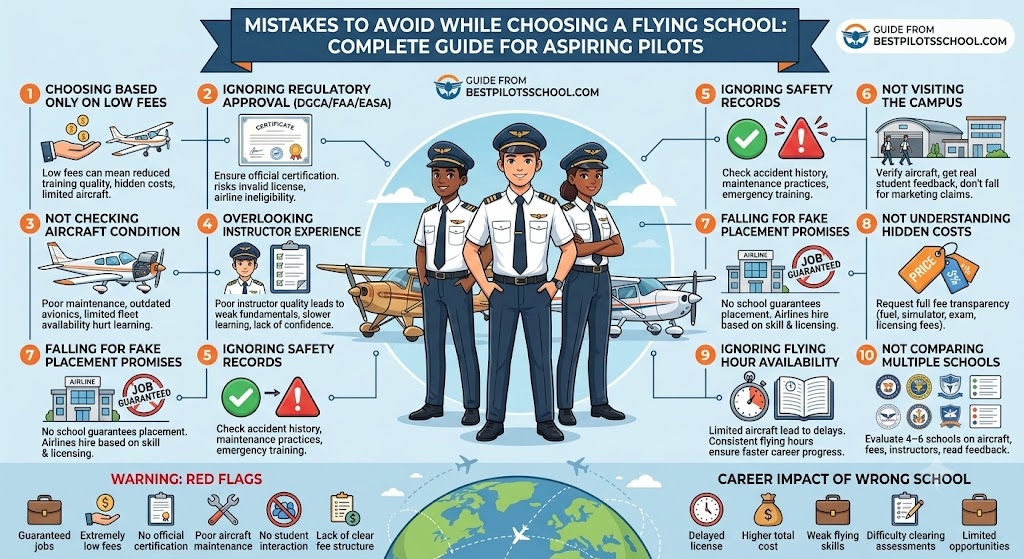
Choosing a flying school is one of the most critical decisions in a pilot’s journey. The quality of your training directly affects your flying skills, safety mindset, licensing progress, and long-term aviation career opportunities. Many students rush into enrollment based on advertisements or low fees and later realize they made costly mistakes.
This guide from bestpilotsschool.com highlights the most common flying school mistakes and how to avoid them so you can make a confident and informed decision.
Why Choosing the Right Flying School Matters
A flying school is not just an educational institute—it is the foundation of your aviation career. Every decision you make here influences your future.
Builds core flying and decision-making skills
Shapes your safety awareness and discipline
Impacts licensing success and exam preparation
Affects airline career opportunities
Determines training cost and timeline efficiency
A wrong choice can delay your career, while a smart choice can accelerate it significantly.
Common Mistakes to Avoid While Choosing a Flying School
Below are the most critical pilot training errors students must avoid before selecting an aviation academy.
- Choosing Based Only on Low Fees
One of the biggest mistakes students make is selecting the cheapest option.
Why it’s risky:
Low fees often mean reduced training quality
Hidden costs may appear later
Aircraft availability may be limited
Always compare value, not just price.
- Ignoring Regulatory Approval (DGCA/FAA/EASA)
Never join a school without checking official certification.
Risks include:
Invalid or non-recognized license
Airline ineligibility
Poor training standards
Approval ensures your training is legally and professionally valid.
- Not Checking Aircraft Condition
Aircraft quality is directly linked to your learning experience.
Avoid schools with:
Poorly maintained aircraft
Outdated avionics
Limited fleet availability
Modern aircraft improve both safety and skill development.
- Overlooking Instructor Experience
Instructors play a major role in shaping your flying career.
Poor instructor quality leads to:
Weak fundamentals
Slower learning
Lack of confidence in flying
Always check instructor flying hours and background.
- Ignoring Safety Records
Safety should never be compromised in aviation training.
Check for:
Accident history
Maintenance practices
Emergency training systems
A strong safety record reflects professionalism.
- Not Visiting the Campus
Many students enroll without physically visiting the school.
Why this is a mistake:
You cannot verify aircraft condition
You miss real student feedback
You may fall for marketing claims
Always visit before deciding.
- Falling for Fake Placement Promises
Some schools advertise guaranteed airline jobs.
Reality:
No school can guarantee airline placement
Airlines hire based on skill and licensing
Such claims are often misleading
Be cautious of unrealistic promises.
- Not Understanding Hidden Costs
Pilot training is expensive and often has additional charges.
Hidden costs may include:
Fuel charges
Simulator fees
Exam and licensing costs
Always request full fee transparency.
- Ignoring Flying Hour Availability
Flying hours are essential for license completion.
Common issue:
Limited aircraft leads to delays
Students wait longer for scheduling
More flying hours = faster career progress.
- Not Comparing Multiple Schools
Many students select the first school they find.
Better approach:
Compare at least 4–6 schools
Evaluate aircraft, fees, instructors
Read student feedback
Comparison leads to better decisions.
Comparison: Good vs Poor Flying School Decision
Factor Good Flying School Choice Poor Flying School Choice
Fees Transparent and justified Low but misleading
Certification Fully approved Unverified or missing
Aircraft Modern and maintained Old and poorly maintained
Instructors Experienced professionals Limited expertise
Safety Strong standards Weak or unclear records
Transparency Open and clear Hidden information
Red Flags in Flying Schools
Be alert if you notice:
Guaranteed job offers after training
Extremely low training fees
No official certification
Poor aircraft maintenance
No student interaction allowed
Lack of clear fee structure
These are strong warning signs of low-quality institutions.
Career Impact of Choosing the Wrong School
Making a poor decision can seriously affect your aviation journey:
Delayed license completion
Higher overall training costs
Weak flying skills and confidence
Difficulty clearing airline assessments
Limited career opportunities
Choosing wisely ensures long-term success in aviation.
FAQs: Mistakes to Avoid While Choosing a Flying School
- What is the biggest mistake students make when choosing a flying school?
The biggest mistake is selecting a school based only on low fees without checking safety, certification, and training quality.
- Why is regulatory approval so important?
It ensures your license is valid and recognized by airlines and aviation authorities. Without it, your training may not be useful professionally.
- Can I trust schools that promise airline jobs?
No, airline jobs cannot be guaranteed by any school. Airlines hire based on skill, experience, and licensing performance.
- How important is aircraft condition in training?
Very important. Aircraft condition directly impacts safety, learning quality, and flight availability.
- Should I visit the flying school before joining?
Yes, visiting helps you evaluate real conditions, meet students, and verify facilities.
- What are hidden costs in pilot training?
Hidden costs may include fuel charges, simulator usage fees, exam fees, and licensing expenses.
- Why are instructor qualifications important?
Experienced instructors help build strong fundamentals and improve your confidence and flying skills.
- What happens if I choose a poor flying school?
You may face delays, higher costs, weak training, and reduced chances of airline selection.
- How many schools should I compare before deciding?
It is recommended to compare at least 4–6 flying schools before making a final decision.
- Is safety record really important for a flying school?
Yes, safety records reflect how seriously the school follows aviation standards and maintenance practices.
Conclusion
Choosing the right flying school is one of the most important decisions in your aviation career. Avoiding common flying school mistakes helps you save money, time, and effort while ensuring high-quality training. Always focus on certification, instructor experience, aircraft condition, safety standards, and transparency rather than just cost or marketing promises.
Take your time, compare multiple schools, and make a well-informed decision. A smart choice today will shape your confidence, skills, and success as a future pilot.
