
Introduction
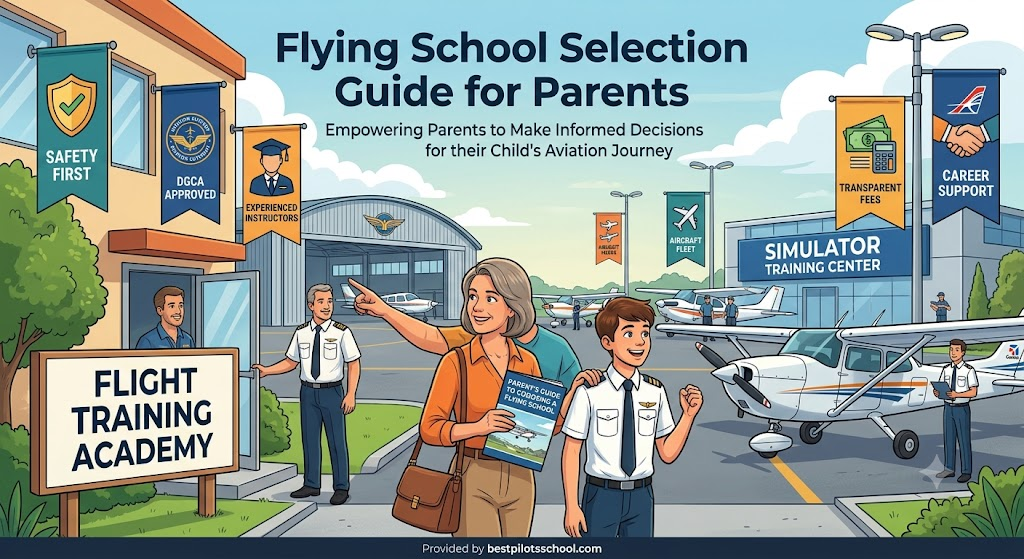
Choosing the right flying school is one of the most important decisions parents can make when their child wants to become a pilot. Pilot training is not just another course. It involves serious financial investment, discipline, safety awareness, technical learning, and long-term career planning.
For many parents, aviation may feel unfamiliar at first. Terms like ground school, flight hours, simulator training, DGCA approval, instructor rating, aircraft fleet, and commercial pilot training can sound confusing. However, with the right information, parents can confidently compare flying schools and choose the best option for their child.
A good flying school does more than teach students how to fly an aircraft. It builds confidence, discipline, decision-making skills, communication ability, and professional flying habits. This guide from bestpilotsschool.com will help parents understand what to check before selecting a flying school.
Why Parents Should Be Involved in Flying School Selection
Parents play a very important role in a student’s aviation journey. Flying school selection affects safety, training quality, career growth, and overall confidence.
Pilot training usually involves high costs, so parents should understand where the money is going. They should check whether the school has proper approvals, experienced instructors, well-maintained aircraft, safe training procedures, and transparent fee details.
Parents also provide emotional support. Flight training can be challenging, and students may face pressure during exams, flying lessons, and skill tests. A supportive family helps the student stay focused and motivated.
Understand Your Child’s Aviation Goal
Before choosing a pilot training school, parents should understand what their child wants to achieve.
Some students want to become airline pilots. Some may want to fly private aircraft, corporate jets, or become flight instructors. The training path may change depending on the goal.
Common aviation goals include:
- Private Pilot License training
- Commercial Pilot License training
- Airline pilot preparation
- Flight instructor training
- Corporate aviation career
- Aviation management support roles
If the goal is to become a commercial pilot, parents should look for a flying school that offers structured commercial pilot training, strong ground classes, sufficient aircraft availability, and good career guidance.
Check School Approval and Accreditation
One of the first things parents should check is whether the flying school is approved by the proper aviation authority. In India, for example, students should look for a DGCA approved flying school.
Approval matters because it shows that the school follows required aviation training standards. It also ensures that the student’s training hours and course completion are recognized for licensing.
Parents should ask:
- Is the school officially approved?
- Are licenses recognized by the aviation authority?
- Are instructors certified?
- Are aircraft maintained according to rules?
- Does the school follow proper safety standards?
Never choose a flying school only because it has attractive marketing. Always verify approval before admission.
Evaluate Instructor Experience
A flight instructor plays a major role in a student’s development. A good instructor teaches more than flying controls. They teach discipline, safety thinking, confidence, communication, and decision-making.
Parents should check:
- Instructor qualifications
- Total flying experience
- Teaching experience
- Student feedback
- Instructor-to-student ratio
- Availability for doubt-clearing
If one instructor is handling too many students, training delays may happen. A good flying school should have enough instructors to guide students properly.
Check the Aircraft Fleet
Aircraft availability directly affects training speed. If a school has very few aircraft and many students, flight training may get delayed.
Parents should check:
- Number of training aircraft
- Aircraft condition
- Maintenance schedule
- Backup aircraft availability
- Modern navigation systems
- Aircraft usage ratio
A well-maintained fleet shows that the school takes safety seriously. Parents should also ask how often aircraft are inspected and who handles maintenance.
Importance of Simulator Training
Flight simulators are useful for learning procedures, emergency handling, instrument flying, and cockpit coordination. They help students practice situations that may be difficult or unsafe to repeat in real aircraft.
Simulator training can help students:
- Improve confidence
- Practice emergency procedures
- Learn cockpit instruments
- Reduce training cost
- Prepare for advanced flying
A flying school with simulator facilities gives students better preparation before actual flight lessons.
Safety Standards Parents Must Check
Safety should always come before cost. A low-cost flying school is not always the best choice if safety standards are weak.
Parents should ask about:
- Aircraft maintenance records
- Weather flying rules
- Emergency response system
- Student supervision
- Instructor briefing process
- Safety reporting system
- Medical and fitness requirements
A good flying school will be transparent about safety procedures and will not hesitate to answer parent questions.
Review the Course Curriculum
A strong pilot training curriculum includes both theory and practical flying. Ground school is very important because students must understand aviation subjects before flying confidently.
Important subjects include:
- Air navigation
- Meteorology
- Air regulations
- Aircraft systems
- Flight planning
- Radio communication
- Human performance
- Aviation safety
Parents should make sure the school gives proper importance to classroom learning, not only flying hours.
Compare Training Costs Carefully
Pilot training can be expensive, so parents should compare costs in detail. Do not look only at the basic fee. Many schools may have extra charges.
Possible costs include:
- Admission fee
- Ground school fee
- Flying hour charges
- Simulator fee
- Exam fee
- Medical test cost
- Uniform cost
- Study material
- Hostel or accommodation
- Transportation
- License processing charges
Parents should ask for a complete fee structure in writing. Cost transparency is a sign of a professional pilot training school.
Visit the Campus Before Admission
Parents should visit the flying school before finalizing admission. A campus visit helps you understand the real training environment.
During the visit, check:
- Classrooms
- Aircraft condition
- Simulator room
- Student facilities
- Hostel facilities
- Library
- Maintenance area
- Safety culture
- Staff behavior
Also try to speak with current students. Their feedback can give a realistic idea about training quality.
Student Success and Placement Support
A flying school should not only train students but also guide them toward aviation careers. Parents should ask about past student success.
Check:
- License completion rate
- Exam pass rate
- Average training duration
- Alumni career progress
- Placement guidance
- Airline interview support
- Resume preparation help
Placement support is especially useful for students who want to become commercial pilots.
Location and Weather Conditions
The location of the flying school can affect training speed. Some places have better flying weather, while others may face frequent delays due to rain, fog, or airspace restrictions.
Parents should consider:
- Airport accessibility
- Weather conditions
- Air traffic levels
- Accommodation nearby
- Travel convenience
- Training frequency
A school with good flying weather may help students complete training more efficiently.
Questions Parents Should Ask Before Admission
Parents should ask these important questions:
- Is the flying school approved by the aviation authority?
- How many aircraft does the school have?
- How many students are currently enrolled?
- How many instructors are available?
- What is the instructor-to-student ratio?
- What is the total training cost?
- Are there any hidden charges?
- How long does the course usually take?
- Are aircraft properly maintained?
- Does the school provide simulator training?
- What subjects are included in ground school?
- Does the school help with exams?
- What is the student pass rate?
- Does the school offer hostel facilities?
- What safety procedures are followed?
- Are parents allowed to visit the campus?
- Does the school provide placement support?
- Are alumni working in aviation careers?
- What happens if training is delayed?
- Is career counseling available?
Common Mistakes Parents Should Avoid
Many parents make decisions based only on cost or location. This can lead to poor training experience.
Avoid these mistakes:
- Choosing the cheapest school without checking quality
- Ignoring safety standards
- Not verifying approvals
- Not visiting the campus
- Ignoring aircraft availability
- Not checking instructor experience
- Believing only advertisements
- Not asking about hidden charges
- Ignoring student feedback
- Not comparing multiple schools
A careful decision at the beginning can save time, money, and stress later.
Flying School Comparison Checklist
| Factor | What Parents Should Check |
|---|---|
| Approval | Aviation authority recognition |
| Safety | Maintenance, emergency procedures, weather rules |
| Instructors | Qualification, experience, teaching quality |
| Aircraft Fleet | Number, condition, availability |
| Simulator | Practical training support |
| Curriculum | Ground school and flying syllabus |
| Cost | Transparent fee structure |
| Campus | Classrooms, hostel, library, facilities |
| Student Feedback | Reviews and testimonials |
| Career Support | Placement, interview, resume guidance |
Signs of a Good Flying School
A high-quality flying school usually has:
- Proper aviation approval
- Experienced instructors
- Well-maintained aircraft
- Transparent fees
- Strong ground school
- Good safety record
- Simulator training
- Career guidance
- Positive student reviews
- Professional management
Parents should look for overall quality, not just one attractive feature.
Benefits of Choosing the Right Flying School
The right flying school helps students build a strong foundation for their aviation career. It improves confidence, safety habits, technical knowledge, and professional discipline.
Benefits include:
- Better flying skills
- Stronger theoretical knowledge
- Safer training environment
- Faster learning progress
- Better career preparation
- Improved confidence
- Long-term aviation success
Choosing the right school is not just about admission. It is about building the future of a young pilot.
Frequently Asked Questions
1. How do parents choose the best flying school?
Parents should compare approval, safety standards, instructor quality, aircraft availability, training cost, student feedback, and career support. A good flying school should be transparent, professional, and student-focused.
2. Is approval important for a flying school?
Yes, approval is very important. It ensures the school follows aviation authority standards and that the student’s training is valid for licensing.
3. Should parents choose the cheapest flying school?
Not always. Low fees may look attractive, but parents should first check safety, aircraft quality, instructors, and total hidden costs.
4. Why are instructors important in pilot training?
Instructors guide students during both theory and practical flying. A skilled instructor helps students learn safely, confidently, and professionally.
5. How important is aircraft availability?
Aircraft availability affects training speed. If aircraft are limited, students may face long delays in completing flying hours.
6. Should parents visit the flying school campus?
Yes. A campus visit helps parents check facilities, aircraft condition, classrooms, safety culture, and the overall learning environment.
7. Do flying schools provide placement support?
Some flying schools provide career guidance, interview preparation, resume support, and placement assistance. Parents should ask before admission.
8. Are simulators necessary in flight training?
Simulators are very helpful. They allow students to practice procedures, emergencies, and instrument flying in a safe learning environment.
9. What is the biggest mistake parents make?
The biggest mistake is choosing a flying school only based on low fees without checking approval, safety, instructors, and training quality.
10. How can bestpilotsschool.com help parents?
bestpilotsschool.com can guide parents with useful information about pilot training, flying school selection, aviation careers, and important factors to consider before admission.
Conclusion
Selecting the right flying school is a major decision for parents and students. It requires careful research, comparison, and understanding of aviation training standards. Parents should not focus only on fees or location. They should evaluate approval, safety, instructor experience, aircraft fleet, simulator facilities, curriculum, campus environment, and career support.
A good flying school can shape a student’s confidence, discipline, flying skills, and future aviation career. With the right guidance, parents can make a smart decision and support their child’s dream of becoming a pilot.
For more helpful guidance on aviation education and pilot training, bestpilotsschool.com can be a trusted resource for parents and students planning a successful flying career.
