
Introduction
Becoming a pilot is a dream career for many students, but flying an aircraft is not only about learning controls, passing exams, and completing flying hours. A pilot must also be medically fit to handle the physical, mental, and decision-making demands of aviation.
Pilot medical tests are designed to protect the safety of the pilot, passengers, crew, and aircraft. These tests check whether a student is healthy enough to fly safely under normal and challenging conditions.
Many students feel nervous before their pilot medical examination because they think one small health issue can end their aviation dream. In reality, not every medical concern leads to permanent rejection. Some issues are temporary, some require further evaluation, and many can be managed with proper treatment and documentation.
This guide explains the common reasons students fail pilot medical tests, how medical fitness is checked, and what aspiring pilots can do to prepare better.
What Is a Pilot Medical Test?
A pilot medical test is a health examination conducted to confirm whether a person is physically and mentally fit to operate an aircraft. It is usually performed by an authorized aviation medical examiner or an approved medical board.
The examination may include:
- Vision test
- Hearing test
- Blood pressure check
- Blood and urine tests
- ECG or heart screening
- General physical examination
- Neurological review
- Mental health assessment
- Review of medical history
- Medication and surgery history
The FAA requires pilots to submit medical certification information through FAA MedXPress before medical certification processing, while EASA and DGCA follow their own aviation medical systems and medical class requirements.
Types of Pilot Medical Certificates
Different pilot licenses require different levels of medical fitness.
Class 1 Medical
Class 1 medical is generally required for commercial pilot careers. Students planning to become airline pilots or commercial pilots usually need this medical certificate.
It is the strictest category because commercial pilots carry passengers, operate complex aircraft, and may fly for long duty periods.
Class 2 Medical
Class 2 medical is commonly required for student pilots and private pilot license applicants in many aviation systems. In India, DGCA medical examinations are commonly understood through Class 2 for student-level entry and Class 1 for commercial pilot licensing progression.
Class 3 Medical
Class 3 medical is used in some countries, especially under FAA rules, for certain private or recreational flying privileges. Requirements vary by country and license type.
Students should always check the latest rules from the aviation authority relevant to their training country.
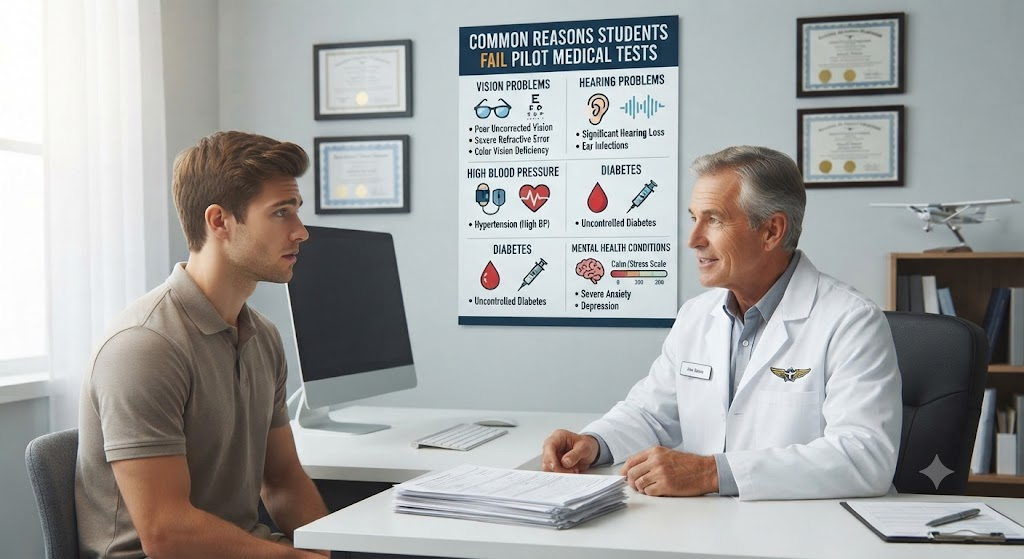
Common Reasons Students Fail Pilot Medical Tests
1- Vision Problems
Vision is one of the most important areas in a pilot medical examination. Pilots must be able to read cockpit instruments, identify runway markings, judge distance, scan the sky, and recognize signals clearly.
Common vision-related reasons for failure include:
- Poor uncorrected or corrected eyesight
- Severe refractive error
- Color vision deficiency
- Double vision
- Eye disease
- Poor night vision
- Recent eye surgery without proper recovery
Many students wrongly believe that wearing glasses automatically disqualifies them. This is not always true. In many cases, pilots are allowed to fly with glasses or contact lenses if their corrected vision meets required standards.
However, color vision can be more sensitive because pilots must identify colored lights, cockpit alerts, navigation signals, and airport lighting. Students with color vision issues may need additional testing.
2- Hearing Problems
Pilots must communicate clearly with air traffic control, instructors, crew members, and other aircraft. Hearing problems can affect radio communication and situational awareness.
Students may face difficulty if they have:
- Significant hearing loss
- Ear infections
- Balance-related inner ear problems
- Poor speech recognition
- Untreated hearing disorders
Some hearing issues are temporary. For example, an ear infection or blocked ear may improve after treatment. Students should avoid attending a medical test when they are suffering from temporary ear problems.
3- High Blood Pressure
High blood pressure is one of the most common medical concerns found during aviation medical exams. A student may show high blood pressure due to stress, poor sleep, anxiety, caffeine, or an unhealthy lifestyle.
A single high reading does not always mean permanent failure. The medical examiner may ask for repeated readings, lifestyle changes, medication review, or a cardiology opinion.
Chronic uncontrolled hypertension can be a problem because it increases the risk of heart disease, stroke, and sudden medical events.
4- Heart Conditions
Aviation medical examiners take heart health seriously because pilots must remain alert and stable throughout flight.
Possible heart-related concerns include:
- Abnormal ECG
- Irregular heartbeat
- History of heart surgery
- Chest pain
- Heart valve disease
- Previous heart attack
- Unexplained fainting
Some findings may not lead to rejection immediately, but they may require further tests such as ECG review, stress test, echocardiogram, or cardiologist evaluation.
5- Diabetes
Diabetes can affect pilot medical approval depending on type, severity, control level, complications, and medication.
Uncontrolled diabetes may create risks such as:
- Low blood sugar
- Blurred vision
- Fatigue
- Nerve issues
- Kidney problems
- Sudden weakness
Students with diabetes should not hide their condition. Controlled diabetes may be reviewed differently depending on the aviation authority and medical evidence provided.
6- Obesity and Poor BMI
Obesity itself may not always cause failure, but it can be linked to other serious health problems. These include high blood pressure, diabetes, heart disease, reduced stamina, and sleep apnea.
Sleep apnea is especially important in aviation because it can cause daytime sleepiness, poor concentration, and fatigue.
Students with high BMI may be advised to improve fitness, undergo additional tests, or provide medical reports.
7- Neurological Disorders
The nervous system plays a major role in balance, coordination, awareness, and decision-making.
Medical concerns may include:
- Epilepsy
- Seizures
- Unexplained fainting
- Serious head injury
- Frequent migraines
- Blackouts
- Neurological weakness
A history of seizures or unexplained loss of consciousness is taken seriously because sudden incapacity during flight can be dangerous.
8- Mental Health Conditions
Mental health is an important part of pilot medical fitness. Pilots must manage pressure, make decisions calmly, and handle emergencies with focus.
Possible concerns include:
- Severe anxiety
- Depression
- Panic attacks
- Substance dependency
- Serious sleep disorders
- Certain psychiatric medications
- Untreated ADHD or attention-related issues
Having a mental health history does not automatically mean a student can never become a pilot. What matters is the condition, treatment, stability, medication, specialist report, and aviation authority rules.
Students should be honest and seek proper medical guidance instead of hiding symptoms.
9- Drug or Alcohol Abuse
Drug and alcohol misuse can lead to failure or disqualification because aviation requires alertness, discipline, and responsible decision-making.
Concerns may include:
- Positive drug screening
- Alcohol dependency
- History of substance abuse
- Use of banned substances
- Misuse of prescription medicines
Aviation authorities take this very seriously because substance use can affect judgment, reaction time, coordination, and safety.
10- Respiratory Problems
Pilots must be able to breathe comfortably in changing cabin conditions and stressful situations.
Medical concerns may include:
- Severe asthma
- Chronic lung disease
- Frequent breathing difficulty
- Low oxygen tolerance
- Recent serious respiratory infection
Mild and well-controlled asthma may not always be disqualifying, but severe or unstable breathing problems may require further evaluation.
11- Poor General Fitness
Some students fail or face temporary rejection because they do not maintain basic health.
Common lifestyle-related problems include:
- Lack of sleep
- Poor diet
- No physical activity
- Smoking
- High caffeine intake
- Dehydration
- Frequent fatigue
- Stress
Aviation medical tests are not just about disease. They also assess whether the student has the stamina and discipline required for flying.
12- Recent Surgery or Injury
Recent surgery may delay medical approval until the student fully recovers.
Examples include:
- Eye surgery
- Bone fracture
- Major dental surgery
- Abdominal surgery
- Heart procedure
- Head injury
- Joint surgery
The examiner may ask for discharge summaries, recovery reports, specialist clearance, and proof that the student can safely fly.
13- Medication Issues
Certain medicines can affect alertness, reaction time, sleep, concentration, or mood. This is why aviation medical examiners ask about current and past medication use.
Problematic medication categories may include:
- Sedatives
- Strong painkillers
- Some psychiatric medicines
- Certain allergy medicines
- Sleep medicines
- Self-medicated drugs
Students should never stop prescribed medicine without consulting a doctor. Instead, they should discuss aviation-safe alternatives with qualified medical professionals.
14- Incomplete or Incorrect Medical Records
Sometimes students do not fail because of a health condition, but because their documents are incomplete.
Common documentation issues include:
- Missing medical history
- Incomplete test reports
- Incorrect application details
- Old prescriptions without explanation
- No specialist certificate
- Hiding previous illness
- Not carrying glasses prescription
- Not declaring surgery history
Honesty is very important. Concealing medical information can create bigger problems later.
Temporary Reasons for Medical Rejection
Not every failure is permanent. Students may be declared temporarily unfit due to short-term issues such as:
- Fever
- Cold or flu
- Ear infection
- Eye infection
- Dehydration
- Poor sleep
- Temporary high blood pressure
- Recent injury
- Stress before the exam
- Recent surgery
- Abnormal lab value needing repeat test
In such cases, the student may be asked to recover, repeat tests, or submit additional documents.
Conditions That May Need Further Evaluation
Some medical conditions do not always result in immediate rejection, but they may require more evidence.
Examples include:
- Corrected eyesight
- Mild asthma
- Controlled diabetes
- Past fracture
- Minor surgery
- Anxiety history
- Migraine history
- Borderline blood pressure
- Past medication use
- Previous hospitalization
The examiner may ask for specialist reports to confirm that the condition is stable and safe for flying.
How Students Can Prepare Before a Pilot Medical Test
Students can improve their chances by preparing properly.
Before the Medical Test
- Sleep well for at least 7–8 hours
- Stay hydrated
- Avoid alcohol
- Avoid smoking
- Avoid excess caffeine
- Eat a balanced meal
- Carry previous medical records
- Carry prescription glasses or contact lenses
- Bring medication details
- Be honest about your medical history
- Avoid intense exercise just before blood tests
- Stay calm during the examination
Long-Term Preparation
- Maintain healthy weight
- Exercise regularly
- Get routine health checkups
- Treat dental, eye, and ear issues early
- Manage stress
- Follow doctor advice
- Avoid self-medication
- Build good sleep habits
Common Myths About Pilot Medical Tests
Wearing Glasses Means You Cannot Become a Pilot
This is not true in many cases. Many pilots fly with glasses or contact lenses if their corrected vision meets the required standard.
One High Blood Pressure Reading Means Permanent Failure
A single high reading may happen due to stress, lack of sleep, or caffeine. The examiner may ask for repeat readings or further evaluation.
Mental Health Treatment Always Disqualifies a Student
Not always. The decision depends on the condition, stability, treatment history, medication, and aviation authority rules.
Color Blindness Always Ends a Pilot Career
Color vision deficiency can be serious, but some students may undergo additional testing depending on the authority and license type.
Only Perfectly Fit People Can Become Pilots
Pilots do not need to be athletes. They need to meet aviation medical standards and maintain safe physical and mental fitness.
What Happens If You Fail a Pilot Medical Test?
If a student fails or is declared temporarily unfit, the next step depends on the reason.
Possible outcomes include:
- Temporary unfit status
- Request for additional tests
- Specialist medical review
- Repeat examination
- Appeal or reconsideration
- Conditional approval
- Permanent disqualification in serious cases
Students should not panic immediately. Many medical issues can be reviewed again with proper treatment and documentation.
When Should Students Take a Medical Test?
Students should complete a pilot medical examination before investing heavily in flying school fees. This helps avoid financial loss and emotional stress later.
It is better to know your medical eligibility early rather than after starting expensive pilot training.
Tips for Maintaining Long-Term Pilot Medical Fitness
Pilot medical fitness is not a one-time requirement. Pilots must renew medical certificates throughout their careers.
To stay fit:
- Exercise regularly
- Maintain healthy weight
- Eat balanced meals
- Sleep properly
- Avoid smoking
- Avoid alcohol misuse
- Take care of eyesight
- Manage stress
- Attend regular checkups
- Report medical changes honestly
- Follow aviation medical rules
The FAA’s medical certification resources also explain that aviation medical examinations are screening exams for minimum standards, not replacements for routine personal healthcare.
Frequently Asked Questions
1- Can I become a pilot if I wear glasses?
Yes, many students can become pilots even if they wear glasses or contact lenses. What matters is whether corrected vision meets the required aviation medical standard. Students should carry their latest eye prescription during the medical test.
2- Does color blindness disqualify a pilot?
Color blindness can affect pilot eligibility because pilots must identify aviation lights and signals. However, the final decision depends on the severity, additional testing, and the aviation authority’s rules.
3- Can students with diabetes become pilots?
It depends on the type of diabetes, control level, medication, complications, and authority rules. Controlled cases may require additional documentation and specialist evaluation. Students should consult an aviation medical examiner early.
4- What happens during a pilot medical examination?
The examination may include vision, hearing, blood pressure, urine test, blood test, ECG, general physical checkup, and medical history review. Some students may need extra tests depending on findings.
5- Is Class 1 medical required for commercial pilots?
Yes, Class 1 medical is generally required for commercial pilot licensing and airline pilot careers. It has stricter standards than basic student-level medical examinations.
6- Can anxiety affect pilot medical approval?
Yes, severe or uncontrolled anxiety may affect medical approval. However, a history of anxiety does not always mean permanent rejection. Stability, treatment, medication, and specialist reports are important.
7- What if I fail my first pilot medical test?
Do not panic. Many students are temporarily unfit due to correctable issues. You may be asked to repeat tests, submit reports, complete treatment, or attend further evaluation.
8- Should I complete my medical before joining flying school?
Yes, it is strongly recommended. Pilot training is expensive, so students should confirm medical eligibility before making a major financial commitment.
9- Can medication cause pilot medical failure?
Yes, some medicines may affect alertness, sleep, judgment, or reaction time. Always declare medication honestly and consult a qualified aviation medical examiner.
10- Can I appeal a failed pilot medical result?
In many aviation systems, students may request further review or submit additional medical evidence. The process depends on the aviation authority and the reason for rejection.
Conclusion
Pilot medical tests are an important part of aviation safety. They are designed to ensure that students are physically and mentally fit to fly safely.
The most common reasons students fail pilot medical tests include vision problems, hearing issues, high blood pressure, heart conditions, diabetes, obesity, neurological disorders, mental health concerns, substance abuse, respiratory issues, medication problems, and incomplete documents.
However, failing a medical test does not always mean the end of a pilot career. Many issues are temporary, manageable, or reviewable with proper medical treatment and documentation.
For students planning a career in aviation, the best step is simple: complete your medical examination early, maintain a healthy lifestyle, be honest about your medical history, and seek guidance from authorized aviation medical professionals.
A strong pilot career starts with strong medical fitness.
