
Becoming a pilot is not only about learning how to fly an aircraft. It is also about proving that your body and mind are ready to handle the responsibility of flight. A pilot must stay alert, make quick decisions, communicate clearly, and respond calmly during normal and emergency situations. This is why a pilot medical examination is an important step in the aviation journey.
For aspiring pilots, the medical exam may feel stressful at first. Many students worry about vision, fitness, blood pressure, documents, or whether a minor health issue could affect their dream. The good news is that proper preparation can make the process easier, smoother, and more confident.
This guide explains how to prepare for a pilot medical examination, what to expect during the test, common reasons for delays, and how to maintain good health throughout your aviation career.
What Is a Pilot Medical Examination?
A pilot medical examination is a health assessment required for people who want to become pilots or continue flying professionally. It is conducted by an authorized aviation medical examiner or approved medical authority.
The purpose of the examination is to ensure that a pilot candidate is physically and mentally fit to fly safely. Aviation authorities require medical certification because pilots must operate aircraft responsibly and protect the safety of passengers, crew, and people on the ground.
During the exam, doctors may check your vision, hearing, blood pressure, general health, medical history, and other health factors depending on the type of pilot license or certificate you are applying for.
Why Medical Fitness Matters for Pilots
Medical fitness is important because flying demands focus, coordination, and quick judgment. Even a small health issue can become serious in flight if it affects concentration, reaction time, or physical ability.
Aviation medical fitness supports:
- Safe decision-making
- Clear vision and hearing
- Strong situational awareness
- Good physical endurance
- Mental alertness
- Emergency response ability
- Long-term pilot career readiness
A healthy pilot is better prepared to handle long training sessions, changing weather, cockpit workload, and flight pressure.
Types of Pilot Medical Certificates
Different types of pilot training and flying careers may require different medical certificates. Requirements vary by country and aviation authority, so students should always confirm the latest rules from the official authority in their region.
Class 1 Medical Certificate
A Class 1 medical certificate is generally required for commercial pilot aspirants and professional flying careers. It is usually the most detailed medical assessment because commercial pilots carry greater professional responsibility.
This certificate may be required for students who want to become airline pilots, commercial pilots, or professional flight crew.
Class 2 Medical Certificate
A Class 2 medical certificate is commonly required for private pilot training or non-commercial flying. It still checks important health standards but may not be as detailed as Class 1 in many aviation systems.
Students beginning their aviation journey often start by understanding Class 2 requirements before moving toward higher certifications.
Class 3 Medical Certificate
In some aviation systems, a Class 3 medical certificate may apply to specific aviation roles or limited flying privileges. Its use depends on the local aviation authority and license type.
Before booking your medical examination, confirm which medical certificate is required for your training path.
What Happens During the Pilot Medical Examination?
The exact process may vary, but most pilot medical examinations include several common checks.
Medical History Review
The doctor may ask about your past and current health conditions, surgeries, allergies, medications, hospital visits, and family medical history. Be honest and complete while answering.
Trying to hide medical information can create problems later. Aviation medical examiners are trained to assess whether a condition is manageable, temporary, or requires further review.
General Physical Examination
This may include checking your general fitness, posture, breathing, heart function, reflexes, and overall physical condition. The aim is to understand whether your body is fit for aviation training and flight duties.
Vision Test
Vision is one of the most important areas in pilot medical exams. Doctors may check distance vision, near vision, color vision, and eye health.
Many aspiring pilots worry about wearing glasses. In many cases, pilots can fly with corrective lenses if they meet the required standard. However, rules depend on the aviation authority and certificate type.
Hearing Test
Good hearing is important because pilots must clearly understand radio communication, cockpit alerts, and instructor instructions. The hearing test may check whether you can hear normal conversation and aviation-related audio signals properly.
Blood Pressure Check
Healthy blood pressure is important for safe flying. High or uncontrolled blood pressure may lead to additional checks or temporary delays.
Before the exam, avoid unnecessary stress, get proper rest, and follow healthy habits.
Height and Weight Measurement
Height and weight may be checked to assess general health and physical fitness. These measurements may also help doctors evaluate body mass and overall health condition.
Blood and Urine Tests
Depending on the medical certificate and aviation authority, blood and urine tests may be required. These tests may help identify issues related to general health, sugar levels, kidney function, or other medical concerns.
ECG or Cardiac Evaluation
For some candidates, especially for higher-level medical certificates or certain age groups, an ECG or additional heart evaluation may be required.
This helps ensure that the heart is healthy enough for aviation duties.
Mental Health Assessment
Mental fitness is also important for pilots. The examiner may ask general questions related to stress, sleep, emotional well-being, medication use, and overall mental readiness.
Pilots need calm judgment and emotional stability, especially during training and demanding flight conditions.
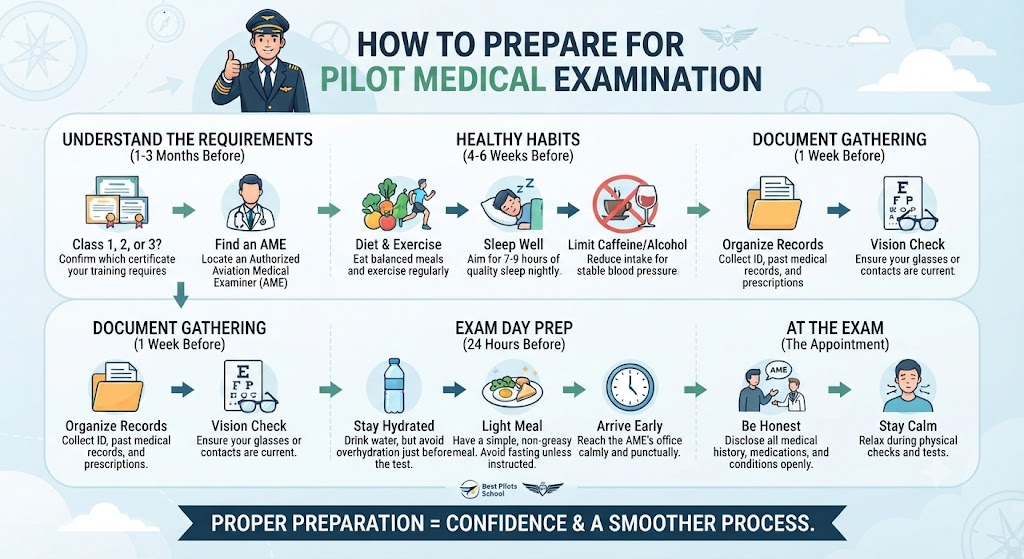
How to Prepare Before Your Pilot Medical Examination
Good preparation can reduce stress and improve your chances of a smooth exam experience.
Get Proper Sleep
Sleep well the night before your medical exam. Lack of sleep can affect blood pressure, mood, focus, and overall performance.
Try to avoid late-night screen time, heavy meals, and unnecessary stress before the exam.
Stay Hydrated
Drink enough water before your appointment. Proper hydration supports normal body function and may help with urine testing if required.
Avoid overdrinking water right before the exam, but do not arrive dehydrated.
Eat a Balanced Meal
Have a light and healthy meal before the exam unless you have been specifically told to fast. Avoid very oily, salty, or heavy food before the test.
If fasting is required for blood tests, follow the instructions given by the medical center.
Avoid Alcohol
Avoid alcohol before your medical examination. Alcohol can affect sleep, hydration, blood pressure, and test results.
Aviation careers require responsible lifestyle habits, and medical exams are a good time to begin showing that discipline.
Limit Caffeine
Too much caffeine may raise your heart rate or blood pressure temporarily. If you are sensitive to caffeine, avoid excessive tea, coffee, or energy drinks before the exam.
Carry Required Documents
Keep your documents ready in advance. These may include:
- Government ID proof
- Passport-size photographs if required
- Previous medical records
- Previous aviation medical certificate if applicable
- Prescription details
- Glasses or contact lens prescription
- Reports for any past medical condition
- Application forms required by the authority
Incomplete documents are one of the most common reasons for delays.
Bring Glasses or Contact Lenses
If you use glasses or contact lenses, carry them with you. Also bring your latest eye prescription if available.
Do not try to attend the exam without your corrective lenses if you normally need them.
Wear Comfortable Clothing
Wear simple and comfortable clothing so the physical examination can be completed easily. Avoid complicated accessories or clothing that may make medical checks difficult.
Be Honest About Medical History
Honesty is very important. If you have a medical condition, medication history, surgery, or past illness, explain it clearly.
Many conditions do not automatically disqualify a candidate. Sometimes the examiner may only need additional reports or specialist opinion.
Arrive Early
Reach the medical center before your appointment time. Arriving late can increase stress and may affect your blood pressure or overall confidence.
Common Reasons Candidates Face Medical Delays
Not every medical delay means rejection. In many cases, a delay simply means the authority needs additional documents, reports, or clarification.
Common reasons include:
- Missing documents
- Unclear medical history
- High blood pressure during the exam
- Poor vision without correction
- Temporary illness
- Medication concerns
- Incomplete previous medical records
- Need for specialist evaluation
- Abnormal test result requiring review
If your medical is delayed, stay calm and follow the instructions given by the medical examiner.
How to Maintain Good Health for a Pilot Career
Passing the medical exam is not the final step. Pilots must maintain health throughout their career.
Exercise Regularly
Regular exercise improves stamina, heart health, posture, and stress control. You do not need extreme workouts, but consistent fitness is important.
Walking, running, swimming, cycling, stretching, and strength training can support long-term health.
Eat a Healthy Diet
A balanced diet helps maintain energy, focus, and physical wellness. Include fruits, vegetables, whole grains, lean proteins, and enough water.
Avoid depending too much on processed food, sugary drinks, and irregular eating habits.
Protect Your Eyes
Vision is essential for pilots. Take care of your eyes by reducing unnecessary screen strain, using proper lighting, and getting regular eye checkups.
If you wear glasses, keep your prescription updated.
Protect Your Hearing
Pilots are exposed to aircraft noise and cockpit communication systems. Use proper hearing protection during training or airport operations when required.
Manage Stress
Pilot training can be demanding. Learn healthy stress management habits such as deep breathing, planning, exercise, journaling, or speaking with mentors.
Mental calmness is an important part of aviation professionalism.
Sleep Properly
Good sleep improves memory, decision-making, reaction time, and emotional balance. Avoid developing poor sleep habits during training.
Avoid Tobacco and Substance Misuse
Tobacco, drugs, and unsafe substance use can harm health and create serious aviation medical concerns. A pilot career requires discipline and responsibility.
Tips to Reduce Stress Before the Medical Exam
Many students feel nervous before their first aviation medical examination. This is normal.
To reduce stress:
- Understand the process before attending
- Prepare documents early
- Sleep well
- Avoid last-minute panic
- Reach the center early
- Ask questions politely
- Stay honest with the examiner
- Focus on your long-term goal
Remember, the medical examination is designed to support safety, not to discourage serious pilot aspirants.
How Best Pilots School Can Help You Prepare
Best Pilots School can help aspiring pilots understand the aviation journey with practical guidance, career awareness, training information, and beginner-friendly educational resources.
Students can use BestPilotsSchool.com to learn more about:
- Pilot training steps
- Aviation career planning
- Flight school preparation
- Pilot license requirements
- Student pilot guidance
- Aviation skills development
- Career readiness tips
A strong pilot career begins with the right information, disciplined preparation, and a clear understanding of aviation requirements.
Frequently Asked Questions
1. How long does a pilot medical examination take?
The time required depends on the type of medical certificate, medical center, and tests involved. A basic examination may take a few hours, while a detailed medical assessment may take longer if additional tests are required.
2. What happens if I fail the pilot medical exam?
Failing or not clearing the exam immediately does not always mean your pilot dream is over. Sometimes the examiner may ask for additional reports, treatment, or specialist review. You should follow official guidance and correct any manageable health issue.
3. Can I wear glasses and still become a pilot?
Yes, many pilots wear glasses or contact lenses. What matters is whether your corrected vision meets the required aviation medical standard. Always carry your glasses, lenses, and prescription during the exam.
4. How often do pilots renew medical certificates?
Renewal frequency depends on the aviation authority, pilot license type, certificate class, and sometimes the pilot’s age. Always check the latest renewal rules from the official aviation authority in your country.
5. Can medical conditions disqualify me from becoming a pilot?
Some conditions may require review, treatment, or special approval. Not every medical condition leads to disqualification. The final decision depends on the condition, severity, treatment, and official aviation medical standards.
6. What documents should I bring for the medical exam?
You should carry valid ID proof, previous medical records, prescriptions, glasses or contact lens details, old medical certificates if applicable, and any forms required by the aviation authority or medical center.
7. Should I fast before the pilot medical examination?
Do not fast unless the medical center or examiner specifically instructs you to do so. Some blood tests may require fasting, but this depends on the type of examination and local requirements.
8. Can I take regular medication before the exam?
If you take regular medication, do not stop it without medical advice. Inform the examiner about all medicines you take and carry prescriptions or doctor reports if available.
9. What happens after passing the medical examination?
After passing, you may receive the required medical certificate or approval based on the process followed by the aviation authority. This certificate allows you to continue with the relevant pilot training or licensing step.
10. How should I prepare the night before the exam?
Sleep well, avoid alcohol, keep documents ready, eat properly, avoid unnecessary stress, and plan your travel to the medical center. A calm and organized approach helps you perform better during the exam.
Conclusion
A pilot medical examination is an important step in your aviation journey. It ensures that you are physically and mentally prepared for the responsibility of flying. With the right preparation, honest communication, healthy habits, and proper documentation, the process becomes much easier to handle.
For aspiring pilots, good health is not only about passing one exam. It is the foundation of a safe, confident, and successful aviation career. Start taking care of your body and mind early, stay disciplined, and keep learning about pilot training requirements. Best Pilots School can help you explore the right aviation guidance and prepare for your future with confidence.
