
Introduction
The aviation industry has always attracted people who dream of flying, exploring new technologies, and building exciting professional careers. From becoming a commercial pilot to working in airport management, aircraft maintenance, aviation safety, and airline operations, the aviation sector offers multiple career opportunities for beginners.
However, starting a career in aviation requires proper planning, awareness, and a clear understanding of available pathways. Many students and aspiring aviation professionals are unsure about which career option to choose, what qualifications are required, how training works, and what skills are needed to succeed.
An aviation career roadmap helps beginners understand every important step, from selecting the right career path and completing education requirements to gaining practical experience and developing industry-ready skills.
Whether your goal is to become a pilot, work with aircraft, manage airport operations, or explore aviation technology, following a structured roadmap can help you make informed career decisions.
What is an Aviation Career?
An aviation career refers to professional opportunities related to aircraft, airlines, airports, aviation technology, and air transportation systems. The aviation industry is not limited to pilots only; it includes various technical, operational, and management roles.
Some major aviation career fields include:
- Commercial pilot careers
- Aircraft maintenance engineering
- Airport operations
- Aviation management
- Air traffic control
- Cabin crew services
- Aviation safety and security
- Aerospace technology
- Drone and unmanned aircraft operations
Each career path has different education requirements, training programs, and skill expectations. Beginners should understand these options before selecting a specific aviation field.
Why Choose Aviation as a Career?
The aviation industry provides opportunities for individuals who are interested in technology, travel, engineering, communication, and leadership. It is a professional field where continuous learning and skill development play an important role.
Some reasons beginners consider aviation careers include:
Global Career Opportunities
Aviation connects countries and industries around the world. Professionals with proper training and skills can explore opportunities with airlines, airports, aviation companies, and aviation service providers.
Diverse Career Options
Aviation offers careers beyond flying aircraft. Students can choose technical, operational, administrative, or customer-focused roles depending on their interests.
Professional Growth
The aviation industry requires skilled professionals, and experienced individuals can progress into leadership and specialized roles.
Technology-Focused Industry
Modern aviation continues to adopt advanced technologies, including aircraft automation, digital systems, artificial intelligence, and sustainable aviation solutions.
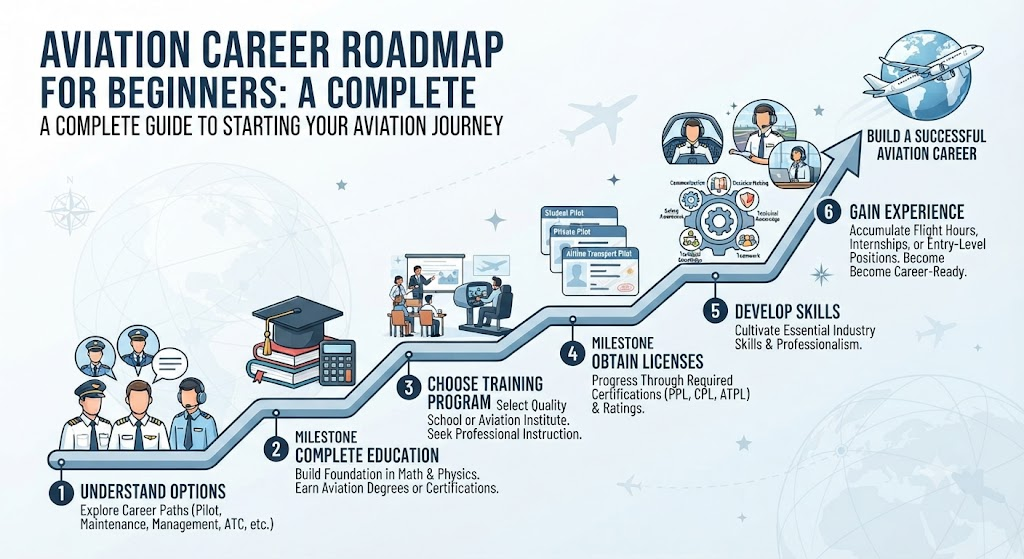
Aviation Career Roadmap for Beginners
Starting an aviation career requires a step-by-step approach. The following roadmap helps beginners understand the journey from interest to professional development.
Step 1: Understand Different Aviation Career Options
The first step is identifying which aviation field matches your interests, skills, and career goals.
Beginners should explore questions such as:
- Do I want to fly aircraft?
- Am I interested in aircraft technology?
- Do I enjoy management and coordination roles?
- Do I prefer customer service-related aviation jobs?
- Am I interested in aviation safety and operations?
Understanding your interests helps you choose the right career direction.
For example:
- Students interested in flying may consider pilot training.
- Students interested in engineering may explore aircraft maintenance.
- Students interested in business operations may choose aviation management.
Step 2: Complete Educational Requirements
Education is the foundation of an aviation career. Different aviation roles have different academic requirements.
For pilot careers, students generally need a strong foundation in subjects such as:
- Mathematics
- Physics
- Science-related subjects
Other aviation careers may require:
- Aviation management degrees
- Engineering qualifications
- Technical certifications
- Professional aviation courses
Building strong academic knowledge helps beginners understand aviation concepts and technical requirements.
Step 3: Choose the Right Aviation Training Program
Selecting the right training program is one of the most important decisions for beginners.
A good aviation training program should provide:
- Professional instructors
- Practical learning opportunities
- Safety-focused training
- Modern training facilities
- Industry-relevant curriculum
For aspiring pilots, training usually includes:
- Ground school education
- Aircraft systems knowledge
- Flight simulation practice
- Actual flight training
- Aviation regulations and safety procedures
Choosing quality training helps students build confidence and professional skills.
Step 4: Obtain Required Aviation Certifications and Licenses
Aviation careers often require specific certifications or licenses.
For pilot careers, common stages include:
Student Pilot License
This is usually the starting point for individuals beginning flight training.
Private Pilot License
This allows individuals to fly aircraft privately after completing required training and examinations.
Commercial Pilot License
This is required for individuals who want to work professionally as pilots.
Airline Transport Pilot License
This represents an advanced qualification for airline-level pilot careers.
Other aviation fields may require specialized certifications based on the job role.
Step 5: Develop Essential Aviation Skills
Technical knowledge alone is not enough for aviation professionals. Successful aviation careers require a combination of technical, communication, and personal skills.
Important aviation skills include:
Communication Skills
Aviation professionals must communicate clearly with teams, passengers, instructors, and other industry professionals.
Decision-Making Skills
Pilots and aviation professionals often need to make quick and responsible decisions.
Safety Awareness
Safety is one of the most important aspects of aviation. Professionals must understand procedures, regulations, and risk management.
Technical Knowledge
Understanding aircraft systems, aviation technology, and operational procedures is essential.
Teamwork
Aviation depends on coordination between pilots, engineers, airport teams, and support staff.
Step 6: Gain Practical Experience
Practical exposure helps beginners become more confident and career-ready.
Ways to gain aviation experience include:
- Flight training hours
- Simulator practice
- Aviation internships
- Airport training programs
- Industry projects
- Entry-level aviation roles
Experience helps students understand real-world aviation operations.
Different Aviation Career Paths for Beginners
Commercial Pilot Career
A commercial pilot operates aircraft professionally for airlines, charter companies, and aviation organizations.
Responsibilities include:
- Operating aircraft safely
- Following aviation procedures
- Managing flight operations
- Communicating with air traffic control
A pilot career requires dedication, technical knowledge, physical fitness, and continuous learning.
Aircraft Maintenance Career
Aircraft maintenance professionals ensure aircraft remain safe and operational.
Their responsibilities include:
- Aircraft inspection
- Maintenance procedures
- Troubleshooting technical issues
- Ensuring safety compliance
This career is suitable for individuals interested in engineering and aircraft technology.
Aviation Management Career
Aviation management focuses on managing aviation operations and business activities.
Career areas include:
- Airport management
- Airline operations
- Aviation administration
- Passenger services
- Aviation business planning
This career path combines aviation knowledge with management skills.
Cabin Crew Career
Cabin crew professionals are responsible for passenger safety and service during flights.
Important skills include:
- Communication
- Customer service
- Problem-solving
- Emergency response knowledge
Cabin crew careers provide opportunities to work with airlines and interact with passengers globally.
Air Traffic Control Career
Air traffic controllers help manage aircraft movement and maintain safe air traffic operations.
Their responsibilities include:
- Monitoring aircraft movement
- Communicating with pilots
- Managing flight coordination
- Supporting aviation safety
This role requires concentration, quick decision-making, and strong communication skills.
Skills Required for a Successful Aviation Career
Aviation professionals should continuously improve their skills.
Key skills include:
- Strong communication abilities
- Technical understanding
- Discipline and professionalism
- Problem-solving ability
- Leadership skills
- Adaptability
- Safety-focused thinking
- Time management
Developing these skills improves career growth opportunities.
Common Mistakes Beginners Should Avoid
Many beginners make mistakes while planning their aviation careers.
Choosing a Career Without Research
Understanding different aviation roles helps avoid choosing a career that does not match personal interests.
Ignoring Training Quality
Selecting the right training institute is important because aviation requires professional and safety-focused education.
Poor Financial Planning
Aviation training can require significant investment. Beginners should carefully plan their education and training expenses.
Not Developing Additional Skills
Technical qualifications should be combined with communication, teamwork, and professional skills.
Having Unrealistic Expectations
Aviation careers require patience, dedication, and continuous improvement.
How to Choose the Right Pilot School or Aviation Institute
Choosing the right aviation training institute can influence your learning experience and career preparation.
Consider the following factors:
Training Quality
Check whether the institute provides structured courses and professional instruction.
Instructor Experience
Experienced instructors can provide better guidance and practical knowledge.
Training Facilities
Look for proper classrooms, simulation facilities, and practical learning opportunities.
Safety Standards
Safety should always be the highest priority in aviation training.
Student Support
Good institutes provide guidance throughout training and career preparation.
Aviation Career Challenges and How to Prepare
Like every professional field, aviation has challenges that beginners should understand.
Continuous Learning
Aviation professionals must regularly update their knowledge and skills.
Competitive Industry
Building a successful aviation career requires dedication and strong preparation.
Medical Requirements
Some aviation careers, especially pilot roles, require meeting specific health standards.
Training Commitment
Aviation training requires discipline, time management, and consistent effort.
Financial Planning
Proper planning helps students manage education and training costs effectively.
Future Opportunities in Aviation
The aviation industry continues to evolve with new technologies and changing travel requirements.
Future opportunities may grow in areas such as:
Sustainable Aviation
The industry is focusing on cleaner technologies and environmentally responsible aviation solutions.
Drone Technology
Unmanned aircraft systems are creating new career opportunities in logistics, photography, agriculture, and security.
Aviation Technology
Digital systems, automation, and advanced aircraft technologies are creating demand for skilled professionals.
Aerospace Innovation
Research and development in aviation and aerospace continue to create specialized career opportunities.
Frequently Asked Questions
1. How can beginners start a career in aviation?
Beginners should first understand different aviation career options, complete the required education, choose suitable training programs, and develop professional skills.
2. What education is required for becoming a pilot?
Pilot education requirements depend on regulations and licensing pathways. Many pilot training programs require a strong foundation in mathematics and science.
3. Is aviation a good career choice?
Aviation can be a rewarding career for individuals interested in aircraft, technology, travel, and professional growth.
4. How long does pilot training take?
The duration of pilot training depends on the type of license, training schedule, and individual progress.
5. What skills are required for aviation jobs?
Important skills include communication, technical knowledge, teamwork, decision-making, and safety awareness.
6. Which aviation career is best for beginners?
The best aviation career depends on individual interests, educational background, skills, and long-term goals.
7. How do I choose a flight school?
Beginners should evaluate training quality, instructors, facilities, safety standards, and student support before selecting a flight school.
8. Can non-science students join aviation careers?
Yes, some aviation careers are available for students from different educational backgrounds, depending on the specific role requirements.
9. What are the different aviation career options?
Aviation offers careers in piloting, maintenance, airport operations, management, cabin crew services, and aviation technology.
10. How can I prepare for an aviation career?
Students should focus on education, professional training, skill development, and gaining practical aviation knowledge.
Conclusion
Starting an aviation career requires proper planning, dedication, and a clear understanding of available opportunities. Beginners should explore different aviation fields, identify their interests, choose suitable training programs, and develop the skills required for long-term success.
The aviation industry offers diverse career paths beyond becoming a pilot. With the right education, practical experience, and commitment to continuous learning, aspiring aviation professionals can build rewarding careers in this exciting industry.
A well-planned aviation career roadmap helps beginners take confident steps toward achieving their professional goals and becoming part of the growing aviation world.
