
Introduction
Becoming a successful pilot requires much more than learning how to operate an aircraft. Aviation is a highly responsible profession where pilots must combine technical knowledge, strong decision-making abilities, communication skills, discipline, and emotional control to ensure safe and efficient flight operations.
Many aspiring pilots focus mainly on flight hours and aircraft handling skills, but professional aviation demands a wider range of abilities. A pilot must be prepared to manage changing weather conditions, communicate effectively with air traffic controllers, work with a flight crew, handle unexpected situations, and make accurate decisions under pressure.
Developing the right skills from the beginning helps future pilots build confidence, improve performance during flight training, and prepare for long-term aviation careers. Whether someone wants to become a commercial airline pilot, private pilot, or aviation professional, strong personal and technical skills are essential for success.
This guide explains the most important skills required to become a successful pilot and how aspiring aviators can develop these abilities throughout their training journey.
Real-World Importance of Pilot Skills
Aviation involves complex situations where pilots must continuously analyze information and make decisions. Strong pilot skills help ensure safety, efficiency, and smooth operations in different flight environments.
Some real-world situations where pilot skills play a critical role include:
- Handling challenging weather conditions: Pilots must understand weather changes, turbulence, visibility issues, and wind conditions to make safe flight decisions.
- Managing emergency situations: Technical problems, medical emergencies, or unexpected events require pilots to stay calm and follow proper procedures.
- Communicating with air traffic control: Clear communication helps pilots receive instructions, maintain proper flight paths, and avoid misunderstandings.
- Making quick decisions: Pilots often need to evaluate situations quickly and select the safest possible action.
- Maintaining passenger safety: Every flight decision focuses on protecting passengers, crew members, and aircraft operations.
- Working with flight teams: Modern aviation depends on teamwork between pilots, cabin crew, engineers, and ground operations teams.
These situations show why successful pilots need a combination of technical knowledge and personal skills.
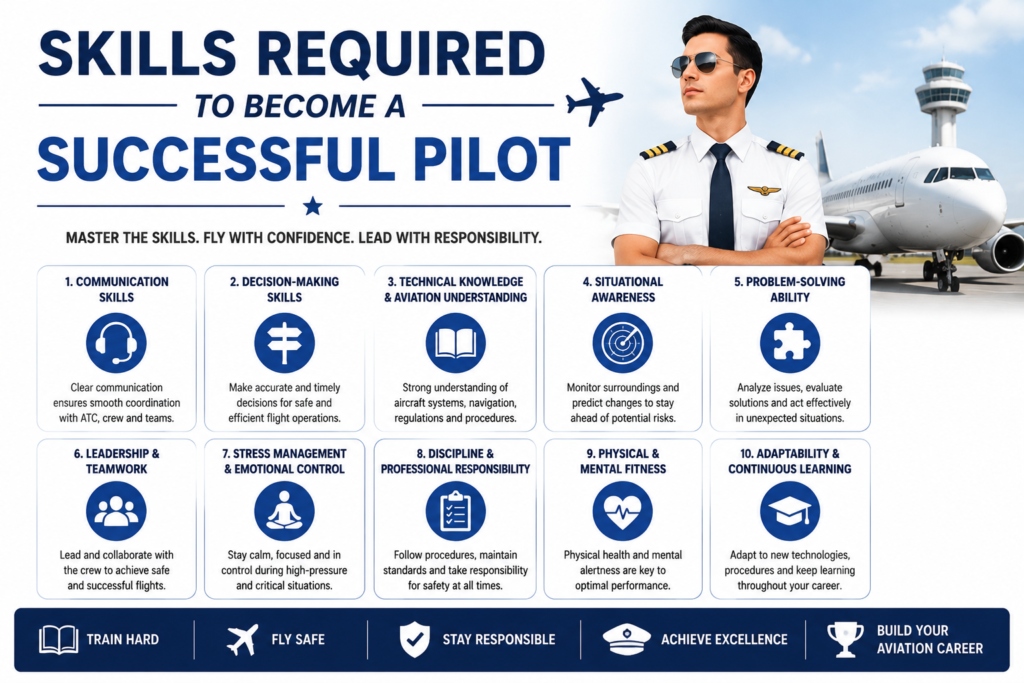
Essential Skills Required to Become a Successful Pilot
1. Strong Communication Skills
Communication is one of the most important skills for every pilot. Pilots regularly interact with air traffic controllers, co-pilots, cabin crew, maintenance teams, and passengers.
Effective communication helps ensure that instructions are understood correctly and that flight operations run smoothly.
Important communication abilities include:
- Speaking clearly and confidently
- Understanding aviation terminology
- Listening carefully to instructions
- Sharing important information with crew members
- Communicating during emergencies
A pilot with strong communication skills can coordinate better with the entire aviation team and reduce the possibility of errors.
2. Decision-Making Skills
Pilots are responsible for making important decisions before and during every flight. These decisions can involve route selection, weather conditions, fuel management, aircraft performance, and emergency responses.
Successful pilots develop the ability to:
- Analyze available information
- Evaluate risks
- Consider multiple solutions
- Make safe decisions quickly
- Remain confident under pressure
Good decision-making comes from proper training, experience, and understanding of aviation procedures.
3. Technical Knowledge and Aviation Understanding
A strong technical foundation is essential for every pilot. Pilots must understand how aircraft systems work and how different factors affect flight performance.
Technical knowledge includes:
- Aircraft controls and systems
- Navigation principles
- Aviation regulations
- Flight planning
- Weather interpretation
- Aircraft performance calculations
Continuous learning is important because aviation technology and procedures continue to evolve. Professional pilots regularly update their knowledge to maintain safety standards.
4. Situational Awareness
Situational awareness means understanding what is happening around the aircraft and predicting what may happen next.
A pilot must continuously monitor:
- Aircraft instruments
- Weather conditions
- Air traffic
- Fuel levels
- Communication updates
- Flight environment
Strong situational awareness helps pilots identify potential problems early and take appropriate action before situations become dangerous.
For example, a pilot who notices changing weather conditions early can adjust flight plans and maintain safer operations.
5. Problem-Solving Ability
Unexpected situations can occur during any flight. Pilots need strong problem-solving skills to handle challenges effectively.
Problem-solving abilities help pilots:
- Identify the cause of an issue
- Follow proper procedures
- Evaluate possible solutions
- Work with the flight crew
- Maintain control during difficult situations
Training exercises, simulator sessions, and real flight experience help pilots improve their ability to solve problems.
6. Leadership and Teamwork Skills
A pilot is not only responsible for flying the aircraft but also for leading and coordinating the flight team.
Leadership skills help pilots:
- Create effective teamwork
- Communicate responsibilities clearly
- Support crew members
- Maintain professional decision-making
Modern aviation follows a team-based approach where pilots, cabin crew, and ground staff work together to achieve safe operations.
A successful pilot understands that good leadership includes listening, cooperation, and respect for others.
7. Stress Management and Emotional Control
Flying an aircraft requires pilots to remain calm and focused, especially during challenging situations.
Stress management helps pilots:
- Maintain concentration
- Avoid panic during emergencies
- Manage workload effectively
- Think logically under pressure
Professional pilots develop emotional control through training, experience, and preparation.
A calm mindset allows pilots to make better decisions and handle unexpected situations safely.
8. Discipline and Professional Responsibility
Discipline is one of the strongest qualities of successful pilots. Aviation requires strict adherence to safety procedures and operational standards.
Professional discipline includes:
- Following aviation regulations
- Completing proper pre-flight checks
- Maintaining accurate records
- Arriving prepared for flights
- Continuously improving skills
Pilots must understand that small mistakes can have serious consequences, making responsibility and discipline essential qualities.
9. Physical and Mental Fitness
Pilots need strong physical and mental fitness because flying requires concentration, alertness, and endurance.
Important aspects of pilot fitness include:
- Maintaining good health
- Managing fatigue
- Developing mental focus
- Maintaining proper sleep habits
- Staying physically active
A healthy lifestyle helps pilots maintain performance during long flights and demanding schedules.
10. Adaptability and Continuous Learning
The aviation industry constantly changes with new aircraft technologies, regulations, and operational methods.
Successful pilots must be willing to learn throughout their careers.
Adaptability helps pilots:
- Understand new aircraft systems
- Adjust to changing procedures
- Learn advanced technologies
- Improve professional abilities
A pilot’s learning journey does not end after obtaining a license. Continuous development is part of aviation professionalism.
How Flight Training Helps Develop Pilot Skills
Flight training plays an important role in transforming students into professional pilots. A structured training program helps candidates develop both technical and personal abilities.
Classroom Training
Ground school provides knowledge about:
- Aviation principles
- Aircraft systems
- Weather
- Navigation
- Safety procedures
- Aviation regulations
Simulator Training
Flight simulators allow students to practice different situations in a controlled environment.
They help develop:
- Emergency response skills
- Decision-making abilities
- Aircraft operation knowledge
- Confidence
Practical Flight Experience
Actual flight training helps students apply their knowledge and improve:
- Aircraft handling
- Communication
- Situational awareness
- Pilot judgment
Instructor Guidance
Experienced instructors provide feedback and help students identify areas for improvement.
Common Mistakes Future Pilots Should Avoid
Many aspiring pilots focus only on passing exams or completing flight hours. However, developing overall skills is equally important.
Common mistakes include:
Ignoring Communication Skills
Poor communication can affect teamwork and flight safety.
Focusing Only on Technical Knowledge
Aircraft knowledge is important, but pilots also need leadership, decision-making, and problem-solving skills.
Poor Time Management
Professional pilots must manage training schedules, preparation, and responsibilities effectively.
Lack of Preparation
Successful pilots always prepare before flights and understand possible challenges.
Ignoring Physical Fitness
Maintaining health and mental alertness is essential for aviation performance.
How to Improve Pilot Skills Before Flight Training
Future pilots can start developing important skills even before entering a flight school.
Useful steps include:
- Improve English communication abilities
- Learn basic aviation concepts
- Read aviation-related materials
- Practice problem-solving activities
- Develop leadership qualities
- Improve concentration and focus
- Maintain a healthy lifestyle
- Follow aviation news and industry developments
Early preparation helps students build confidence before beginning professional flight training.
Career Benefits of Developing Strong Pilot Skills
Strong pilot skills provide several advantages throughout an aviation career.
Benefits include:
- Better performance during flight training
- Increased confidence in aviation operations
- Improved decision-making abilities
- Greater professional growth opportunities
- Enhanced safety awareness
- Better teamwork with aviation professionals
Airlines and aviation organizations value pilots who demonstrate both technical competence and professional qualities.
Frequently Asked Questions
1. What skills are needed to become a successful pilot?
Successful pilots need communication skills, decision-making ability, technical knowledge, leadership qualities, situational awareness, and discipline. These skills help pilots manage normal operations and unexpected situations safely.
2. Why are communication skills important for pilots?
Communication allows pilots to coordinate with air traffic controllers, crew members, and ground teams. Clear communication helps prevent misunderstandings and improves flight safety.
3. Do pilots need strong decision-making skills?
Yes, pilots regularly make important decisions related to weather, aircraft performance, and safety. Good decision-making helps pilots choose the safest actions during flights.
4. How can students improve their pilot skills?
Students can improve pilot skills through flight training, simulator practice, aviation studies, communication improvement, and continuous learning.
5. Is technical knowledge enough to become a pilot?
Technical knowledge is important, but successful pilots also need teamwork, leadership, communication, and problem-solving abilities.
6. Why is teamwork important in aviation?
Aviation operations involve many professionals working together. Good teamwork helps pilots coordinate effectively with crew members and aviation teams.
7. How does flight training improve pilot abilities?
Flight training develops aircraft handling skills, decision-making ability, emergency response, and confidence through practical experience.
8. What personal qualities make a good pilot?
Professionalism, discipline, patience, responsibility, confidence, adaptability, and emotional control are important qualities of successful pilots.
9. How important is physical fitness for pilots?
Physical and mental fitness help pilots maintain concentration, manage fatigue, and perform effectively during flights.
10. Can pilot skills be developed through practice?
Yes, pilot skills improve through consistent training, experience, feedback from instructors, and continuous professional development.
Conclusion
Becoming a successful pilot requires a combination of technical expertise, personal qualities, and professional discipline. Flying skills alone are not enough; pilots must also develop communication, leadership, decision-making, problem-solving, and adaptability skills.
Aspiring pilots who focus on continuous improvement and skill development can build stronger foundations for their aviation careers. The journey to becoming a professional pilot requires dedication, practice, and a commitment to safety and learning.
By developing these essential skills, future pilots can prepare themselves for the responsibilities and challenges of modern aviation.
