
Introduction
Flight training can be exciting, but it can also create pressure for student pilots. Learning new procedures, managing cockpit tasks, responding to instructor feedback, and preparing for flight tests can feel demanding. Some students become nervous when they make mistakes or struggle with a particular lesson. Learning how to manage this pressure can help students stay focused, learn from their experiences, and gradually build confidence in the cockpit.
Understanding Pressure During Flight Training
Pressure during flight training can come from several different sources. A student may feel nervous before a first solo flight, worry about making mistakes in front of an instructor, or feel anxious about an upcoming check ride.
Some students also put pressure on themselves to progress quickly. They may compare their flying hours, skills, or achievements with classmates. This can create unnecessary stress because every student learns at a different pace.
Common sources of pressure include:
- Fear of making mistakes during a flight
- Instructor expectations and performance feedback
- First solo flight preparation
- Flight tests and check rides
- Written examinations and technical subjects
- Managing training schedules
- Concerns about training expenses
- Difficult weather conditions
- Communication with air traffic control
- Comparing personal progress with other students
- Handling unfamiliar situations in the aircraft
Understanding where the pressure comes from is the first step toward managing it effectively.
Why Flight Training Can Feel Stressful
Flying requires students to manage several responsibilities at the same time. A beginner may need to control the aircraft, monitor instruments, communicate with the instructor or air traffic control, maintain awareness of the surroundings, and follow established procedures.
This workload can feel overwhelming during the early stages of training. As students gain experience, many tasks become more familiar and require less conscious effort.
Flight training also involves evaluation. Students receive continuous feedback from instructors and eventually complete tests or check rides. While evaluation is an important part of pilot training, the desire to perform well can sometimes increase anxiety.
Another factor is the possibility of making mistakes. Students may believe that a mistake means they are not suitable for flying. In reality, training exists to help students identify weaknesses, correct them, and develop safer habits under appropriate supervision.
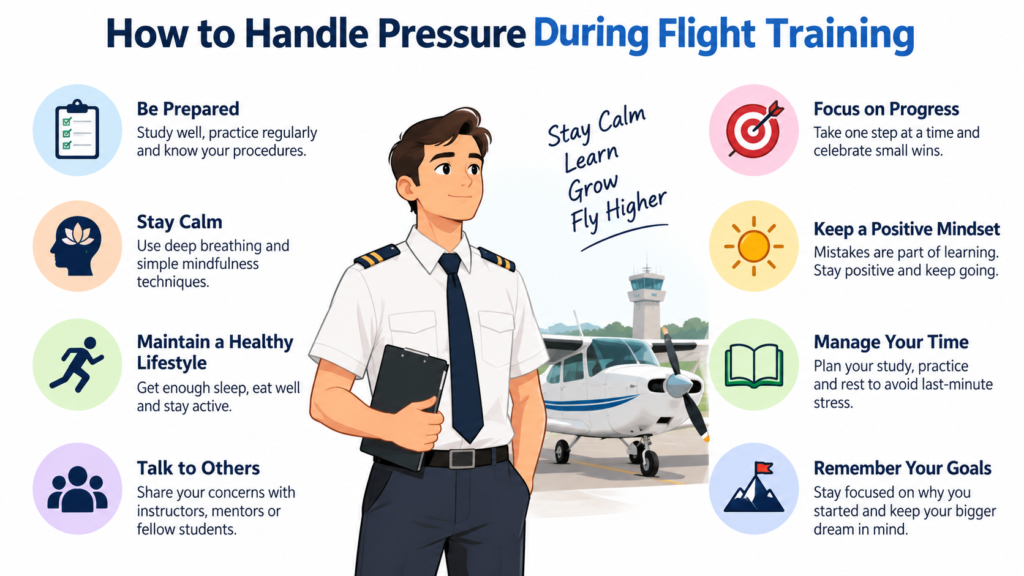
How to Handle Pressure During Flight Training
Prepare Before Every Flight
Preparation can reduce uncertainty before entering the aircraft. Review the lesson objectives, relevant procedures, aircraft information, and topics covered during previous training.
Arrive with the required equipment and enough time to prepare without rushing. A calm pre-flight routine can make it easier to approach the lesson with a clear mind.
Preparation does not mean trying to memorize everything at the last minute. Consistent preparation over time is generally more useful than intensive studying immediately before a flight.
Focus on One Task at a Time
Students can become overwhelmed when they think about everything that could go wrong at once. Instead, concentrate on the task currently requiring attention.
For example, if you are practicing a particular maneuver, focus on the relevant procedure and instructor instructions rather than worrying about the entire training session.
Breaking complex activities into smaller steps can make the workload feel more manageable.
Follow Procedures and Checklists
Checklists provide an organized way to complete important aircraft-related tasks. Under pressure, students may be tempted to rush because they want to demonstrate confidence or finish a procedure quickly.
A disciplined approach is more useful than rushing. Follow the applicable procedures and use checklists as trained. If you become unsure about a step, communicate with your instructor rather than guessing.
Ask Questions When Something Is Unclear
Students sometimes remain silent because they worry that asking questions will make them appear unprepared.
However, asking a relevant question can be an important part of learning. If you do not understand a procedure, maneuver, instruction, or piece of technical information, ask your instructor for clarification.
Good communication helps prevent misunderstandings and gives instructors an opportunity to explain difficult concepts from another perspective.
Learn From Mistakes
Mistakes can feel uncomfortable, particularly when they happen during a training flight. The important question is what you learn from the experience.
After a mistake, try to understand:
- What happened?
- Why did it happen?
- How did you respond?
- What procedure or knowledge could help next time?
- What can you practice before the next flight?
This approach turns an uncomfortable experience into a learning opportunity.
Maintain Healthy Sleep and Daily Routines
Fatigue can affect concentration, memory, reaction time, and decision-making. Students should take rest seriously, particularly before important training flights.
A consistent sleep schedule, adequate meals, hydration, and reasonable daily routines can support concentration during training.
Students should also avoid treating exhaustion as a test of commitment. Being prepared for a flight includes being physically and mentally ready to participate safely.
Practice Simple Relaxation Techniques
Some students experience nervousness before flights even when they have prepared properly. Simple techniques can help them settle down before training.
Slow, controlled breathing can help create a short pause between nervous thoughts and the next action. Students can also take a moment to organize their thoughts before starting a task.
The objective is not to eliminate every feeling of nervousness. Instead, the goal is to remain sufficiently calm and focused to follow training and procedures.
Stop Comparing Your Progress With Others
Two students can receive similar training while progressing at different rates.
One student may become comfortable with a maneuver quickly, while another may require additional practice. This does not automatically indicate that one student will become a better pilot.
Instead of asking whether you are progressing faster than someone else, focus on whether you understand your current lesson, whether you are improving, and what you need to practice next.
Build Confidence Through Consistent Practice
Confidence usually develops through repeated exposure, preparation, and successful completion of training tasks.
A student does not need to feel completely confident before learning a new skill. Confidence often grows after the student practices the skill, receives feedback, corrects mistakes, and tries again.
Keeping track of areas that have improved can also help students recognize progress that they might otherwise overlook.
Discuss Recurring Concerns With Your Instructor
If the same concern continues to create pressure, discuss it with your flight instructor.
For example, a student who repeatedly struggles with workload management can ask for additional explanation or practice. An instructor may also identify whether the issue involves knowledge, technique, preparation, communication, or simply a lack of experience.
Open communication allows training to address the actual source of the problem rather than allowing anxiety to grow.
Managing Pressure Before a Flight
The period before a flight can influence how a student approaches the lesson.
A useful pre-flight routine may include reviewing the lesson objectives, checking required materials, understanding the expected exercises, and arriving with enough time for preparation.
Avoid filling the final few minutes with excessive last-minute studying. If you already know the lesson objectives, use the remaining time to organize your equipment and mentally prepare for the flight.
It can also help to identify one or two specific goals for the session. For example, the goal might be improving a particular maneuver or becoming more comfortable with cockpit communication.
Clear goals can make a training flight feel more structured.
Staying Calm During Difficult Training Flights
Unexpected situations can increase pressure quickly. A student may make a mistake, forget a step, become distracted, or struggle with a maneuver.
The first response should not be panic. Follow the procedures you have been taught and listen carefully to your instructor’s guidance.
If workload begins to increase, avoid allowing one mistake to consume all of your attention. A previous error cannot be changed during the current flight. What matters is maintaining awareness of the aircraft and responding appropriately to the situation.
Students should also communicate when they are confused or overloaded. Clear communication with an instructor is particularly important during supervised training.
Building Confidence Through Preparation
Confidence and preparation are closely connected.
When students understand the purpose of a procedure and have practiced it repeatedly, they generally have a stronger foundation for handling the task. Preparation also reduces the amount of information that feels unfamiliar.
However, preparation should remain realistic. Trying to know every possible situation before beginning practical training is impossible. Aviation training gradually introduces students to increasingly complex tasks.
The objective is to develop knowledge, practical skills, judgment, and the ability to apply training under appropriate supervision.
Common Mistakes Students Make Under Pressure
Rushing Procedures
Nervous students may try to complete procedures quickly because they believe speed demonstrates competence. Rushing can instead increase the chance of missing important steps.
Focusing Too Much on One Mistake
A student may continue thinking about an earlier error while trying to complete the next task. This can reduce attention to what is happening in the present moment.
Avoiding Questions
Some students remain silent because they fear appearing inexperienced. This can make uncertainty worse.
Ignoring Checklists
Pressure can cause students to rely entirely on memory. Checklists should be used according to the aircraft and training procedures rather than being ignored because a student feels rushed.
Comparing Training Progress
Constant comparison with other students can create unnecessary anxiety and distract from individual learning goals.
Expecting Immediate Perfection
Flight training involves learning new skills. Expecting perfect performance from the beginning can create unrealistic pressure and make normal learning difficulties feel like failures.
Important Considerations
Every student pilot has a different learning journey. Previous experience, learning style, confidence level, training environment, and familiarity with aviation can all affect how quickly someone becomes comfortable with different tasks.
Instructor feedback should be treated as part of the learning process. A correction does not necessarily represent failure. It provides information that can help improve technique and decision-making.
Students should also understand the difference between normal training nervousness and persistent difficulty that interferes with learning. If pressure repeatedly affects concentration, sleep, preparation, or participation in training, discussing the situation with an appropriate instructor or qualified professional may be helpful.
Most importantly, students should not hide uncertainty simply because they want to appear confident. Good aviation habits include knowing when to ask questions, communicate concerns, and seek appropriate guidance.
Frequently Asked Questions
1. Is it normal to feel nervous during flight training?
Yes. New responsibilities, unfamiliar procedures, instructor feedback, and flight evaluations can make students nervous. Familiarity and experience often make these situations easier to manage.
2. How can I stay calm before a flight?
Prepare your lesson materials, arrive with enough time, review the main objectives, organize your equipment, and use simple breathing techniques if you feel tense.
3. What should I do if I make a mistake during training?
Stay focused on the current task, follow your training and instructor guidance, and review the mistake afterward. Understanding why it happened can help you avoid repeating it.
4. Does feeling nervous mean I am not suitable for flying?
Not necessarily. Nervousness can occur when people learn demanding and unfamiliar skills. What matters is how you manage the situation and continue developing your skills through appropriate training.
5. How can I stop comparing myself with other student pilots?
Set personal training goals and measure your progress against your previous performance. Students do not necessarily learn every skill at the same pace.
6. Should I tell my instructor when I feel overwhelmed?
Yes. Clear communication helps your instructor understand what you are experiencing and provide appropriate guidance or additional practice.
7. Can preparation reduce flight-training pressure?
Good preparation can reduce uncertainty and help students approach training with a clearer understanding of the lesson. It cannot remove every challenge, but it can make training more organized.
8. What should I do when I forget a procedure?
Do not guess simply because you feel pressured. Follow the training and aircraft procedures you have been taught, and communicate with your instructor when clarification is needed.
9. How does sleep affect flight training?
Insufficient rest can make concentration and learning more difficult. Being properly rested is an important part of preparing for training.
10. Does confidence come before flying skills?
Confidence can develop alongside flying skills. Practice, preparation, feedback, and experience can gradually make students more comfortable with tasks that initially seem difficult.
Conclusion
Pressure is a normal part of learning to fly, but students can learn to manage it through preparation, communication, consistent practice, and realistic expectations. Staying calm does not mean never feeling nervous. It means learning how to remain focused and follow appropriate procedures when challenges arise.
Every training flight provides an opportunity to develop more than aircraft-handling skills. Students also learn discipline, communication, decision-making, situational awareness, and the ability to respond constructively to mistakes. With steady practice and guidance from instructors, managing pressure can become another important part of becoming a capable and responsible pilot.
