
Introduction
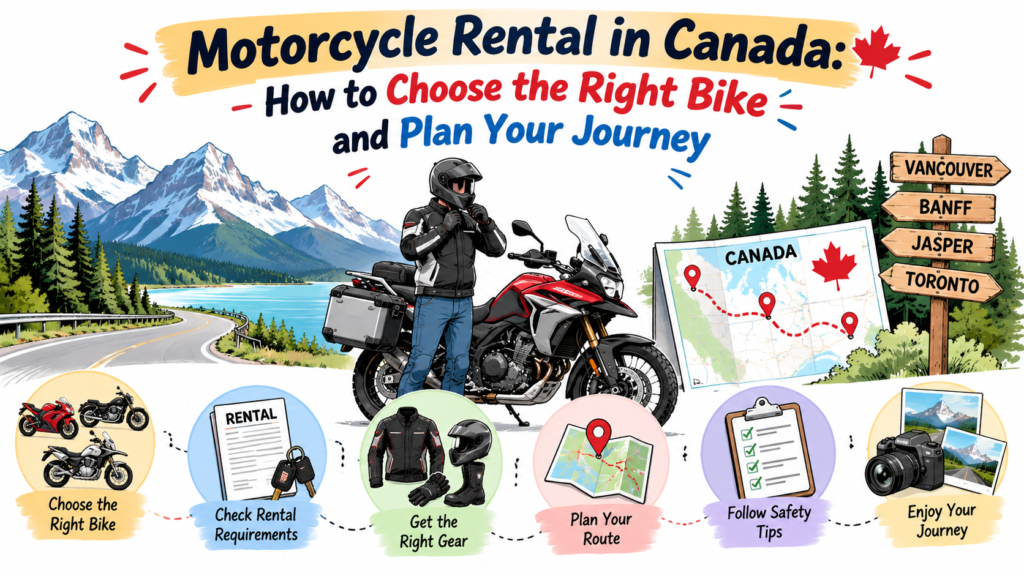
Renting a motorcycle gives you a simple way to explore Canada at your own pace. You can ride through busy cities, follow quiet country roads, or enjoy mountain views. However, a good trip starts with the right motorcycle and careful planning.
Canada has many different riding conditions. A city ride in Toronto differs from a mountain trip near Calgary. Coastal roads around Vancouver also bring different weather and road conditions. Your route, riding skills, budget, and travel dates should guide your choice.
This guide explains how to choose a rental motorcycle, understand rental terms, prepare your documents, and plan a comfortable journey. It also covers common mistakes, safety tips, and questions to ask before you book.
How to Choose the Right Motorcycle for Your Trip
The best motorcycle depends on where you plan to ride and how much experience you have. A large touring bike may suit a long highway trip. A lighter motorcycle may work better for short rides around town.
Think about your comfort, luggage, passenger needs, and daily travel distance. You should also consider the roads you expect to use.
Compare Different Motorcycle Types
| Motorcycle type | Best use | Important points |
|---|---|---|
| Commuter motorcycle | Short city trips | Easy handling and practical use |
| Standard motorcycle | City rides and day trips | Comfortable for many everyday journeys |
| Sport motorcycle | Riders who prefer a sporty feel | Riding position may feel tiring on long trips |
| Touring motorcycle | Long highway journeys | Often offers better wind protection and luggage options |
| Adventure motorcycle | Mixed paved roads and suitable gravel routes | Offers an upright riding position and versatile handling |
| Cruiser motorcycle | Relaxed rides and scenic highways | Seat height and weight vary by model |
Do not choose a motorcycle based on appearance alone. A heavy bike can feel difficult when you park or turn slowly. A tall adventure bike may also challenge shorter riders.
If possible, choose a model that matches a motorcycle you already know. Familiar controls and handling can make your trip more comfortable.
Match the Motorcycle to Your Route
Your planned route should influence your rental choice. City streets, highways, mountain passes, and gravel roads place different demands on a motorcycle.
For example, a standard motorcycle may suit a short trip through Toronto. A touring motorcycle may work better for several days on paved highways. An adventure motorcycle may suit a route with suitable gravel sections, provided you have the right skills.
Always check the motorcycle’s permitted road use. Do not assume that every adventure motorcycle or rental agreement allows off-road riding.
Where to Rent a Motorcycle in Canada
Your destination affects rental choices, travel costs, and the roads you can explore. Start by checking the rental options available in your chosen city.
Motorcycle Rental in Toronto
Toronto offers access to urban attractions and longer trips through Ontario. You might plan a ride toward smaller towns, lakeside areas, or scenic country roads.
Traffic can become heavy during busy hours. Parking also needs attention, especially in central areas. Choose a motorcycle that feels manageable at low speeds and check where you can park legally.
Before leaving the city, review your route and fuel stops. Do not assume that every road offers the same riding conditions.
Motorcycle Rental in Vancouver
Vancouver provides access to coastal scenery, forested roads, and mountain routes. Weather can change quickly, especially when you travel between coastal and higher areas.
Rain can make road surfaces slippery. Mountain routes may also bring sharp turns, steep climbs, and changing temperatures.
Check the forecast before leaving. Carry suitable rain gear and confirm road conditions before planning a mountain ride.
Motorcycle Rental in Calgary
Calgary can serve as a starting point for trips across southern Alberta and toward the Rocky Mountains. These areas offer striking scenery, but mountain riding needs careful preparation.
Check the weather, road surface, fuel stops, and expected travel time. Conditions can change between the city and higher elevations.
Choose a motorcycle that suits your experience. If you have little mountain-riding experience, start with a shorter route on familiar roads.
Finding a Motorcycle Rental Near You
When searching for a motorcycle rental near you, compare more than the daily price. Review the rental terms, motorcycle condition, included equipment, and collection arrangements.
Check these details before making a booking:
- Motorcycle model and engine size.
- Daily or weekly rental cost.
- Security deposit and payment rules.
- Insurance coverage and exclusions.
- Included kilometres and extra-distance charges.
- Helmet and protective gear options.
- Pickup, return, and cancellation conditions.
- Breakdown support and emergency procedures.
A low starting price may not reflect the full cost. Compare the complete rental terms before choosing a provider.
Understand Motorcycle Rental Requirements
Rental rules can vary by province, territory, and provider. Before you book, confirm that your licence allows you to ride the motorcycle you want.
Check Your Motorcycle Licence
Canadian provinces and territories set their own licensing rules. Some require a specific motorcycle licence class or endorsement. Learner restrictions and other conditions may also apply.
If you plan to rent a motorcycle in another province, check the rules that apply to your licence. Confirm that the rental provider accepts your licence and experience level.
International visitors should check whether their home licence permits motorcycle riding in Canada. An international driving permit does not replace a valid licence. It also does not grant motorcycle privileges that your original licence lacks.
Ask the relevant provincial authority or rental provider if you are unsure about your eligibility.
Prepare Your Documents
Rental providers may ask for several documents before handing over a motorcycle. Requirements differ, so confirm them in advance.
Common requests include:
- A valid motorcycle licence.
- Government-issued photo identification.
- A payment card accepted by the provider.
- Booking confirmation.
- Proof of insurance, if required by the agreement.
Some providers also set minimum age or riding-experience requirements. Do not assume that a standard car licence is enough to rent a motorcycle.
Understand Rental Costs, Deposits, and Insurance
The advertised daily rate is only one part of your travel budget. Additional charges may affect the final amount.
What Affects Motorcycle Rental Prices?
Rental costs depend on the motorcycle, location, season, rental length, and provider. Premium and touring motorcycles may cost more than smaller models.
Your final bill may include:
- Base rental charges.
- Applicable taxes and fees.
- Security deposit or payment-card hold.
- Insurance or damage-protection charges.
- Extra-kilometre fees.
- Helmet and gear rental.
- Delivery or collection charges, where offered.
- Late-return or cleaning fees, if the agreement allows them.
Ask for a clear breakdown before confirming your booking. Also, check whether the provider charges for cancellations or changes.
Understand Insurance Coverage
Never assume that your existing car insurance covers a rented motorcycle. Motorcycle coverage may work differently from car coverage.
Ask the provider what protection the rental includes. Check whether it covers damage, theft, third-party liability, and roadside assistance.
Pay special attention to exclusions. Some policies limit coverage for certain roads, unauthorised riders, or specific types of damage.
If you have personal insurance or a credit card with rental benefits, confirm the exact terms with the insurer or card provider. Do not rely on general statements about coverage.
Know How the Deposit Works
A security deposit may protect the provider against certain costs. The amount and payment method depend on the rental agreement.
Ask when the provider will release the deposit after you return the motorcycle. Also, check whether damage, missing equipment, or unpaid charges could reduce the refund.
Keep your booking records and return documents until the provider settles all charges.
Plan a Motorcycle Road Trip Across Canada
A motorcycle road trip Canada travellers enjoy requires more than choosing a destination. You need a realistic schedule, suitable gear, and a plan for changing conditions.
Choose a Realistic Daily Distance
Do not plan each day around highway distance alone. City traffic, roadworks, mountain curves, weather, and rest breaks can increase travel time.
New riders should plan shorter days. Experienced riders should also leave room for meals, fuel, sightseeing, and unexpected delays.
Before departure, identify overnight stops and check whether accommodation is available during your travel dates.
Check Weather and Seasonal Conditions
Canada’s riding season varies by region and elevation. Spring may bring cold mornings, wet roads, and lingering snow in some areas. Summer can offer better riding conditions, but storms and sudden weather changes remain possible.
Autumn may bring cooler temperatures and shorter daylight hours. Winter often makes many routes unsuitable for motorcycles.
Check official road reports and weather forecasts before each ride. Mountain passes and remote highways need extra care because conditions can change quickly.
Plan Fuel and Rest Stops
Fuel stations may be far apart on some rural and northern routes. Do not wait until your tank is nearly empty before looking for fuel.
Mark fuel stops along your route. Carry water, snacks, a charged phone, and basic emergency supplies.
Take regular breaks to reduce fatigue. Stop riding if you feel tired, cold, distracted, or uncomfortable.
Choose Suitable Accommodation
Book overnight stays that fit your daily distance and budget. If you travel during busy holiday periods, check availability early.
Ask about secure motorcycle parking when needed. Keep valuables out of sight and follow the rental provider’s advice about overnight storage.
Avoid planning a long mountain ride after a full day of travel. A relaxed schedule can help you enjoy the journey without rushing.
Inspect the Motorcycle Before You Leave
A short inspection can help you spot problems before they affect your trip. Complete it with the rental provider whenever possible.
Check the following items:
- Tyres: Look for visible damage and signs of low pressure.
- Brakes: Make sure the controls feel normal and the brakes respond properly.
- Lights: Test the headlight, brake light, and indicators.
- Mirrors: Adjust them to give you a clear view.
- Controls: Check the throttle, clutch, horn, and other controls.
- Leaks: Look for unusual fluid leaks around the motorcycle.
- Damage: Photograph existing scratches, dents, and broken parts.
- Equipment: Confirm that keys, documents, and included accessories are present.
Ask the provider to explain any unfamiliar controls. Do not ride away if the motorcycle has a safety problem.
Record the fuel level and odometer reading. Keep a copy of the inspection details and any damage report.
Choose the Right Riding Gear
Good protective gear helps reduce injury risks and improves comfort. A helmet is especially important, but it should not be your only protection.
Look for a properly fitting helmet that meets the applicable requirements. Check the rules in the province or territory where you will ride.
Consider wearing:
- A motorcycle jacket with protective padding.
- Long riding trousers with suitable protection.
- Gloves designed for motorcycle use.
- Over-the-ankle riding boots.
- Rain gear for wet conditions.
- Layers for cold mornings and mountain temperatures.
Ask whether the rental provider supplies helmets or other gear. Confirm the fit, condition, and cleaning arrangements before accepting any equipment.
Ordinary casual clothing offers less protection during a fall. Choose gear that suits both the weather and the road conditions.
Practical Tips Before Booking a Motorcycle
Use these steps to make your rental process easier.
- Set your travel plan. Decide where you want to go and how long you will ride each day.
- Choose a suitable motorcycle. Consider your skills, comfort, luggage, and passenger needs.
- Check your eligibility. Confirm your licence class and the provider’s age and experience rules.
- Compare full costs. Include deposits, insurance, mileage, equipment, and taxes.
- Read the agreement. Check cancellation rules, permitted roads, return times, and damage procedures.
- Confirm your pickup details. Verify the location, collection time, and documents you must bring.
- Prepare for the weather. Review forecasts and pack suitable protective gear.
- Inspect the motorcycle. Record existing damage and confirm that the controls work correctly.
If you are comparing options through a rental marketplace such as MotoShare.ca, focus on the details of each listing and its terms. Verify the actual vehicle, location, and booking conditions before making a commitment.
Common Motorcycle Rental Mistakes to Avoid
Small oversights can create large problems during a trip. Avoid these common mistakes.
Choosing a Bike That Feels Too Heavy
A motorcycle may look appealing but still feel difficult to control. Heavy bikes can be harder to move in parking areas or handle at low speeds.
Choose a model that suits your size, experience, and strength. Ask about the motorcycle’s weight and seat height before booking.
Ignoring Insurance Exclusions
Some riders check only whether insurance exists. They overlook limits, deductibles, and exclusions.
Read the agreement carefully. Ask the provider or insurer to explain anything you do not understand.
Underestimating Travel Time
A short distance on a map can take much longer on winding or busy roads. Mountain routes may also require frequent breaks.
Plan your journey around realistic travel times. Avoid rushing to reach your destination before dark.
Skipping the Vehicle Inspection
Failing to record existing damage can lead to disagreements at return time. A quick inspection also helps identify possible safety issues.
Take clear photographs before departure. Report any concern to the provider and keep a record of the response.
Forgetting Return Conditions
Late returns, low fuel levels, or missing accessories may lead to extra charges under the agreement.
Confirm the return time, fuel policy, and required equipment. Allow enough time to reach the drop-off location.
Important Considerations for Riding in Canada
Canadian roads can change quickly across regions and seasons. Riders must consider local laws, weather, wildlife, and road conditions before each trip.
Follow provincial and territorial rules. Check requirements for licences, helmets, insurance, and other riding conditions. Rules may differ across jurisdictions.
Watch for wildlife. Deer and other animals may cross roads, especially near forests and rural areas. Stay alert around dawn and dusk.
Prepare for remote travel. Some routes have limited mobile coverage, services, and fuel stops. Share your itinerary with someone you trust.
Respect road conditions. Rain, loose gravel, potholes, construction, and sharp curves can affect control. Reduce speed when conditions demand it.
Check passenger and luggage limits. Follow the motorcycle manufacturer’s limits and rental agreement. Secure luggage properly and keep it clear of moving parts.
Know what to do during a breakdown. Ask about roadside support before leaving. Keep the provider’s contact details and follow their instructions if the motorcycle develops a fault.
Avoid riding under the influence. Alcohol, cannabis, and other impairing substances can affect judgement and reaction time. Never ride when your ability to control the motorcycle may be impaired.
Frequently Asked Questions
1. Can tourists rent a motorcycle in Canada?
Yes, eligible tourists may rent motorcycles in Canada. They must meet the applicable licensing rules and the provider’s requirements. International visitors should confirm whether their licence permits motorcycle riding and whether they need supporting documents.
2. Can I rent a motorcycle with a regular car licence?
Usually, a standard car licence alone does not provide motorcycle riding privileges. Requirements vary by province and territory. Check the applicable licence class before booking.
3. How much does motorcycle rental cost in Canada?
The price depends on the motorcycle, location, season, rental duration, and provider. Taxes, insurance, deposits, gear, and mileage charges may increase the total. Request a full price breakdown before booking.
4. Do motorcycle rental providers require a security deposit?
Many providers require a deposit or payment-card hold, but policies vary. Confirm the amount, payment method, and refund conditions before you book.
5. Does motorcycle rental include insurance?
Coverage depends on the provider and rental agreement. Ask what the policy covers and what exclusions or deductibles apply. Confirm whether you need additional protection.
6. Can I rent an adventure motorcycle in Canada?
You may find adventure motorcycles through some rental providers. Availability depends on the location, season, and vehicle fleet. Confirm the motorcycle’s permitted road use and whether your experience meets the provider’s requirements.
7. Is motorcycle rental available in Toronto?
Motorcycle rental options may be available in Toronto, depending on the provider and travel dates. Compare motorcycle types, pickup arrangements, rental terms, and total costs before choosing.
8. Can I rent a motorcycle in Vancouver for a mountain trip?
You may be able to rent a suitable motorcycle for a mountain trip. Check the forecast, road reports, rental restrictions, and your riding experience first. Mountain roads can involve steep climbs, sharp turns, and sudden weather changes.
9. What should I bring when renting a motorcycle?
Bring your valid motorcycle licence, identification, required payment method, and booking details. Pack suitable riding gear and weather protection. Check with the provider for any additional documents.
10. Can I rent a motorcycle for several days?
Rental periods depend on the provider’s terms and availability. Longer rentals may have different rates or conditions. Confirm mileage limits, return arrangements, and charges for extending your booking.
11. Can I take a rental motorcycle outside the province?
That depends on the rental agreement and applicable rules. Ask the provider before travelling across provincial or territorial borders. Confirm insurance coverage, permitted routes, and any restrictions.
12. What should I check before returning a rental motorcycle?
Check the return time, fuel policy, mileage terms, and equipment requirements. Photograph the motorcycle and note its condition. Keep your return confirmation and final payment records.
Conclusion
A successful motorcycle trip across Canada starts with careful choices. Select a motorcycle that matches your experience, route, and comfort needs. Check your licence, understand the insurance terms, and calculate the full rental cost before booking.
Plan realistic daily distances and prepare for changing weather. Inspect the motorcycle, wear suitable protective gear, and check road conditions before each ride. These simple steps can help you avoid common problems and enjoy your journey with greater confidence.
Whether you plan a short city ride or a longer scenic adventure, take time to compare your options. Review the rental agreement and confirm every important detail before you set off. With the right preparation, you can explore Canada’s roads at a pace that suits you.
