
Introduction
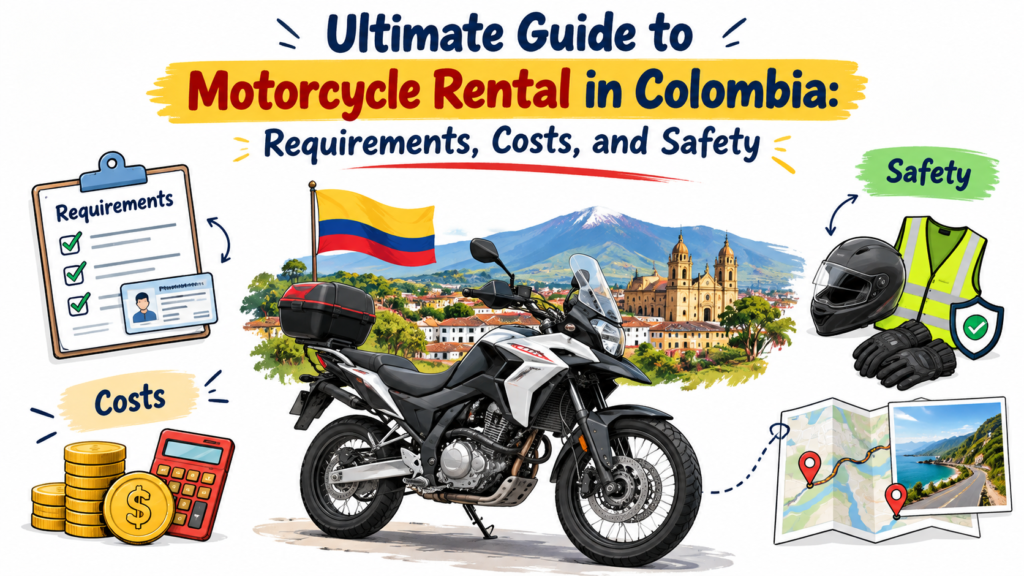
Renting a motorcycle in Colombia opens up incredible travel opportunities, but it also requires careful preparation. This article explores how to choose the right motorcycle, what documents and licences you need, how to navigate insurance and deposits, and what safety precautions to keep in mind. You will also find practical tips for managing Colombian road conditions and a detailed FAQ section answering common renter questions. Understanding these details helps you avoid unexpected costs and ensures a smooth, enjoyable journey.
Colombia offers some of the most dramatic and rewarding riding routes in South America. From winding Andean mountain passes to scenic coastal highways, exploring the country on two wheels provides a sense of freedom that enclosed vehicles cannot match. Whether you are planning a weekend escape from the city or a cross-country adventure, preparing properly makes all the difference. This guide covers everything you need to know about renting a motorcycle in Colombia, from legal requirements to route safety and common pitfalls.
Choosing the Right Motorcycle for Your Colombian Journey
Selecting the correct motorcycle depends heavily on your experience level, your route, and your luggage needs. Colombian terrain varies from smooth multi-lane highways to unpaved rural tracks and steep mountain switchbacks.
Motorcycle Types and Suitability
| Motorcycle Category | Typical Displacement | Ideal Terrain & Usage | Key Advantages |
|---|---|---|---|
| Scooter / Urban | 115cc – 150cc | City streets in Medellín or Bogotá | Easy to ride, nimble in heavy traffic, fuel-efficient |
| Dual-Sport / Lightweight | 150cc – 300cc | Mixed pavement, unpaved rural roads | Versatile, lightweight, easy to manage on rough tracks |
| Adventure / Touring | 500cc – 900cc+ | Long-distance highways, Andean passes | High comfort, luggage capacity, strong engine power |
City Scooters and Small Displacement Motorcycles
For urban exploration in major cities, a small scooter or lightweight motorcycle (115cc to 150cc) is usually sufficient. These vehicles are nimble in heavy traffic, easy to park, and economical on fuel. However, they lack the power needed for steep mountain climbs or sustained highway speeds.
Adventure and Touring Motorcycles
If your plans include intercity travel or crossing the Andes, a mid-size to large adventure motorcycle (250cc to 650cc or higher) is far more appropriate. These bikes offer stronger suspension, better ground clearance, and enough power to handle high altitudes and highway traffic comfortably. Choose a model that matches your physical size and riding skill. A heavy adventure bike can be challenging to manage on loose gravel or in muddy conditions if you lack off-road experience.
Legal Requirements and Rider Eligibility
Before renting a vehicle, you must ensure you meet all legal requirements set by Colombian authorities. Regulations are strictly enforced, and riding without proper documentation can lead to heavy fines or vehicle impoundment.
Driving Licences
Foreign visitors generally need a valid driver’s licence from their home country endorsed for motorcycle operation, along with an International Driving Permit (IDP) in many cases. Always check whether your specific licence category covers the engine displacement you plan to rent. Colombian residents require a valid local licence (licencia de conducción) with the correct category endorsement.
Age and Identification
Most rental providers require riders to be at least 21 or 23 years old, and some enforce higher age limits for larger adventure motorcycles. You must carry your original passport (or Colombian cédula) and your physical driving licence at all times while riding. Digital copies are rarely accepted by traffic police during roadside checks.
Understanding Costs, Insurance, and Deposits
Renting a motorcycle involves several financial components beyond the advertised daily base rate. Clarifying these costs upfront helps you budget accurately.
What the Rental Price Includes
Base rental rates typically cover motorcycle usage for a specified period. Some providers include basic third-party liability insurance or standard helmets, while others charge separately for safety gear. Always ask for an itemized breakdown of what is included before signing an agreement.
Deposits and Excess Charges
Rental providers almost always require a security deposit held via credit card pre-authorization or cash. This deposit covers potential damage, traffic fines, or loss of equipment. Additionally, understand the deductible or excess amount associated with the insurance policy. If an accident occurs, you are generally responsible for costs up to that deductible limit.
Fuel Policies and Mileage Limits
Check whether the rental agreement enforces daily mileage caps or offers unlimited mileage. Exceeding a mileage limit incurs extra per-kilometer fees. Regarding fuel, most providers expect you to return the motorcycle with the same fuel level as departure. Refueling at local service stations before return prevents service surcharges.
Pre-Rental Inspection and Documentation
A thorough vehicle inspection before leaving the rental shop protects you from liability for pre-existing damage.
- Examine the Bodywork: Look closely for scratches, cracked fairings, bent levers, or dented exhaust pipes.
- Test Critical Controls: Check the operation of the front and rear brakes, throttle, clutch, horn, turn signals, and headlight beam.
- Inspect Tyres and Chain: Ensure tyre tread depth is adequate and the drive chain is properly lubricated and tensioned.
- Document Everything: Take clear photographs and video of all sides of the motorcycle, noting any existing cosmetic flaws on the rental checklist.
- Verify Paperwork: Confirm that the mandatory insurance (SOAT) and technical inspection certificate (Tecnomecánica) are present in the storage compartment.
Navigating Colombian Roads and Weather
Riding in Colombia presents unique challenges that differ from standard urban commuting in North America or Europe. Road conditions can change rapidly.
Mountain Roads and Traffic
Routes crossing the Andes feature endless curves, steep inclines, and heavy commercial truck traffic. Overtaking large trucks on blind corners is extremely hazardous. Maintain a safe following distance and remain patient behind slower vehicles until a clear, straight passing lane appears.
Weather Conditions
Tropical rainfall can transform dry mountain roads into slippery surfaces within minutes. Reduced visibility during heavy downpours makes waterproof riding gear and rain-safe helmet visors essential. If weather conditions become severe, pull over safely under shelter and wait out the storm rather than risking a slide on wet asphalt.
Common Mistakes to Avoid
- Choosing an Overpowered Motorcycle: Selecting a large adventure bike without prior off-road or heavy-machine experience leads to handling difficulties on rugged Colombian routes.
- Ignoring International Licence Rules: Assuming a standard home-country car licence permits motorcycle riding without the proper motorcycle endorsement and IDP.
- Skipping the Pre-Rental Inspection: Failing to document existing scratches or mechanical quirks leaves you vulnerable to disputed damage charges upon return.
- Underestimating Travel Times: Calculating travel distances based strictly on map mileage rather than accounting for winding mountain terrain and roadworks.
- Riding Without Proper Safety Gear: Opting for light clothing instead of sturdy jackets, riding pants, gloves, and sturdy boots.
- Neglecting Insurance Exclusions: Assuming full comprehensive coverage applies without checking deductibles, off-road restrictions, or single-vehicle accident clauses.
- Forgetting Document Security: Leaving physical passports or licence copies exposed to moisture or misplacing mandatory vehicle papers during a police stop.
- Riding After Dark: Navigating unfamiliar rural highways at night when unlit livestock, potholes, and unmarked road hazards are nearly impossible to see.
- Overloading Luggage: Strapping excessive weight high up on the motorcycle, which negatively alters its center of gravity and cornering stability.
- Failing to Confirm Breakdown Support: Renting a vehicle without clarifying what emergency assistance or replacement vehicle options exist if a mechanical failure occurs far from major cities.
- Disregarding Altitude Changes: Failing to pack warm layers for high-altitude mountain passes where temperatures drop significantly compared to coastal or valley cities.
- Rushing the Fuel Stops: Letting fuel levels drop too low in remote rural regions where petrol stations can be sparse or temporarily out of stock.
Important Considerations
Renting a vehicle requires balancing cost, convenience, and safety. Keep these core factors in mind before finalizing any booking:
- Legal Compliance: Ensure your driving credentials strictly match the vehicle category you intend to operate.
- Skill Match: Be realistic about your riding ability, especially when tackling unpaved secondary roads or heavy city traffic.
- Total Financial Exposure: Factor in deposits, insurance deductibles, fuel costs, and potential toll fees alongside the base rental price.
- Provider Policies: Review cancellation terms, minimum rental durations, and geographic restrictions that forbid crossing certain regional borders.
- Emergency Preparedness: Save local emergency numbers and your rental provider’s direct support contact in an accessible place before departure.
Frequently Asked Questions (FAQs)
1. Do I need an International Driving Permit to rent a motorcycle in Colombia?
Many rental providers and traffic authorities accept a valid foreign motorcycle licence, but carrying an International Driving Permit alongside your home licence is strongly recommended to prevent language or regulatory disputes during police checks.
2. What is the minimum age requirement for motorcycle rentals?
Most rental companies require riders to be at least 21 years old. For larger adventure or touring motorcycles, providers frequently raise the minimum age requirement to 23 or 25.
3. Are helmets provided with the motorcycle rental?
Basic helmets are usually included in the standard rental fee by most providers. However, many riders prefer bringing their own helmet for a better fit, superior hygiene, and higher safety certification standards.
4. What documents must I carry while riding in Colombia?
You must carry your original passport, your valid driving licence (and IDP if applicable), the vehicle’s mandatory insurance (SOAT), and the technical inspection certificate (Tecnomecánica).
5. How are security deposits handled?
Providers typically place a temporary pre-authorization hold on a major credit card as a security deposit. This hold is released after the vehicle is returned undamaged and verified against the initial checkout inspection.
6. Can I cross international borders into neighboring countries?
Most domestic rental agreements strictly prohibit taking rental motorcycles across international borders into countries like Ecuador or Venezuela due to complex customs and insurance regulations. Always check provider rules beforehand.
7. What kind of insurance coverage is standard?
Standard rental fees generally include basic third-party liability insurance mandated by law. Comprehensive collision damage waiver (CDW) policies often carry significant deductibles and may exclude single-vehicle accidents or off-road riding.
8. Are mileage limits common on Colombian motorcycle rentals?
Some companies offer unlimited mileage for regional rentals, while others enforce daily kilometre caps with extra fees applied for distance exceeding the agreed limit. Clarify this policy before booking.
9. What should I do if the motorcycle breaks down on a rural road?
Contact your rental provider immediately using their designated support number. Reliable providers offer guidance, roadside assistance, or instructions on how to handle mechanical failures safely.
10. Is it safe to ride motorcycles at night in Colombia?
Riding at night outside major urban areas is strongly discouraged. Potholes, unlit vehicles, wandering livestock, and reduced visibility make rural night riding significantly more hazardous.
11. How do fuel policies work when returning the vehicle?
The standard policy requires you to return the motorcycle with the same fuel level as when you collected it. Returning the vehicle with less fuel incurs refueling service fees determined by the provider.
12. Where can I find and compare vehicle-rental options in Colombia?
Travelers looking to explore different vehicle-rental choices can browse available options through platforms like MotoShare.co to compare rental providers, vehicle categories, and destination choices across Colombia.
Conclusion
Renting a motorcycle in Colombia offers an unmatched way to experience the country’s breathtaking landscapes and vibrant culture. By understanding legal requirements, selecting a machine suited to your skill level, preparing for changing weather, and reviewing rental terms carefully, you set yourself up for a safe and memorable journey. Take time to inspect your vehicle, respect local traffic laws, and prioritize caution on winding mountain routes. With proper preparation, your Colombian road trip will be both challenging and deeply rewarding.
