
Introduction
Becoming a commercial pilot requires extensive training, strict regulatory compliance, and high operational costs. Aircraft fuel, instructor fees, maintenance, airport charges, and simulator usage all contribute to the high cost of training.
Unlike many other professions, pilot training is heavily dependent on real-world practice hours, which makes it inherently resource-intensive. As a result, even basic commercial pilot programs can become financially challenging for many students.
Understanding where the money goes is the first step toward reducing overall expenses. Once you identify cost-heavy areas, you can make smarter choices that reduce financial pressure.
Real-World Cost Breakdown of Pilot Training
To effectively reduce expenses, it is important to understand the key components of pilot training costs:
1. Flight Training Hours
- The most expensive part of pilot training
- Charged per hour of aircraft usage
- Includes fuel, maintenance, and instructor fees
2. Ground School Fees
- Classroom or online theoretical training
- Covers aviation subjects like navigation, meteorology, and air regulations
3. Simulator Training
- Used for procedural and emergency practice
- Cheaper than real aircraft but still significant in cost
4. Licensing and Examination Costs
- DGCA or FAA exam fees depending on country
- Medical tests and certification charges
5. Hidden Expenses
- Accommodation near flight schools
- Travel to training locations
- Study materials and uniforms
- Food and daily living costs
Understanding these cost areas helps students plan more effectively and avoid unnecessary financial strain.
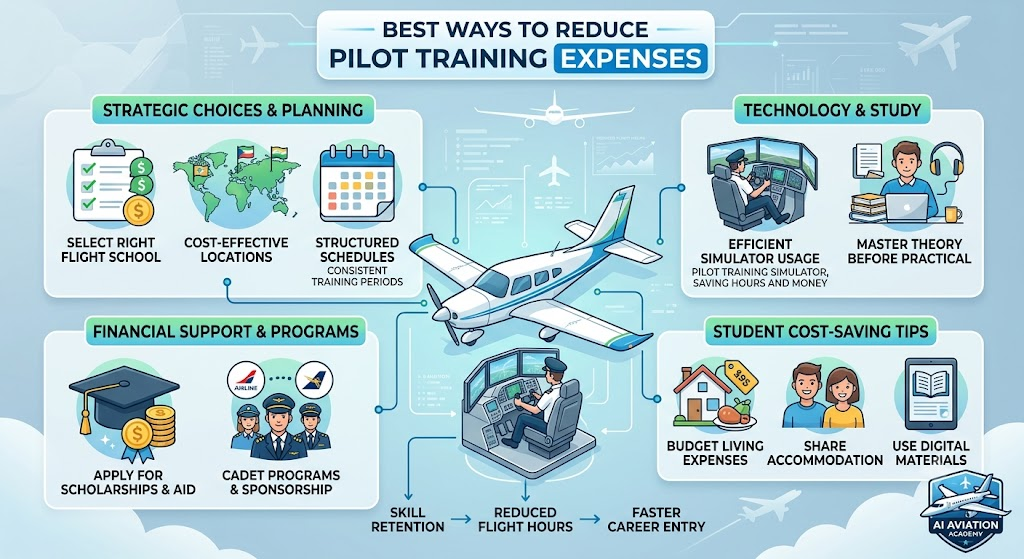
Best Ways to Reduce Pilot Training Expenses
There are multiple proven strategies that can significantly lower the total cost of becoming a pilot.
1. Choose the Right Flight School
Selecting the right flight school is one of the most important financial decisions.
- Compare multiple flying schools before enrollment
- Check aircraft availability and maintenance efficiency
- Look for schools with structured training schedules to avoid delays
- Prefer schools with transparent fee structures
A well-managed school reduces delays, which directly reduces training costs.
2. Plan Training in Cost-Effective Locations
Training location plays a major role in overall expenses.
- Some regions offer lower aircraft rental and instructor fees
- Weather conditions also matter; better weather reduces downtime
- Avoid locations where delays due to weather are frequent
A shorter training timeline means fewer total expenses.
3. Use Simulator Hours Smartly
Flight simulators are significantly cheaper than real aircraft.
- Practice procedures in simulators before actual flights
- Use simulators for emergency training and navigation practice
- Reduce aircraft hours by mastering basics in simulation first
Efficient simulator use can reduce overall flying hours required.
4. Apply for Scholarships and Financial Aid
Many aviation academies and organizations offer financial assistance.
- Merit-based scholarships for top-performing students
- Need-based financial aid programs
- Airline-sponsored cadet programs
These programs can reduce a large portion of training costs if applied early.
5. Follow a Structured Training Schedule
Delays in training are one of the biggest cost inflators.
- Maintain consistency in flying schedule
- Avoid long gaps between training sessions
- Complete theory and practical phases in parallel
Consistency improves skill retention and reduces repeated lessons.
6. Opt for Bundled Training Packages
Many schools offer package-based pricing.
- Fixed-cost CPL packages reduce unexpected charges
- Bundled hours are often cheaper than pay-per-hour models
- Helps in better financial planning
Always read package details carefully before committing.
7. Study Theory Before Practical Training
Strong theoretical knowledge reduces wasted flight hours.
- Learn navigation, aerodynamics, and regulations in advance
- Understand aircraft systems before practical sessions
- Prepare for exams early to avoid reattempt fees
Better preparation reduces repetition in flight training.
8. Avoid Switching Flight Schools Frequently
Changing schools midway increases cost and delays certification.
- Each school may have different syllabus structure
- Transitioning often leads to repeating modules
- Additional administrative fees may apply
Stability in training saves both time and money.
Cost-Saving Tips for Students
Here are additional practical tips that students can apply immediately:
- Create a monthly budget for training and living expenses
- Track every flying hour carefully
- Avoid unnecessary rescheduling of flight lessons
- Share accommodation with fellow trainees to reduce rent
- Use digital study resources instead of expensive printed materials
- Stay physically and mentally prepared to avoid failed training sessions
Small savings consistently applied can lead to major reductions in total cost.
Common Mistakes That Increase Pilot Training Costs
Many students unknowingly increase their training expenses due to avoidable mistakes:
1. Poor Attendance and Irregular Training
Missing classes or flight sessions leads to repetition, which increases costs.
2. Lack of Preparation
Unprepared students require extra instruction time, increasing aircraft usage.
3. Delays in Exams
Postponing theory or licensing exams extends training duration and expenses.
4. Switching Flight Schools
Changing institutions often results in restarting certain modules.
5. Inefficient Learning Approach
Slow skill acquisition leads to more flight hours than necessary.
Avoiding these mistakes can save a significant amount of money.
Career ROI Perspective: Is Pilot Training Worth It?
Although pilot training is expensive, it offers strong long-term financial returns.
Career Benefits:
- High-paying airline pilot salaries
- Global job opportunities
- Career progression to captain roles
- Opportunities in cargo, charter, and international aviation
ROI Insight:
A well-planned training strategy ensures that students enter the workforce faster, allowing them to start earning sooner and recover training costs more efficiently.
Efficient training is not just about saving money—it’s about accelerating career entry.
FAQs
1. Why is pilot training so expensive?
Pilot training is expensive due to aircraft fuel costs, maintenance, instructor fees, simulator usage, and strict regulatory requirements. Each flight hour requires significant operational resources.
2. How can I reduce pilot training expenses effectively?
You can reduce costs by choosing the right flight school, using simulators efficiently, applying for scholarships, and maintaining a consistent training schedule without delays.
3. Are simulator hours cheaper than actual flying hours?
Yes, simulator training is significantly cheaper than real aircraft flying and is highly effective for procedural learning and emergency training practice.
4. Do scholarships really help in pilot training?
Yes, many aviation academies and airlines offer scholarships or cadet programs that can reduce a large portion of training costs if applied for early.
5. What is the biggest hidden cost in pilot training?
Living expenses such as accommodation, food, travel, and study materials often become major hidden costs during pilot training.
6. Is it better to train in India or abroad for cost savings?
It depends on budget and goals. Some countries offer cheaper flying hours, but India provides structured DGCA-based training that may reduce licensing complications.
7. How many hours are required to become a commercial pilot?
Typically, around 200 flying hours are required for a commercial pilot license, depending on regulatory requirements and training structure.
8. What mistakes increase pilot training costs the most?
Poor preparation, irregular training schedules, switching schools, and repeated exam failures are the most common causes of increased expenses.
Conclusion
Reducing pilot training expenses is not about cutting corners—it is about making smarter and more strategic decisions throughout the training journey. From choosing the right flight school and using simulators effectively to maintaining discipline and avoiding delays, every step plays a crucial role in controlling costs.
A well-planned approach can significantly reduce financial pressure while ensuring high-quality training and strong skill development. Aspiring pilots who focus on efficiency, preparation, and consistency not only save money but also complete their training faster and enter the aviation industry sooner.
With the right mindset and strategy, the dream of becoming a pilot can become both achievable and financially manageable.
