
Introduction
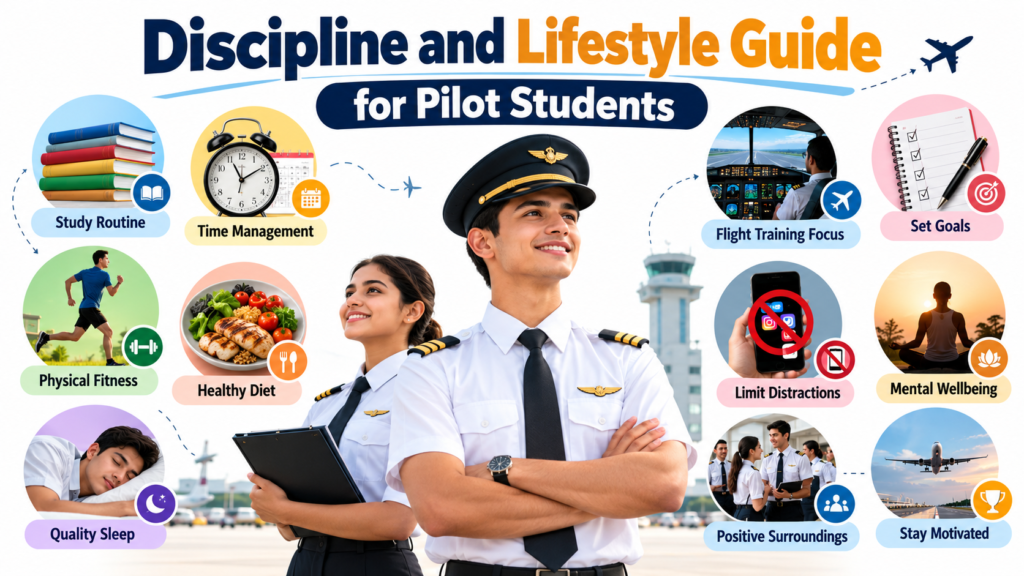
Becoming a pilot requires more than learning to fly an aircraft. Students must develop discipline, good habits, and a responsible attitude. A balanced lifestyle helps them manage studies, flight lessons, and personal responsibilities. With the right routine, students can prepare for training challenges and build a strong foundation for an aviation career.
Why Discipline Matters in Pilot Training
Discipline is an important part of a pilot student’s daily life. Flight training involves classroom learning, practical lessons, simulator sessions, and regular assessments. Students must prepare for these activities and follow instructions carefully.
A disciplined student learns to manage time, accept feedback, and take responsibility for mistakes. These habits also help students develop attention to detail. In aviation, even small oversights can matter, so careful preparation is essential.
Discipline does not mean following a strict schedule every minute. It means making responsible choices, following approved procedures, and staying consistent with learning goals. Students should also understand when they need rest or support.
For example, a student who reviews weather concepts before a scheduled lesson may feel better prepared. This preparation can make the lesson more useful and help the student ask better questions.
Building a Daily Routine as a Pilot Student
A regular routine helps students balance aviation training with personal life. However, every student’s schedule will differ based on flight times, ground classes, travel, and individual learning needs.
Start by listing fixed activities, such as classes, simulator sessions, and flight lessons. Then set aside time for revision, meals, exercise, and rest. Leave some space for unexpected changes because flight training schedules can change with weather and aircraft availability.
A simple daily routine might include the following activities:
- Morning: Wake up, eat breakfast, and prepare for scheduled training.
- Training hours: Attend classes or flight lessons and follow instructor guidance.
- Afternoon: Review lesson notes and complete assigned study tasks.
- Evening: Exercise, prepare for the next day, and spend time with family.
- Night: Reduce distractions and follow a regular sleep routine.
Treat this schedule as a starting point rather than a fixed rule. Students with early morning lessons may need to sleep earlier. Those with later classes may follow a different routine.
The main goal is to create habits that support learning, health, and safety.
Time Management for Ground Classes and Flight Training
Pilot students study several subjects while developing practical skills. These may include aerodynamics, meteorology, navigation, aircraft systems, and aviation regulations. Managing all these subjects can become difficult without a plan.
Begin by dividing large study tasks into smaller parts. For example, study one navigation concept before practising related questions. Review the topic again later instead of trying to learn everything in one sitting.
A weekly plan can help students identify difficult subjects and prepare for upcoming assessments. Give extra time to topics that require more practice. However, avoid filling every free hour with study because rest is also important for learning.
Students should also prepare for flight lessons before arriving at the training facility. Review the planned lesson, relevant procedures, and instructor-provided material. This preparation allows students to use lesson time more effectively.
When plans change, adjust the schedule instead of abandoning it completely. Consistent progress is usually more useful than following an unrealistic timetable.
Sleep, Rest, and Fatigue Management
Sleep supports concentration, memory, decision-making, and learning. These abilities are important during ground school and practical flight training. Poor sleep can make it harder to understand instructions and respond appropriately.
Students should maintain a regular sleep schedule whenever possible. Most adults need at least seven hours of sleep each night, although individual needs vary. Teenagers generally need more sleep than adults.
Avoid staying awake late to complete avoidable last-minute study tasks. Instead, spread revision across several days. Reduce screen use before bedtime if it interferes with sleep, and create a comfortable sleeping environment.
Fatigue deserves special attention in aviation. A student who feels unusually tired, unwell, or unable to concentrate should not ignore the problem. They should inform the appropriate instructor and follow the applicable fitness-for-training procedures.
Never treat a flight lesson as more important than safety. Rest is part of responsible preparation, not a reward that students earn after finishing their work.
Physical Fitness and Healthy Eating Habits
Pilot students benefit from habits that support general health and daily energy. Regular physical activity, balanced meals, and adequate hydration can help students manage demanding schedules.
Choose activities that fit your fitness level and personal needs. Walking, cycling, swimming, or other suitable exercise can help build a consistent routine. Students do not need an extreme workout plan to maintain healthy habits.
Food choices also matter during long training days. Include a variety of vegetables, fruits, whole grains, protein sources, and other balanced foods. Carry water and drink regularly, especially during hot weather.
Avoid relying on excessive caffeine or energy drinks to manage tiredness. These products do not replace sleep and may affect sleep quality when consumed late in the day.
Students with specific medical or dietary needs should seek appropriate professional advice. They should also follow any applicable aviation medical requirements and guidance from qualified professionals.
Mental Discipline and Stress Management
Pilot training can involve examinations, practical assessments, financial pressure, and unexpected delays. Students may sometimes feel nervous about performance or worry about falling behind. Learning to manage these feelings is part of developing a sustainable training routine.
Start by focusing on tasks you can control. Prepare for lessons, complete revision in manageable steps, and ask questions when a concept is unclear. Avoid comparing your progress constantly with other students because learning speeds differ.
When you make a mistake, examine what happened and identify what you can improve. Listen to instructor feedback and practise the relevant skills under proper supervision. Treat constructive feedback as part of learning rather than as a personal failure.
Simple habits can also help manage everyday stress. Take short breaks, maintain social connections, exercise regularly, and make time for activities outside aviation. If stress begins affecting sleep, concentration, or daily functioning, consider seeking qualified support.
Mental discipline is not about hiding emotions or pretending every day is easy. It is about recognising difficulties and responding to them responsibly.
Study Habits for Aviation Subjects
Aviation subjects require both understanding and regular revision. Memorising facts alone may not be enough when students need to apply concepts to practical situations.
Begin each study session with a clear objective. You might review a weather concept, practise navigation calculations, or revise aircraft system components. After studying, explain the concept in your own words to check your understanding.
The following habits can make study sessions more effective:
- Review notes soon after a class while the information is fresh.
- Use practice questions to identify weak areas.
- Keep a list of concepts that need clarification.
- Revisit difficult topics at regular intervals.
- Ask instructors about confusing material.
- Use approved training materials and reliable references.
Students should avoid depending entirely on last-minute revision. Regular study makes it easier to identify gaps before an examination.
They should also understand the difference between theoretical knowledge and practical competence. Passing a test does not remove the need to follow procedures, practise skills, and learn from instructors.
Maintaining Professional Behaviour and Personal Responsibility
Professional behaviour begins during training. Pilot students should respect instructors, fellow students, ground staff, and other members of the aviation community.
Arrive prepared, communicate clearly, and follow training organisation rules. If you do not understand an instruction, ask for clarification instead of guessing. If you make an error, report it honestly and participate in the learning process.
Personal responsibility also includes keeping training materials organised, completing assigned work, and maintaining accurate records where required. Students should protect confidential information and use digital devices responsibly.
Teamwork is another important habit. Aviation activities often involve communication between several people. Listening carefully, sharing relevant information, and remaining respectful can help students develop professional communication skills.
A good attitude does not mean agreeing with everything without question. Students should raise safety concerns through appropriate channels and seek clarification whenever something is unclear.
These habits help prepare students for the responsibilities they may face in future aviation roles.
Punctuality, Checklist Use, and Attention to Detail
Punctuality helps students prepare calmly for training. Arriving at the last moment may lead to rushed preparation and missed instructions. Plan travel time, organise materials in advance, and check the training schedule regularly.
Attention to detail is equally important. Students should learn to use the checklists and procedures specified by their instructors and training organisation. Checklists help ensure that required items receive proper attention.
Never skip a step simply because a task seems familiar. At the same time, students should understand the purpose of each checklist item instead of treating the process as a meaningless exercise.
If you discover an error or are unsure about a procedure, stop and ask the appropriate instructor for guidance. Do not guess or improvise beyond your training and authority.
For example, a student can check the required lesson materials and confirm the reporting time before leaving home. This small habit can reduce avoidable problems and support a more organised training day.
Managing Social Life, Screen Time, and Distractions
Pilot training can require significant time and attention, but students also need a healthy personal life. Family connections, friendships, hobbies, and suitable leisure activities can support overall well-being.
Problems arise when distractions regularly interfere with sleep, study, or training preparation. Excessive gaming, endless scrolling, and late-night entertainment can make the next day more difficult.
Set reasonable limits on recreational screen time. Keep your phone away during focused study sessions and follow device restrictions during training. Plan leisure activities around your responsibilities rather than allowing them to replace essential tasks.
Students should also avoid isolating themselves completely. Talking with friends, family, classmates, or trusted mentors can provide support during demanding periods.
A balanced lifestyle is more sustainable than a routine built around studying every waking hour. The aim is to protect important responsibilities while allowing time to rest and enjoy life.
Financial Discipline During Pilot Training
Pilot training can involve substantial expenses. Students and families may need to plan for tuition, examinations, accommodation, travel, equipment, medical assessments, and other costs. The exact expenses depend on the country, training organisation, licence pathway, and individual circumstances.
Create a realistic budget before training begins. List known costs and set aside a reasonable amount for everyday needs and possible unexpected expenses. Confirm which charges are included in the training fee and which are separate.
Track spending regularly so you can identify unnecessary expenses. Compare training options carefully, but do not choose a provider based on price alone. Consider the training structure, applicable approvals, aircraft availability, instructor support, and other relevant factors.
Students should also discuss major financial decisions with their families or a qualified financial adviser when appropriate. Avoid taking on debt without understanding the repayment terms and future obligations.
Financial discipline can reduce avoidable stress and help students focus on their training. However, careful budgeting cannot remove every unexpected expense or guarantee a particular career outcome.
Common Mistakes Pilot Students Should Avoid
Many students understand the value of discipline but struggle to maintain it consistently. Recognising common mistakes can help them develop better habits before those mistakes affect their progress.
One frequent problem is irregular sleep. Staying awake late for entertainment or unnecessary revision can reduce concentration the next day. Students should plan study sessions earlier and protect adequate rest.
Another mistake is postponing difficult subjects. Avoiding a topic does not make it easier. Break it into smaller tasks, practise regularly, and ask for help when necessary.
Some students also ignore feedback because they feel disappointed by a poor assessment. Instead, identify the specific areas that need improvement and follow the instructor’s guidance.
Other mistakes include:
- Arriving unprepared for lessons.
- Relying on motivation instead of consistent routines.
- Ignoring illness or fatigue.
- Spending without a training budget.
- Allowing social distractions to interrupt study.
- Hiding mistakes instead of reporting them appropriately.
- Comparing personal progress unfairly with classmates.
Students should not expect to change every habit overnight. Choose one or two improvements, practise them consistently, and review progress regularly.
Important Considerations for a Safe and Balanced Lifestyle
Every pilot student’s circumstances are different. Training schedules, local weather, course requirements, financial resources, and personal responsibilities can affect daily routines.
Students should therefore use lifestyle plans as flexible guides. Follow the approved training schedule and adjust personal activities when necessary. If a lesson changes, reorganise study time without sacrificing essential rest.
Safety must remain the priority. General advice about sleep, exercise, food, and study habits does not replace formal aviation requirements or medical guidance. Students should follow their training organisation’s policies and the applicable aviation authority’s rules.
It is also important to recognise personal limits. Students may face difficult examinations, slow progress, or periods of uncertainty. These experiences do not automatically mean that they are unsuited to aviation.
Seek help when a problem affects your health, learning, or ability to train safely. Speak with an appropriate instructor, medical professional, counsellor, or trusted adviser, depending on the situation.
Most importantly, remember that discipline develops over time. Consistent preparation, honest communication, and responsible decisions are more valuable than trying to appear perfect.
Frequently Asked Questions (FAQs)
1. Why is discipline important for pilot students?
Discipline helps pilot students manage time, prepare for lessons, and follow approved procedures. It also supports accountability, attention to detail, and professional behaviour. These habits contribute to safe and effective training.
2. How should a pilot student plan a daily routine?
Start by listing fixed classes, flight lessons, and other required activities. Add time for revision, meals, exercise, and rest. Keep the schedule flexible enough to handle weather changes and unexpected delays.
3. How many hours should pilot students study each day?
There is no single study duration that works for every student. The amount depends on course demands, upcoming assessments, and individual learning needs. Regular, focused study is generally more useful than long sessions without breaks.
4. How can students balance flight training and ground classes?
Use a weekly plan to organise lessons, revision, and assignments. Prepare for each session in advance and give extra attention to difficult subjects. Protect adequate rest so that studying does not interfere with safe training.
5. Why is sleep important during pilot training?
Sleep supports concentration, memory, learning, and decision-making. Poor sleep can make it harder to understand instructions and respond appropriately. Students should manage fatigue responsibly and report concerns before training when required.
6. How can pilot students manage exam stress?
Break study material into smaller tasks and revise regularly. Use practice questions, seek clarification, and take suitable breaks. If stress begins affecting daily functioning, consider seeking qualified support.
7. What physical fitness habits are useful for pilot students?
Regular physical activity, balanced meals, and adequate hydration can support general health. Students should choose activities that suit their needs and avoid extreme routines. Any specific medical or aviation fitness requirements must be followed separately.
8. How can students reduce distractions during training?
Set limits on recreational screen time and keep phones away during focused study. Plan entertainment around training responsibilities and maintain a consistent sleep routine. Review your habits if distractions repeatedly affect preparation.
9. How should students handle mistakes during flight training?
Students should acknowledge mistakes, inform the appropriate instructor, and understand what needs improvement. They should follow corrective guidance and practise under proper supervision. Hiding errors or guessing when unsure can create unnecessary risks.
10. How can pilot students maintain discipline over the long term?
Start with a realistic routine and build habits gradually. Review progress each week and adjust the schedule when circumstances change. Consistency, accountability, adequate rest, and a willingness to learn can help students maintain discipline.
Conclusion
Discipline and lifestyle habits are important parts of pilot training. Students need to manage their time, study regularly, maintain their health, and approach lessons with responsibility. They must also recognise fatigue, accept feedback, and follow approved procedures.
A successful routine does not need to be complicated or perfect. It should support steady learning, personal well-being, and safe training practices. By building good habits early, pilot students can prepare more effectively for the demands of aviation and the responsibilities of a future professional role.
