
Introduction
Have you ever wanted to start a blog but worried about the cost? You do not need a big budget to share your ideas online. Many free platforms help beginners publish their thoughts and stories.
A Free Blogging Platform gives you a simple way to start writing. You can share knowledge, build an online presence, and connect with readers. You also do not need advanced technical skills to begin.
BlogOrbix helps writers, creators, professionals, and businesses share their content. It offers free hosting and a simple space for online publishing. This guide explains how blogging works and how you can get started.
1. What Is a Free Blogging Platform?
A blogging platform helps you write, manage, and publish content online. It gives your articles a place where readers can find them.
You do not need to build a website from scratch. The platform handles many basic publishing tasks.
A free blogging platform can help you:
- Share personal stories and experiences.
- Publish guides, tips, and tutorials.
- Write about your hobbies and interests.
- Share professional knowledge.
- Build an online portfolio.
- Publish business updates and useful information.
Some platforms also include free hosting. This means you can start without buying separate web hosting.
However, free services may have limits. Always review the platform’s current terms before you begin.
2. Why Should Beginners Start a Blog?
Blogging gives you a place to express your ideas. It also helps you organize your knowledge and share it with others.
You can start with one topic and grow your blog over time.
Here are some useful reasons to begin:
- Share your knowledge: Explain topics that you understand well.
- Improve your writing: Regular practice helps you write more clearly.
- Build an online presence: Give readers a place to explore your work.
- Share your interests: Write about travel, food, education, or technology.
- Create a portfolio: Show your articles and ideas in one place.
- Support your business: Share useful information about your products or services.
Blogging takes time and effort. Regular publishing does not guarantee traffic or income. Focus on useful content and steady improvement.
3. How to Choose the Right Blogging Platform
The right platform should match your goals. Beginners should look for simple tools and clear publishing options.
Before choosing a platform, consider these points:
- Ease of use: Choose a platform with a simple writing process.
- Hosting: Check whether the platform offers free hosting.
- Domain options: Understand the available web address choices.
- Writing space: Look for a clean and comfortable editor.
- Content topics: Check whether you can write about your preferred subjects.
- Author support: Find out whether the platform supports multiple contributors.
- Usage limits: Read the rules for storage, publishing, and other features.
Do not choose a platform only because it costs nothing. Check whether it supports your long-term plans.
4. Compare Different Blogging Goals
Every blogger has a different reason to publish content. Some people want to share personal stories. Others want to support a business or build a professional portfolio.
Use this table to understand common blogging goals.
| Blogging Goal | Main Purpose | Suitable Content |
|---|---|---|
| Personal blogging | Share life and interests | Stories, hobbies, experiences |
| Professional blogging | Show skills and knowledge | Tutorials, career advice |
| Business blogging | Share business information | Updates, guides, product details |
| Creative blogging | Share original ideas | Art, writing, photography |
| Educational blogging | Explain useful subjects | Lessons, study guides |
Choose one main goal before writing your first article. You can explore other topics as your blog grows.
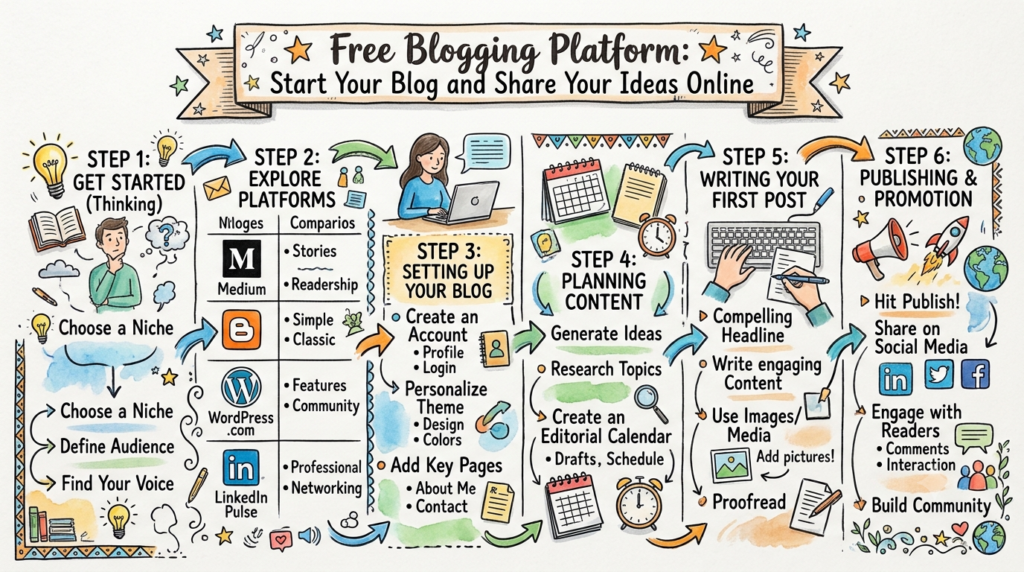
5. How to Create a Blog for Free
Starting a blog does not need to feel difficult. Follow a few simple steps to prepare your publishing space.
Step 1: Choose Your Main Topic
Start with a subject that interests you. Pick something you understand or enjoy learning about.
Some useful blog topics include:
- Technology and digital skills
- Education and learning
- Travel and local experiences
- Health and lifestyle information
- Business and professional growth
- Food, hobbies, and creativity
A clear topic helps readers understand your blog.
Step 2: Select a Blogging Platform
Compare a few platforms before making your choice. Check their writing tools, hosting options, and terms.
Choose a platform that supports your current needs. Avoid paying for features that you do not need.
Step 3: Create Your Blog
Follow the platform’s sign-up process. Add the basic details that it requests.
Choose a blog name that matches your subject. Keep the name short and easy to remember.
Step 4: Write Your First Article
Start with a topic that answers a simple question. Use a clear title and short paragraphs.
Explain your ideas in a helpful order. Add examples when they make the topic easier to understand.
Step 5: Review and Publish
Check your article before publishing it. Correct spelling mistakes and unclear sentences.
Make sure the title matches the content. Then use the platform’s publishing option.
6. Free Blog Hosting: What Should You Know?
Hosting gives your blog a place on the internet. It helps readers open your published pages.
Some blogging platforms include hosting at no cost. This can help beginners avoid a separate hosting purchase.
Before using free hosting, check these details:
- Does the platform include hosting at no cost?
- Does it provide a personal blog address?
- Are there storage or publishing limits?
- Can you review the current service terms?
- Does the platform explain its available features?
Free hosting can work well for a new blogger. However, your needs may change as your content grows.
7. Free Subdomain and Custom Domain
Your blog needs an online address. Some platforms offer a free subdomain. Others may support custom domain options.
A free subdomain uses part of the platform’s main domain. A custom domain gives your blog its own separate web address.
| Feature | Free Subdomain | Custom Domain |
|---|---|---|
| Cost | Often included at no cost | Usually requires payment |
| Address | Includes the platform name | Uses your chosen domain |
| Setup | Usually simple | Requires domain setup |
| Best for | Beginners and practice | Long-term brand identity |
Review the platform’s current domain rules before choosing. Do not assume every free plan supports custom domains.
8. What Makes a Good Blogging Platform for Writers?
Writers need a comfortable place to develop ideas. A clean editor can help them focus on their content.
A useful Blogging Platform for Writers should support a simple publishing process.
Look for these qualities:
- A clear writing area.
- Easy article creation.
- A simple publishing process.
- Support for different content topics.
- A personal space for your writing.
- Clear information about platform limits.
Your writing should remain the main focus. Avoid spending too much time on unnecessary design changes.
9. Use an Online Publishing Platform to Share Knowledge
An Online Publishing Platform helps people share written content with readers. It gives writers a place to publish articles without building every website feature themselves.
You can use online publishing to share:
- Step-by-step guides.
- Personal experiences.
- Educational articles.
- Industry knowledge.
- Creative stories.
- Business information.
Before publishing, make sure your article gives readers something useful. Clear information and honest examples help create a better reading experience.
10. How to Publish Articles Online
You do not need to write a long article every time. A short, useful post can also help readers.
Follow this simple process when you Publish Articles Online:
- Choose one clear topic.
- Understand what readers want to learn.
- Write a useful and simple title.
- Divide the article into small sections.
- Explain each point in plain language.
- Add examples where needed.
- Check grammar and spelling.
- Review the final article.
- Publish it on your platform.
- Share it with the right audience.
Always check your facts before publishing. Correct information helps readers trust your work.
11. Personal Blogging Platform: Share Your Own Story
A Personal Blogging Platform gives you space to share your thoughts and experiences. You can write about daily life, travel, hobbies, or lessons you have learned.
You do not need to act like an expert. Write honestly and explain your ideas clearly.
Here are a few personal blog ideas:
- Lessons from daily life.
- Travel stories and local places.
- Book reviews and reading notes.
- Personal learning journeys.
- Creative writing and hobbies.
- Useful tips from your own experience.
Choose topics that you enjoy discussing. Your interest can help you keep writing over time.
12. Business Blogging Platform: Share Useful Business Content
Businesses can use blogs to explain their work. They can also answer common customer questions.
A Business Blogging Platform gives a company space to share useful information. It can support articles about services, products, industry topics, and company updates.
Business blog ideas include:
- Simple guides about your services.
- Answers to common customer questions.
- Product information and updates.
- Industry news and explanations.
- Helpful tips for your audience.
- Company stories and experiences.
Keep your claims accurate. Do not promise results that your business cannot guarantee.
13. Multi-Author Blogging Platform: Work With Other Writers
Some blogs need more than one writer. A Multi-Author Blogging Platform can support content from different contributors.
This approach may help teams share knowledge across several subjects.
For example:
- A teacher can write learning guides.
- A developer can explain technical topics.
- A travel writer can share destination stories.
- A business owner can publish industry updates.
- A student can share study tips.
Before inviting contributors, decide who will review and publish each article. Clear writing rules can help maintain a consistent style.
14. Build a Blogging Community for Writers
Writing does not always need to happen alone. A Blogging Community for Writers can help people discover different ideas and perspectives.
Readers may explore articles from independent publishers. Writers can share knowledge across many subjects.
A useful writing community can encourage people to:
- Explore new topics.
- Read different viewpoints.
- Learn from other writers.
- Share useful experiences.
- Discover fresh ideas.
- Improve their own writing.
Respect other writers and their original work. Always credit sources when you use outside information.
15. How BlogOrbix Helps Writers Get Started
BlogOrbix gives writers and creators a place to share their content. It supports people who want to publish stories, tutorials, knowledge, and experiences.
The platform focuses on simple online publishing.
Here are some details about BlogOrbix:
- Free hosting: Start publishing without buying separate web hosting.
- Personal subdomains: Use a BlogOrbix subdomain for your blog.
- Simple writing space: Focus on creating and sharing content.
- Multiple topics: Write about technology, business, education, travel, and more.
- Multi-author contributions: Support content from different contributors.
- Business content: Share useful information related to your work.
- Content discovery: Help readers explore content from independent publishers.
BlogOrbix can support personal publishing and professional content. Review its current terms to understand the available features and limits.
Explore the platform here: blogorbix.com
16. Common Blogging Mistakes and How to Avoid Them
New bloggers often make small mistakes. A few simple changes can improve the reading experience.
- Choosing too many topics: Start with one main subject and expand later.
- Writing long paragraphs: Break large blocks into smaller sections.
- Using unclear titles: Write titles that explain the article’s main idea.
- Ignoring proofreading: Check spelling, grammar, and facts before publishing.
- Copying other writers: Use your own words and give proper credit.
- Publishing without a plan: Prepare a simple list of future topics.
- Expecting instant results: Give your blog time to develop.
- Ignoring platform rules: Review the current terms and feature limits.
Focus on useful writing instead of chasing quick results. Small improvements can make your blog clearer.
17. Simple Checklist Before Publishing Your Blog
Use this checklist before you publish an article:
- Choose one clear topic.
- Write a helpful title.
- Keep sentences short.
- Use simple words.
- Add useful headings.
- Check spelling and grammar.
- Review facts and examples.
- Avoid copied content.
- Make sure the article answers its main question.
- Read the platform’s publishing rules.
- Review the article once more before publishing.
This small routine can help you prepare better articles. It also makes your writing process easier to manage.
18. Frequently Asked Questions
1. What is a Free Blogging Platform?
A Free Blogging Platform lets you create and publish blog content without paying for basic access. Some platforms also include free hosting and a subdomain. Each service has different rules and limits. Review those details before choosing a platform. Beginners can use a free option to learn blogging and share their first articles.
2. How can I Create a Blog for Free?
First, choose a topic that interests you. Next, select a platform that offers a free plan. Follow its sign-up process and create your blog. Write a useful first article and check it carefully. Then publish it. Read the platform’s terms so you understand its hosting, domain, and feature limits.
3. Which Blogging Platform for Writers should beginners choose?
Beginners should look for a simple editor and an easy publishing process. Free hosting can also help reduce starting costs. Check whether the platform supports your preferred topics. Read its terms before creating an account. The best choice depends on your writing goals and the features you need.
4. What is an Online Publishing Platform?
An Online Publishing Platform helps people create and share written content on the internet. Writers can use it for stories, guides, tutorials, and other articles. Some platforms also offer hosting and personal blog addresses. Compare the available features before selecting one. Choose a service that fits your content needs.
5. How do I Publish Articles Online?
Start with a topic that answers a reader’s question. Write a clear title and divide your content into sections. Use simple language and helpful examples. Check your facts and correct mistakes. Finally, use your platform’s publishing option. You can then share the article with people who may find it useful.
6. What does Free Blog Hosting mean?
Free Blog Hosting means a platform provides space for your blog without a separate hosting payment. This option can help new writers start with lower costs. However, free services may have limits. Check storage rules, publishing options, and current terms. Make sure the service meets your needs before you begin.
7. What is a Multi-Author Blogging Platform?
A Multi-Author Blogging Platform supports content from more than one writer. It can help teams share knowledge across different subjects. For example, teachers, developers, and business writers may contribute articles. Before using this setup, decide how your team will review content. Clear guidelines can help keep articles consistent.
8. Is a Personal Blogging Platform useful for beginners?
Yes. A Personal Blogging Platform gives beginners a place to share stories, interests, and experiences. You can start with simple topics and improve your writing over time. Choose subjects that you enjoy. Keep your articles clear and useful. Regular practice can help you become more confident as a writer.
9. How can a Business Blogging Platform help a company?
A Business Blogging Platform gives companies a place to explain their services and share useful information. Businesses can publish guides, updates, and answers to customer questions. Helpful articles may support communication with readers. However, blogging does not guarantee sales or leads. Focus on accurate information that serves your audience.
10. Can I use a Blogging Community for Writers to find ideas?
A Blogging Community for Writers can help you explore different subjects and viewpoints. You may discover new topics by reading other people’s work. You can also learn how writers explain complex ideas. Respect original content and credit outside sources. Use your own experience and research when creating new articles.
11. Is BlogOrbix suitable for new bloggers?
BlogOrbix supports writers, creators, professionals, and businesses. It offers free hosting, personal subdomains, and a simple writing space. Users can share stories, tutorials, and knowledge across different topics. New bloggers should review the platform’s current terms and features. This helps them understand whether it fits their publishing needs.
12. Can I start a blog without buying web hosting?
Yes. Some platforms include hosting as part of their free service. This means you may not need to buy separate hosting when you start. Check the platform’s terms and available features first. Free plans may include certain limits. Choose an option that supports your current goals and publishing needs.
Final Thoughts
Starting a blog does not need a large budget or advanced skills. A free platform can help you share ideas and publish useful articles. First, choose a topic that you enjoy. Then find a platform that matches your needs. Keep your writing clear, check your facts, and publish with care. BlogOrbix offers free hosting, personal subdomains, and a simple space for content. You can use it to share stories, tutorials, and knowledge. Take your first step today. Learn as you write, improve each article, and give readers information they can use.
