
Introduction
Becoming a pilot is one of the most exciting career dreams for students and aviation enthusiasts. It offers adventure, responsibility, global opportunities, and a respected professional identity. But a successful pilot career does not happen overnight. It requires early planning, disciplined training, financial preparation, medical fitness, and the right career direction.
Many aspiring pilots start with passion but later struggle because they do not understand the cost, licensing steps, medical rules, or career timeline. Planning your pilot career early helps you avoid confusion, save money, choose the right training path, and build the skills needed to grow in aviation.
Whether you are a school student, college student, parent, or career changer, this guide will help you understand how to plan your pilot career early and move step by step toward your aviation goals.
Why Early Pilot Career Planning Matters
Pilot training is a serious investment of time, money, and effort. Early planning gives you a clear advantage because you can prepare academically, financially, and mentally before entering formal flight training.
When you plan early, you can:
- Choose the right subjects in school
- Understand pilot licensing requirements
- Prepare for aviation medical tests
- Research flying schools carefully
- Build communication and leadership skills
- Create a realistic training budget
- Avoid costly mistakes
- Set a clear career roadmap
Aviation is competitive, and airlines look for candidates who are technically strong, disciplined, confident, and professionally prepared. Early planning helps you develop these qualities before you enter the cockpit.
Understand Your Pilot Career Options
Before starting your journey, you should understand the different types of pilot careers available. Not every pilot works for a commercial airline. Aviation offers multiple career paths depending on your goals, lifestyle preference, and training choices.
Commercial Airline Pilot
This is the most popular career goal for many aspiring pilots. Airline pilots fly passenger aircraft for domestic and international airlines. This career usually requires a Commercial Pilot License, multi-engine training, instrument rating, flight experience, and eventually higher-level airline qualifications.
Cargo Pilot
Cargo pilots fly aircraft that transport goods, packages, and freight. This career can be rewarding and may involve night flying, international routes, and logistics-based operations.
Corporate or Business Jet Pilot
Corporate pilots fly private jets for companies, executives, business owners, or charter operators. This role often requires flexibility, professionalism, and strong customer service skills.
Flight Instructor
Many pilots begin their professional journey as flight instructors. It helps them build flying hours, improve technical knowledge, and gain teaching experience.
Charter Pilot
Charter pilots fly private or scheduled charter flights for individuals, businesses, or travel groups. This career offers variety and exposure to different airports and aircraft types.
Military Pilot
Military aviation is a prestigious path for those who want to serve the nation while flying advanced aircraft. It usually requires selection through defense services and strict medical and physical standards.
Helicopter Pilot
Helicopter pilots work in areas such as emergency medical services, tourism, offshore transport, defense, rescue operations, and private aviation.
Choose the Right Educational Foundation
Education plays an important role in your pilot career. While requirements may vary by country and aviation authority, students interested in aviation should focus on building strong academic basics.
Important subjects include:
- Mathematics
- Physics
- English
- Geography
- Computer basics
- General science
Mathematics and physics help you understand navigation, aircraft performance, weather, speed, distance, fuel planning, and flight principles. English is also very important because aviation communication is widely conducted in English.
A college degree may not always be mandatory for every pilot job, but it can be helpful, especially for airline careers or competitive hiring. Degrees in aviation, aeronautical science, engineering, or related fields can add value, but many successful pilots also come from non-aviation academic backgrounds.
Understand Pilot Licensing Steps
Pilot training happens in stages. Each license or rating gives you new privileges and prepares you for higher responsibilities.
Student Pilot License
This is often the starting point for beginners. It allows students to begin basic flight training under supervision.
Private Pilot License
A Private Pilot License allows you to fly aircraft for personal use, but not for paid commercial flying. It is a strong foundation for advanced training.
Commercial Pilot License
A Commercial Pilot License allows you to work professionally as a pilot. This is one of the most important milestones for anyone planning a career in aviation.
Instrument Rating
Instrument rating trains pilots to fly using cockpit instruments, especially in low visibility or challenging weather conditions. It is essential for professional flying.
Multi-Engine Rating
This rating allows pilots to fly aircraft with more than one engine. It is important for airline, charter, cargo, and corporate flying.
Airline Transport Pilot License
This is usually the highest level of pilot certification and is required for senior airline roles such as captain. It requires significant flight experience and advanced knowledge.
Check Medical Requirements Early
One of the biggest mistakes aspiring pilots make is ignoring medical eligibility. Aviation medical standards are strict because pilots are responsible for passenger safety and aircraft operation.
Before investing heavily in training, check whether you meet the required medical standards. Common areas assessed include:
- Vision
- Hearing
- General physical fitness
- Mental health
- Heart health
- Neurological condition
- Medical history
Even if you are young and healthy, it is wise to complete an aviation medical check early. This helps you avoid surprises later.
Build a Financial Roadmap
Pilot training can be expensive, so financial planning is essential. Costs may include ground school, flying hours, simulator training, exams, medical tests, license fees, accommodation, books, uniforms, and travel.
To plan your budget, consider:
- Total training cost
- Flying school fees
- Aircraft rental charges
- Exam and licensing fees
- Accommodation and living expenses
- Additional ratings
- Time-building costs
- Loan or financing options
Ways to manage costs include:
- Comparing multiple flying schools
- Avoiding unnecessary training delays
- Preparing well before flight lessons
- Using simulators wisely
- Applying for scholarships where available
- Choosing a structured training plan
- Maintaining consistency during training
Good financial planning reduces stress and helps you complete training without unnecessary interruptions.
Research Flying Schools Carefully
Choosing the right flying school is one of the most important decisions in your pilot career. A good school can improve your training quality, safety awareness, confidence, and career readiness.
Before selecting a flying school, check:
- Approval and recognition by aviation authorities
- Aircraft fleet condition
- Instructor experience
- Safety record
- Training structure
- Student reviews
- Weather conditions in the training location
- Simulator availability
- Placement or career support
- Total cost transparency
Do not choose a school only because it is cheap. Low fees may sometimes hide extra costs or training delays. Always compare quality, safety, aircraft availability, and student support.
Develop Essential Pilot Skills Early
A pilot needs more than flying ability. Airlines and aviation employers look for strong professional qualities.
Important skills include:
Communication
Pilots must communicate clearly with air traffic control, crew members, passengers, and ground teams. Good communication reduces confusion and improves safety.
Decision-Making
Pilots often make quick decisions under pressure. Early development of logical thinking and calm judgment is very valuable.
Discipline
Aviation requires punctuality, preparation, rule-following, and professionalism. Discipline is one of the strongest qualities of a good pilot.
Situational Awareness
Pilots must constantly understand what is happening around the aircraft, weather, instruments, traffic, and route.
Leadership
Even junior pilots must show leadership, responsibility, and teamwork. Captains especially need strong leadership qualities.
Time Management
Pilot training involves classes, flying lessons, exams, self-study, and practice. Good time management helps you progress faster.
Problem-Solving
Unexpected weather, technical issues, route changes, and operational challenges require strong problem-solving skills.
Gain Aviation Exposure Early
Before investing in full training, try to understand aviation practically. Exposure helps you confirm whether this career truly suits you.
You can gain aviation exposure through:
- Visiting airports
- Attending airshows
- Joining aviation clubs
- Speaking with pilots
- Watching cockpit procedure videos
- Reading aviation books
- Using flight simulators
- Following aviation news
- Taking introductory flying lessons
- Joining student aviation communities
This early exposure builds confidence and helps you understand the real lifestyle of pilots.
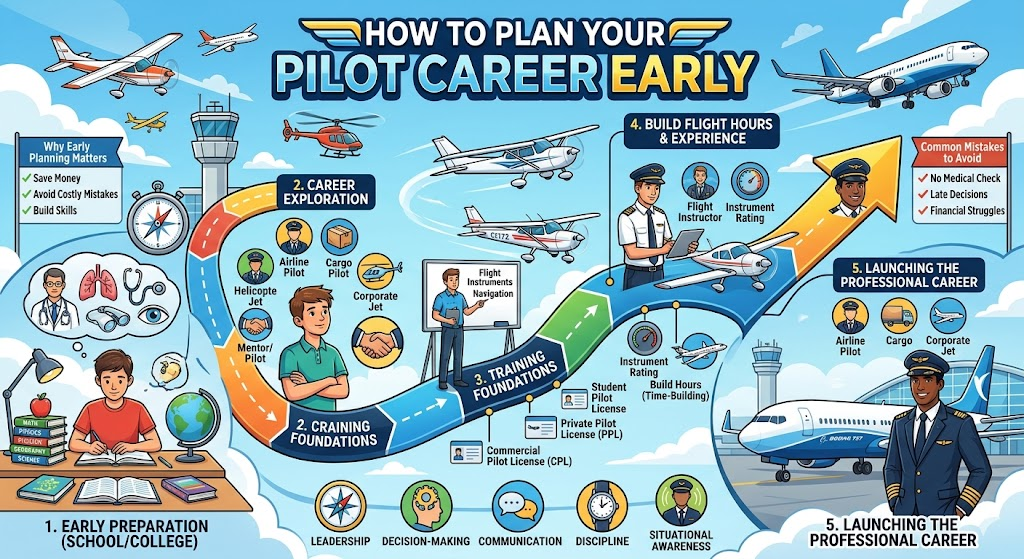
Create a Pilot Career Timeline
A clear timeline helps you stay focused. Your exact path may vary, but a simple roadmap can look like this:
School Stage
Focus on mathematics, physics, English, discipline, fitness, and communication skills. Start learning about aviation basics and pilot career paths.
Pre-Training Stage
Research flying schools, medical requirements, licensing rules, training costs, and financing options. Speak with experienced pilots and career counselors.
Flight Training Stage
Complete ground school, flying lessons, exams, and required licenses. Stay consistent and avoid long training gaps.
Time-Building Stage
Gain flying experience through instruction, charter flying, entry-level pilot roles, or other approved flying opportunities.
First Professional Job
Apply for roles such as flight instructor, charter pilot, cargo pilot, corporate pilot, or airline cadet programs depending on your qualifications.
Airline Career Growth
With experience, ratings, and strong performance, you can progress from junior pilot to first officer and eventually captain.
Common Mistakes to Avoid
Many aspiring pilots face delays because they make avoidable mistakes. Early awareness can save time and money.
Common mistakes include:
- Starting training without medical clearance
- Choosing a flying school without research
- Underestimating total training cost
- Ignoring English communication skills
- Taking long breaks during training
- Not preparing for exams properly
- Depending only on passion without planning
- Ignoring physical and mental fitness
- Not understanding career options
- Expecting instant airline jobs after training
A pilot career requires patience. Every stage builds your experience and professional maturity.
Expert Tips for Future Pilots
Start early, but do not rush blindly. Learn about the industry, speak with professionals, and understand both the opportunities and challenges. Maintain good health, stay disciplined, and keep your academic foundation strong.
Also, build a habit of continuous learning. Aviation keeps changing, and good pilots never stop improving. They study aircraft systems, weather, procedures, safety practices, and communication throughout their careers.
Most importantly, stay realistic. Becoming a pilot is achievable, but it requires commitment, planning, and persistence.
Frequently Asked Questions
1- What age should I start planning my pilot career?
You can start planning during school years, especially if you are serious about aviation. Early planning helps you choose the right subjects, understand medical requirements, and prepare financially. Even if you start later, a clear roadmap can still help you enter the field successfully.
2- Is a college degree necessary to become a pilot?
A college degree may not be mandatory for every pilot role, but it can be helpful for airline careers and competitive selection. Some airlines prefer candidates with higher education, while others focus more on licenses, flying hours, skills, and training performance.
3- How much does pilot training cost?
Pilot training costs vary depending on country, flying school, aircraft type, ratings, and training duration. Costs may include flying hours, ground school, exams, medical checks, accommodation, and additional ratings. It is important to request a full cost breakdown before joining any school.
4- What subjects should future pilots focus on?
Students should focus on mathematics, physics, English, and general science. These subjects help with navigation, aircraft performance, weather, communication, and technical understanding. Strong English communication is especially important in aviation.
5- Can I become a pilot without aviation background?
Yes, many pilots begin with no aviation background. What matters most is your commitment, medical fitness, learning ability, discipline, and proper training. Early exposure through aviation clubs, airport visits, and simulators can help you build confidence.
6- How long does it take to become an airline pilot?
The timeline depends on training structure, country requirements, flying hour requirements, exam progress, weather, aircraft availability, and job opportunities. Some students progress quickly, while others take longer due to financial or training delays.
7- Why is medical fitness important for pilots?
Pilots must meet strict medical standards because flight safety depends on physical and mental fitness. Vision, hearing, heart health, and overall medical condition are usually checked. It is best to complete medical screening early before spending heavily on training.
8- How can I reduce pilot training costs?
You can reduce costs by preparing well before each lesson, avoiding long gaps, choosing a reliable school, using simulators effectively, applying for scholarships, and maintaining consistent progress. Poor planning often increases total training expenses.
9- Are pilot jobs in demand?
Pilot demand depends on airline growth, regional aviation needs, cargo operations, business aviation, and economic conditions. Aviation careers can offer strong opportunities, but candidates must remain skilled, flexible, and prepared for competition.
10- What is the best first step toward becoming a pilot?
The best first step is to research the pilot career path clearly and check your medical eligibility. After that, learn about licensing requirements, training costs, flying schools, and career options. A planned approach gives you a stronger start.
Conclusion
Planning your pilot career early gives you a powerful advantage. It helps you understand the journey, prepare your education, manage training costs, choose the right flying school, and develop the skills needed for professional aviation. A pilot career is exciting, but it also demands discipline, patience, and continuous improvement. Whether your dream is to fly for an airline, cargo company, corporate operator, or aviation service provider, the right planning can turn your ambition into a structured career path. Start early, stay focused, learn consistently, and take each step with confidence. Your journey to the cockpit begins long before your first flight.
