
Introduction
Choosing the right flying school is one of the most important decisions in an aspiring pilot’s journey. It directly shapes your flying skills, safety mindset, career opportunities, and overall confidence in the cockpit. A good decision can fast-track your aviation career, while a poor choice can lead to delays, extra costs, and limited opportunities.
This guide will help you understand exactly how to evaluate, compare, and select a flying school wisely so you can take a confident step toward becoming a professional pilot.
Why Choosing the Right Flying School Matters
A flying school is not just a place where you learn to fly—it is where your aviation foundation is built. The quality of training affects every stage of your career.
- Builds core flying skills and discipline
- Develops safety awareness and decision-making ability
- Prepares you for licensing exams and certifications
- Impacts airline placement opportunities
- Determines training cost efficiency and timeline
A strong foundation ensures long-term success in aviation, while weak training can create challenges that are difficult to fix later.
Key Factors to Consider When Selecting a Flying School
Before enrolling in any flying school, carefully evaluate the following essential factors.
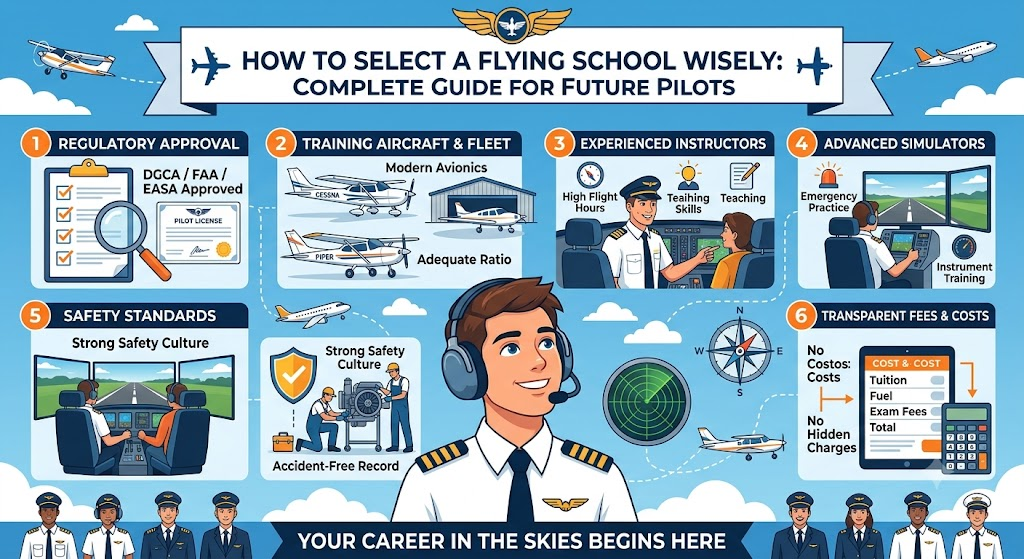
1. Regulatory Approval and Certification
Always ensure the flying school is approved by aviation authorities such as DGCA, FAA, or EASA depending on your region.
Why it matters:
- Ensures your license is valid and internationally recognized
- Confirms compliance with safety and training standards
- Required for commercial pilot career eligibility
2. Training Aircraft Quality
The condition and availability of aircraft significantly affect your training experience.
Look for:
- Well-maintained training fleet
- Modern avionics and navigation systems
- Adequate aircraft-to-student ratio
Poor aircraft availability can delay your flight hours and overall progress.
3. Simulator Training Facilities
Flight simulators play a critical role in safe and effective training.
A good flying school should offer:
- Advanced flight simulators
- Emergency situation practice
- Instrument flying training modules
Simulators help you build confidence before handling real aircraft situations.
4. Instructor Experience and Quality
Instructors directly influence your learning speed and understanding.
Check for:
- High total flying hours
- Commercial or airline background
- Strong teaching and communication skills
Experienced instructors make complex aviation concepts easier to understand.
5. Safety Standards and Record
Safety is the most critical factor in aviation training.
Evaluate:
- Maintenance practices
- Emergency preparedness
- Accident and incident history
- Compliance with aviation regulations
A strong safety culture reflects professionalism and reliability.
6. Training Fees and Transparency
Pilot training is a major financial investment, so clarity is important.
Ask about:
- Total course fees
- Fuel charges and landing fees
- Simulator usage costs
- Exam and licensing fees
Avoid schools with hidden or unclear charges.
7. Location and Weather Conditions
Weather directly affects flight training schedules and efficiency.
Ideal conditions include:
- Consistent flying weather
- Low air traffic congestion
- Minimal seasonal disruptions
Better weather means faster completion of flight hours.
8. Aircraft Availability and Flight Scheduling
Ensure the school provides structured and timely flying schedules.
Look for:
- Guaranteed monthly flight hours
- Minimal waiting time for aircraft
- Efficient scheduling system
More flying time leads to faster skill development.
Step-by-Step Guide to Select the Right Flying School
Follow this simple process to make the right decision.
Step 1: Shortlist Multiple Schools
Compare at least 5–8 flying schools based on reputation and facilities.
Step 2: Verify Certifications
Check approvals and validity of training programs.
Step 3: Visit the Campus
Inspect aircraft, simulators, classrooms, and maintenance areas.
Step 4: Talk to Current Students
Get real feedback about training quality and experience.
Step 5: Compare Total Costs
Evaluate full cost, not just base fees.
Step 6: Assess Training Quality
Focus on aircraft availability, instructors, and safety culture.
Step 7: Take a Trial Flight (if possible)
Experience real training conditions before final enrollment.
Comparison: Good Flying School vs Average Flying School
| Factor | Good Flying School | Average Flying School |
|---|---|---|
| Aircraft Condition | Modern and well-maintained | Old or inconsistent maintenance |
| Instructor Quality | Highly experienced pilots | Limited teaching experience |
| Safety Standards | Strong and strictly followed | Inconsistent safety practices |
| Flight Hours | Regular and guaranteed | Often delayed or limited |
| Cost Transparency | Fully transparent fees | Hidden or unclear charges |
| Simulator Access | Advanced and frequent use | Limited or outdated systems |
Common Mistakes Students Make
Avoid these mistakes when selecting a flying school:
- Choosing based only on low fees
- Ignoring safety records and approvals
- Not checking aircraft availability
- Trusting marketing claims without verification
- Skipping campus visits before enrollment
Making informed decisions prevents long-term career setbacks.
Career Opportunities After Flying School
After completing training from a reputed flying school, multiple career paths become available:
- Commercial Airline Pilot
- Cargo Pilot
- Flight Instructor
- Corporate Pilot
- Charter Pilot
- Aviation Management Roles
A strong training foundation improves your chances of joining top airlines globally.
FAQs: How to Select a Flying School Wisely
1. What is the first thing to check in a flying school?
The first thing to check is regulatory approval. Without certification from aviation authorities, your training may not be valid for commercial aviation careers.
2. How important is aircraft condition in training?
Aircraft condition is extremely important because it directly impacts safety, learning experience, and flight availability during training.
3. Do all flying schools offer simulator training?
Not all schools offer advanced simulators. However, quality schools always include simulator training as part of their core program.
4. Can I become a pilot if I choose the wrong school initially?
Yes, but it may lead to delays, extra costs, and additional training requirements to meet airline standards.
5. How many hours should I fly during training?
Flight hours vary by program, but consistent flying schedules are essential for skill development and license completion.
6. Is it better to choose a local or international flying school?
Both options are valid. The choice depends on budget, licensing goals, and airline career plans.
7. What role do instructors play in pilot training?
Instructors guide your learning, correct mistakes, build confidence, and prepare you for real-world flying scenarios.
8. How do I verify a flying school’s safety record?
You can check regulatory reports, student reviews, and ask directly about past incidents and safety audits.
9. Are expensive flying schools always better?
Not always. A higher fee does not guarantee better quality. Evaluate training standards, not just pricing.
10. What is the biggest mistake students make?
The biggest mistake is selecting a school based only on cost without checking safety, aircraft quality, and instructor experience.
Conclusion
Selecting the right flying school is a defining step in your aviation journey. It is not just about learning to fly but about building discipline, confidence, safety awareness, and professional readiness for airline careers. Every factor—certification, instructors, aircraft quality, simulators, and transparency—plays a critical role in shaping your future.
Take time to research, visit schools, and compare multiple options before making a decision. A well-chosen flying school will not only help you earn your license but also prepare you for long-term success in the aviation industry. Your career in the skies begins with the decision you make today, so choose wisely and aim high.
