
Introduction
Becoming a pilot requires more than technical knowledge and flying skills. Every aspiring pilot must first meet strict medical requirements to ensure safe and efficient operation of an aircraft. Aviation is a high-responsibility field where even minor health issues can impact performance, reaction time, and decision-making.
Aviation authorities such as DGCA in India and other global regulators have defined structured medical standards to evaluate whether a candidate is fit to fly. These standards are designed to ensure that pilots can handle physical and mental pressure in all flying conditions.
This guide explains the complete pilot medical requirements, including medical classes, vision standards, hearing requirements, physical fitness rules, examination process, and common reasons for disqualification.
What is a Pilot Medical Certificate?
A pilot medical certificate is an official document issued after a medical examination conducted by an authorized aviation medical examiner. It confirms that a candidate is medically fit to operate an aircraft safely.
In India, DGCA regulates all pilot medical certifications. Similar aviation bodies exist worldwide, such as FAA and EASA.
Types of Pilot Medical Certificates
Class 1 Medical Certificate
- Required for Commercial Pilot License (CPL)
- Strictest level of medical evaluation
- Mandatory for airline pilots
Class 2 Medical Certificate
- Required for Private Pilot License (PPL)
- Moderate medical standards
- Suitable for private and recreational flying
Class 3 Medical Certificate
- Required for student pilots in some cases
- Basic medical fitness evaluation
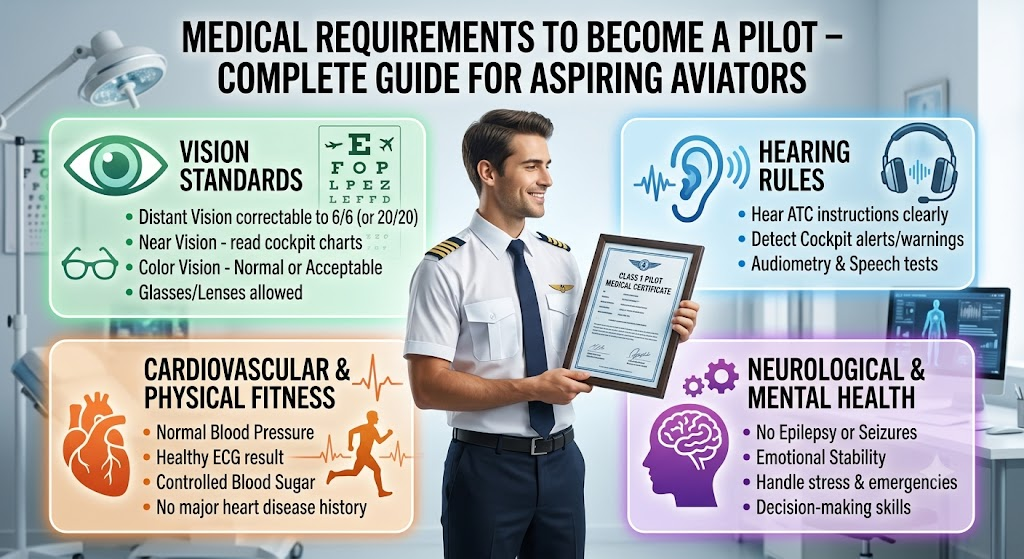
Key Pilot Medical Requirements
Pilot medical fitness is evaluated across several critical areas.
Vision Requirements
Vision plays a major role in aviation safety.
- Distant vision must meet aviation standards (correctable if required)
- Near vision must be sufficient to read cockpit instruments
- Color vision must be normal or within acceptable limits
- Glasses or contact lenses are allowed if correction meets standards
Hearing Requirements
Pilots must clearly understand communication in all flight conditions.
- Ability to hear air traffic control instructions
- Ability to detect cockpit alerts and warnings
- Audiometry and speech tests are conducted
Cardiovascular Health
Heart health is carefully evaluated for flight safety.
- Normal blood pressure levels
- Healthy ECG results
- No history of severe heart disease
Neurological Health
The nervous system must function without impairment.
- No history of epilepsy or seizures
- No severe balance or coordination disorders
- Stable cognitive performance
Mental Health Standards
Psychological stability is essential for pilots.
- Ability to handle stress and emergencies
- No severe anxiety or psychiatric disorders
- Strong decision-making ability under pressure
General Physical Fitness
Overall fitness is assessed through multiple health indicators.
- Normal BMI range
- Healthy liver and kidney function
- Controlled blood sugar levels
- No chronic disabling conditions
Step-by-Step Pilot Medical Examination Process
Step 1: Visit Approved Medical Examiner
Candidates must visit DGCA-authorized aviation medical examiners or designated hospitals.
Step 2: Submit Required Documents
- Valid identity proof
- Passport-sized photographs
- Previous medical history (if applicable)
Step 3: Medical Tests
Common tests include:
- Vision test
- Hearing test
- Blood and urine analysis
- ECG examination
- Chest X-ray (if required)
Step 4: Medical Evaluation
The examiner reviews all test reports and prepares the medical assessment.
Step 5: Certification
If all requirements are met, the candidate receives a pilot medical certificate.
Common Medical Disqualifications
Permanent Disqualifications
- Severe cardiac diseases
- Epilepsy or seizure disorders
- Major vision loss not correctable
- Serious psychiatric conditions
Temporary Disqualifications
- Uncontrolled blood pressure
- Temporary infections or illness
- Short-term vision or health issues
Many temporary conditions can be reassessed after treatment.
How to Prepare for Pilot Medical Tests
Maintain Healthy Lifestyle
- Balanced nutrition
- Regular physical exercise
- Proper sleep routine
Eye Health Care
- Avoid excessive screen exposure
- Use prescribed corrective lenses properly
- Regular eye checkups
Hearing Protection
- Avoid prolonged exposure to loud environments
- Use protective equipment when necessary
Mental Fitness
- Practice stress management
- Stay calm under pressure
- Avoid harmful substances
Medical Validity and Renewal
Pilot medical certificates are not permanent and must be renewed periodically.
Validity Period
- Class 1 requires frequent renewal based on age and authority rules
- Class 2 has longer validity but still requires periodic updates
Renewal Process
- Repeat medical examination
- Updated health evaluation
- Fitness confirmation by aviation authority
FAQs – Medical Requirements to Become a Pilot
1. Can I become a pilot if I wear glasses?
Yes, you can become a pilot if your vision is corrected to meet aviation standards using glasses or contact lenses.
2. Is color blindness allowed in pilot medicals?
Full color blindness is generally not permitted because pilots must identify cockpit lights and signals accurately.
3. What happens if I fail the pilot medical test?
You may be temporarily or permanently disqualified depending on the condition. Some cases can be retested after treatment.
4. How long is a pilot medical certificate valid?
Validity depends on medical class and age, and requires periodic renewal as per aviation regulations.
5. Can pilots have high blood pressure?
Controlled blood pressure may be acceptable, but uncontrolled hypertension can lead to disqualification.
6. Is mental health checked for pilots?
Yes, mental stability and psychological fitness are important parts of the evaluation process.
7. Can asthma affect pilot eligibility?
Mild asthma may be acceptable if well controlled, but severe cases can restrict eligibility.
8. Do pilots need perfect eyesight?
Perfect eyesight is not required, but vision must be correctable to aviation safety standards.
9. Can I retake a failed medical examination?
Yes, after treatment or recovery, you can undergo re-evaluation for medical certification.
10. Where are DGCA medical tests conducted?
They are conducted at DGCA-approved medical examiners and authorized aviation hospitals.
11. Is fitness important for becoming a pilot?
Yes, overall physical fitness is essential for handling long flights and operational stress.
Conclusion
Medical requirements are one of the most important steps in becoming a pilot. They ensure that every pilot is physically and mentally capable of handling the responsibilities of flying an aircraft safely.
From vision and hearing to cardiovascular health and mental stability, each parameter is carefully evaluated through structured medical examinations. Understanding these requirements early helps aspiring pilots prepare in advance and avoid delays in their aviation journey.
If you are serious about becoming a pilot, it is strongly recommended to undergo a medical assessment at the beginning of your training path. A strong medical foundation ensures a smooth and successful aviation career.
