
Introduction
Becoming a pilot takes more than learning how to fly. It also takes mental strength, focus, patience, and discipline. Flight training can bring new challenges every week. Some lessons may feel easy, while others may test your confidence.
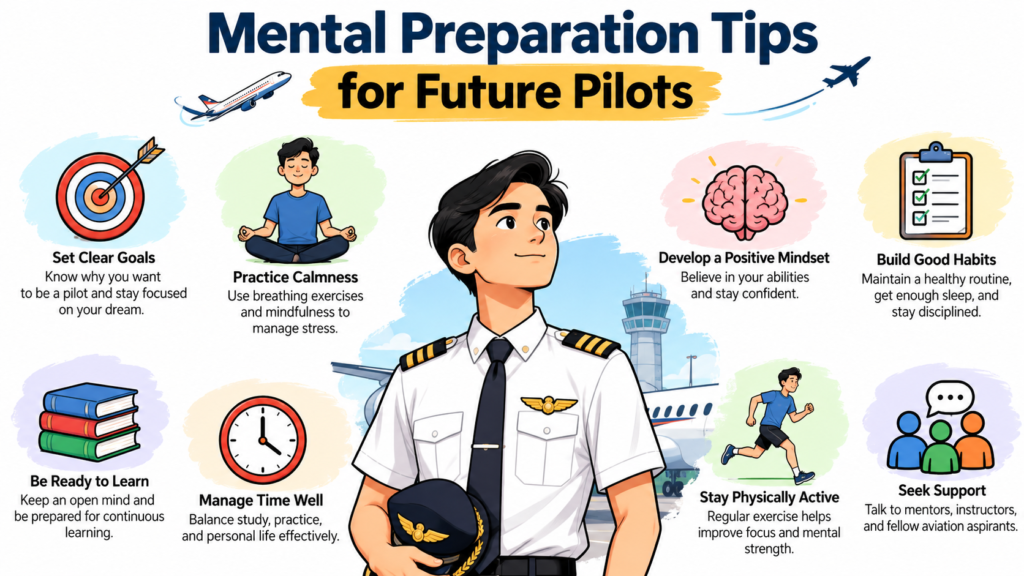
Future pilots need to prepare their minds along with their technical skills. A calm and focused mind can help students learn better. It can also help them handle mistakes, feedback, exams, and flight tests.
Mental preparation does not mean never feeling nervous. It means learning how to manage those feelings and stay focused on the task.
Understand the Mental Demands of Pilot Training
Pilot training can feel demanding at times. Students must study aviation subjects and attend flight lessons. They also need to prepare for tests and practical training.
Some training days may not go as planned. Weather can delay a flight. An instructor may ask you to repeat a skill. An exam may also require more preparation than expected.
These situations can feel frustrating. However, they form part of the learning process.
Students should expect both good and difficult days. This mindset can reduce unnecessary stress. It can also help students stay patient during training.
Build a Calm and Focused Mindset
Focus plays an important role during flight training. Students need to pay attention to instructions and complete tasks carefully.
You can build focus through simple habits.
- Prepare before every training session.
- Review the lesson plan before flying.
- Keep your phone and other distractions away.
- Focus on one task at a time.
- Take short breaks during long study sessions.
- Review your performance after each lesson.
A calm mind can help you notice important details. It can also help you respond better when something changes during training.
Learn to Handle Mistakes
Every student makes mistakes while learning. A mistake does not always mean that you cannot become a good pilot.
The important step comes after the mistake. Try to understand what happened. Listen to your instructor’s explanation. Ask questions if something remains unclear.
Then practice the skill again.
Avoid hiding mistakes because of embarrassment. Honest learning can help you improve faster. Aviation training also teaches students to recognize problems and respond correctly.
Instead of thinking, “I am bad at this,” ask, “What can I learn from this?”
That simple change can improve your approach to training.
Prepare for Flight Training Pressure
Students may experience pressure for many reasons. Exams, flight tests, training costs, and performance expectations can all create stress.
Some students also compare themselves with classmates. This can create extra pressure.
Try to focus on your own progress. Another student’s learning speed does not define your ability.
Break large goals into smaller tasks. Focus on the lesson you need to complete today. Prepare well instead of worrying about every future challenge.
If training pressure becomes difficult to manage, talk to your instructor or another trusted professional.
Develop Good Decision-Making Habits
Pilots make decisions using available information and established procedures. Students can start building good decision habits during training.
Before making a decision, take a moment to understand the situation. Check the information available to you. Think about your options and follow the correct procedures.
Good decision-making also includes knowing your limits.
You do not need to pretend that you know everything. Asking for help can be a responsible choice.
A student who asks a clear question can often avoid a larger problem later.
Build Confidence Without Becoming Overconfident
Confidence helps students perform better. However, confidence should come from preparation and practice.
You can build confidence by studying regularly and practicing your skills. Reviewing instructor feedback can also show you where you have improved.
Overconfidence creates a different problem. A student may start ignoring procedures after gaining experience.
Good pilots continue to respect procedures and limits. They also remain open to learning.
Your goal should be steady confidence. Trust your training, but continue to check your work.
Develop Discipline and Consistency
Discipline can make flight training easier to manage. Students need regular study and preparation habits.
Create a simple routine for your training days.
For example, review your previous lesson before the next flight. Prepare your notes and training materials in advance. Keep track of areas that need more practice.
Time management also matters. Avoid leaving all your studying until the last moment.
Small daily habits can make a big difference over time.
Consistency also helps reduce last-minute stress. You can enter each training session with a clearer idea of what you need to learn.
Learn How to Handle Instructor Feedback
Instructor feedback is a normal part of flight training. Your instructor may point out mistakes or areas that need improvement.
Do not treat every correction as personal criticism. Your instructor is helping you improve your skills.
Listen carefully during the briefing and debriefing. Write down important points when useful. Ask questions when you need more explanation.
Then apply the feedback during your next practice session.
A student who accepts useful feedback can improve more effectively. Feedback also helps students understand their current strengths and weaknesses.
Prepare Mentally for Setbacks
Pilot training does not always move in a straight line. Some students may need extra practice before mastering a skill.
You may also face a difficult exam or an unsuccessful flight test. Weather can cause unexpected delays. These situations can feel disappointing.
Give yourself time to understand what happened. Then identify the next step.
Ask your instructor what you should improve. Create a simple practice plan. Focus on progress rather than frustration.
One setback does not define your entire training journey.
The ability to recover and keep learning is an important part of preparation.
Take Care of Your Mental and Physical Readiness
Your physical condition can affect your ability to focus. Poor sleep can make studying and training harder. Lack of rest can also reduce attention.
Try to maintain healthy daily habits.
- Get enough sleep before training.
- Eat regular and balanced meals.
- Drink enough water.
- Take proper rest between study sessions.
- Stay physically active.
- Avoid unnecessary distractions before a flight.
- Give yourself enough preparation time.
Good habits can support better focus during training.
Students should also avoid treating tiredness as something they must always ignore. If you do not feel ready for training, discuss the situation with your instructor and follow the applicable training procedures.
A Simple Mental Preparation Checklist
Before a flight lesson, take a few minutes to check your readiness.
- Did I review my previous lesson?
- Do I understand today’s training goal?
- Am I rested and focused?
- Did I prepare the required materials?
- Do I remember my instructor’s previous feedback?
- Do I have any questions to ask?
- Am I ready to accept corrections?
- Am I prepared to learn from mistakes?
This simple checklist can help you approach training with a clear mind.
Common Mistakes Future Pilots Should Avoid
Mental preparation can become difficult when students develop unhealthy habits. Recognizing these habits early can help.
Trying to Hide Mistakes
Some students worry about admitting mistakes. This can slow down learning. Speak openly with your instructor when something goes wrong.
Comparing Yourself With Other Students
Every student has a different learning pace. Comparing yourself with others can create unnecessary pressure.
Ignoring Instructor Feedback
Feedback can show you what needs improvement. Listen carefully and use it during future practice.
Studying Only Before Exams
Regular study usually feels easier than last-minute preparation. Build a steady study routine instead.
Becoming Overconfident
Good performance should increase confidence, not reduce attention to procedures.
Losing Confidence After One Bad Session
One difficult lesson does not describe your complete ability. Review the problem and keep working on it.
Ignoring Sleep and Rest
Mental focus can suffer when you do not rest properly. Give your mind and body enough recovery time.
Rushing the Learning Process
Pilot training takes time. Trying to rush every skill can create extra pressure. Focus on learning each stage properly.
Important Considerations
Mental preparation is only one part of becoming a pilot. Students also need proper ground training, flight instruction, practical skills, and required aviation knowledge.
Training requirements can vary based on the license, authority, and training program. Students should always follow the current rules that apply to their training.
It is also important to remember that feeling nervous does not automatically mean you are unsuitable for aviation. New situations can make many learners nervous.
The goal is to learn how to manage those feelings responsibly.
If you have serious concerns about your ability to cope with training pressure, discuss them with an appropriate professional. Your flight instructor can also guide you toward suitable support.
Frequently Asked Questions
1. Why is mental preparation important for pilot training?
Mental preparation can help students stay focused and handle challenges. It can also help them learn from mistakes and feedback.
2. How can student pilots manage flight training stress?
Prepare before each lesson and focus on one task at a time. Regular study, rest, and clear communication can also help.
3. How can I stay confident after making a mistake?
Understand what caused the mistake and listen to your instructor’s feedback. Then practice the skill again.
4. How can I improve my focus during flight lessons?
Prepare before the lesson and reduce distractions. Pay attention to instructions and focus on the current task.
5. Is nervousness normal during early flight training?
Some nervousness can happen when students face new situations. Preparation and regular practice can help students become more comfortable.
6. How can students handle instructor criticism?
Listen carefully and focus on the useful information. Treat corrections as part of the learning process.
7. How can I prepare mentally for a flight test?
Review your training, practice weak areas, and understand the test requirements. Avoid last-minute panic and focus on proper preparation.
8. What habits can help student pilots stay disciplined?
Regular study, good time management, proper preparation, and consistent practice can support discipline.
9. How should I deal with a failed aviation exam or flight test?
Take time to understand what went wrong. Speak with your instructor and create a plan to improve before trying again.
10. How can I prepare myself mentally before starting pilot training?
Learn about the training process and understand that progress takes time. Build good study, sleep, focus, and preparation habits early.
Conclusion
Mental preparation can make pilot training more manageable. Future pilots need focus, patience, discipline, confidence, and good judgment.
Mistakes and setbacks can happen during training. What matters is how you respond to them.
Prepare before each lesson. Listen to feedback. Stay open to learning. Take care of your health and rest.
Most importantly, give yourself time to develop your skills. A calm and consistent approach can help you handle the challenges that come with pilot training.
