
Introduction
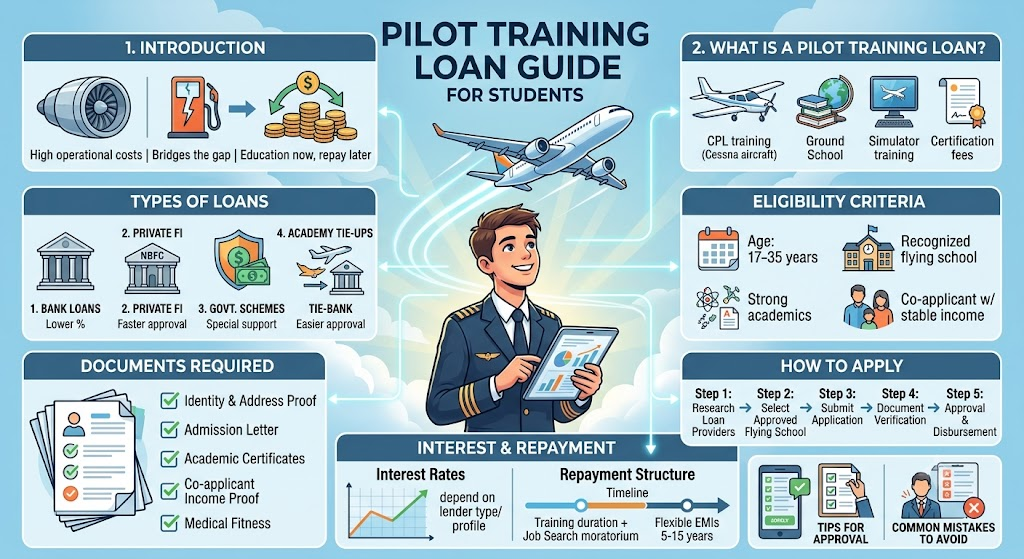
Becoming a commercial pilot requires extensive training, strict regulatory compliance, and hundreds of flight hours. Unlike traditional degree programs, aviation training involves high operational costs such as aircraft usage, fuel, instructor fees, and simulator sessions.
Because of these expenses, many students are unable to self-finance their training. A pilot training loan helps bridge this gap by allowing students to pay for their education now and repay after they begin their careers.
This financial support system ensures that talented students are not restricted by financial limitations and can pursue aviation as a long-term profession.
What Is a Pilot Training Loan?
A pilot training loan is a type of education loan specifically designed to cover the cost of aviation training programs such as:
- Commercial Pilot License (CPL) training
- Private Pilot License (PPL) training
- Ground school education
- Simulator training
- Flight hours and certification fees
These loans work similarly to student loans but are tailored for aviation expenses. The lender pays the training institute directly or reimburses the student based on approved costs.
The repayment usually begins after the completion of training, often including a moratorium period where students do not need to repay immediately.
Types of Pilot Training Loans
There are several financing options available for aviation students:
1. Bank Education Loans
Traditional banks offer structured education loans for professional courses, including pilot training.
- Lower interest rates compared to private lenders
- Longer repayment tenure
- Requires strong documentation and co-applicant
2. Private Financial Institutions
Non-banking financial companies (NBFCs) also offer aviation-specific loans.
- Faster approval process
- Flexible eligibility criteria
- Slightly higher interest rates
3. Government-Backed Schemes
Some regions provide subsidized education loan programs for higher studies.
- Lower interest burden
- Special support for economically weaker students
- Limited availability depending on country policies
4. Aviation Academy Tie-Up Loans
Some flight schools have partnerships with financial institutions.
- Easier approval process
- Pre-approved training cost packages
- Reduced documentation requirements
Eligibility Criteria for Pilot Training Loans
While requirements vary between lenders, common eligibility criteria include:
- Minimum age requirement (usually 17–35 years)
- Admission in a recognized flight training school
- Good academic background (especially in science subjects)
- Co-applicant with stable income (parent or guardian)
- Valid identification and residency documents
Meeting these requirements improves approval chances and may also help secure better loan terms.
Documents Required for Loan Approval
Students typically need to submit the following documents:
- Identity proof (Aadhar card, passport, or national ID)
- Address proof
- Admission letter from a flying school
- Academic certificates and transcripts
- Income proof of co-applicant
- Bank statements
- Medical fitness certificate (if required by lender)
- Fee structure from the aviation institute
Having complete documentation ready can significantly speed up the approval process.
How to Apply for a Pilot Training Loan
The application process is usually straightforward if planned properly:
Step 1: Research Loan Providers
Compare banks, NBFCs, and aviation-specific lenders based on interest rates and repayment terms.
Step 2: Select Approved Flight School
Choose a recognized and accredited training institute, as lenders prefer approved schools.
Step 3: Submit Application
Fill out the loan application form with all required personal and academic details.
Step 4: Document Verification
The lender verifies your documents and training institution details.
Step 5: Loan Approval and Disbursement
Once approved, the loan amount is either disbursed directly to the training institute or in installments.
The entire process may take a few days to a few weeks depending on the lender.
Interest Rates and Repayment Options
Pilot training loans come with different repayment structures:
Interest Rates
- Depend on lender type and credit profile
- Bank loans generally offer lower interest
- Private lenders may charge higher rates for faster processing
Repayment Structure
- Monthly EMIs after completion of training
- Moratorium period (training duration + job search time)
- Flexible repayment tenure (often 5–15 years)
EMI Planning
Proper EMI planning ensures financial stability after becoming a pilot. Many lenders offer flexible repayment plans based on expected aviation salary growth.
Tips to Get Pilot Training Loan Approval Easily
Getting approval is easier when students follow a strategic approach:
- Maintain strong academic records
- Choose a recognized and reputed flying school
- Apply early before course start date
- Ensure co-applicant has a good credit score
- Keep documentation complete and accurate
- Avoid multiple loan applications simultaneously
Lenders prefer candidates with clear career goals and structured training plans.
Alternatives to Pilot Training Loans
While loans are common, students can also explore other funding options:
1. Scholarships
Some aviation academies and organizations offer merit-based scholarships for outstanding students.
2. Cadet Programs
Airlines sometimes sponsor training in exchange for future employment commitments.
3. Part-Time Financial Support
Some students combine family funding with partial loans to reduce debt burden.
4. Self-Funding Strategy
A few students save and fund initial training phases before applying for loans.
These alternatives can significantly reduce total financial pressure.
Common Mistakes to Avoid When Taking a Loan
Many students make avoidable mistakes that delay approval or increase costs:
- Choosing unrecognized training institutes
- Ignoring interest rate comparisons
- Submitting incomplete documentation
- Not understanding repayment terms
- Borrowing more than required
- Delaying application until last moment
Avoiding these mistakes ensures smoother financial planning.
FAQs
1. What is a pilot training loan?
A pilot training loan is an education loan designed to cover the cost of aviation training, including flight hours, ground school, and certification expenses.
2. Can I get a loan for commercial pilot training?
Yes, most banks and financial institutions offer loans specifically for Commercial Pilot License (CPL) training programs.
3. Do I need collateral for a pilot training loan?
It depends on the loan amount and lender. Some banks may require collateral for higher loan amounts, while others offer unsecured loans.
4. When do I start repaying the loan?
Repayment usually starts after training completion, often with a moratorium period that includes job search time.
5. Can international students apply for pilot training loans?
Yes, but eligibility depends on the country, lender policies, and co-applicant requirements.
6. What expenses are covered in pilot training loans?
Loans typically cover tuition fees, flight training, simulator sessions, exam fees, and sometimes living expenses.
7. How long does loan approval take?
Approval time varies from a few days to a few weeks depending on documentation and lender verification processes.
8. Are pilot training loans risky?
They are not risky if planned properly. Since aviation careers offer strong earning potential, repayment is generally manageable with proper financial planning.
Conclusion
A pilot training loan is one of the most effective ways to turn an expensive aviation dream into reality. With proper planning, students can access high-quality training without immediate financial pressure.
Understanding loan types, eligibility criteria, documentation requirements, and repayment structures helps students make informed decisions. At the same time, choosing the right flight school and maintaining financial discipline ensures long-term success.
Becoming a pilot is a significant investment, but with the right financial strategy, it becomes an achievable and rewarding career path that opens doors to global opportunities in aviation.
