
Introduction
Becoming an airline pilot is a dream career path for many students who are passionate about aviation, technology, and exploring the world. However, the journey from having an interest in flying to becoming a professional airline pilot requires proper planning, structured training, dedication, and continuous skill development.
A pilot career is not achieved through a single course or certification. It involves multiple stages, including understanding aviation fundamentals, completing flight training, meeting medical requirements, gaining flight experience, earning necessary licenses, and preparing for airline opportunities.
For beginners, the pilot training journey can sometimes feel complex because there are many decisions involved. Choosing the right flight school, understanding training steps, preparing financially, and developing professional aviation skills are important parts of the process.
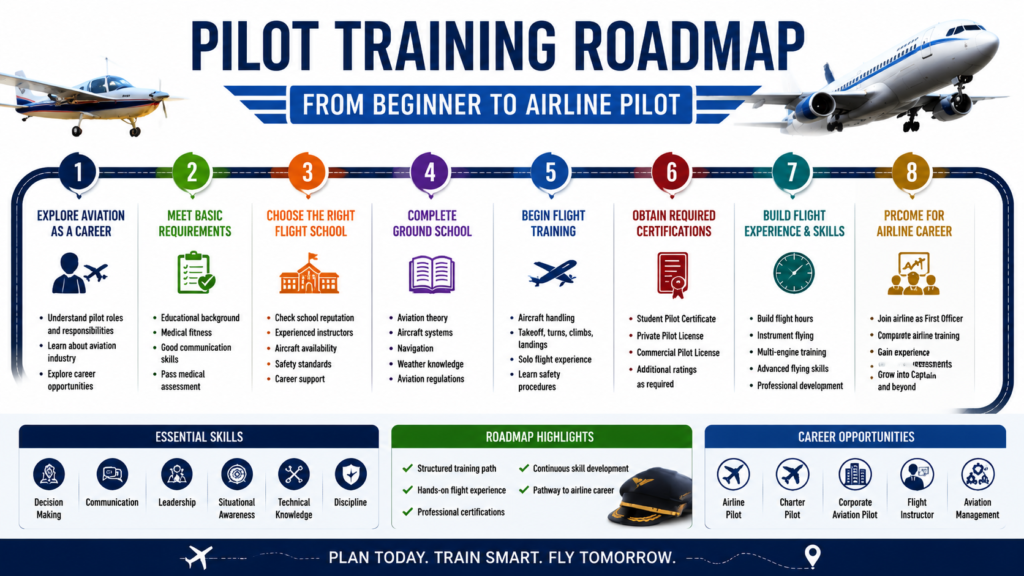
This pilot training roadmap explains the complete journey from beginner level to airline pilot, helping aspiring pilots understand each stage and make better career decisions.
Real-world examples
- A student interested in aviation researches different flight training options after completing education and chooses a structured pilot training path.
- A beginner pilot joins a flight school, completes ground classes, and gradually develops practical flying skills through instructor-guided training.
- An aspiring airline pilot builds flight experience, improves aviation knowledge, and prepares for airline selection processes after completing commercial pilot training.
Evaluation Criteria for Choosing a Pilot Training Path
Before starting pilot training, beginners should carefully evaluate different factors to select the right training approach.
Flight School Reputation
A reliable flight school should have a good training environment, experienced instructors, and a strong focus on aviation safety. Students should research the school’s training structure and learning support before enrollment.
Instructor Experience
Flight instructors play an important role in developing a pilot’s technical knowledge and confidence. Experienced instructors help students understand aircraft operations, safety procedures, and decision-making skills.
Aircraft Availability
Regular access to training aircraft is important because consistent flying practice helps students progress efficiently. A school with proper aircraft availability can provide smoother training experiences.
Training Quality and Safety Standards
Safety should always be the highest priority in aviation. Students should choose training programs that focus on professional standards, proper procedures, and disciplined flying practices.
Certification Pathway
Beginners should understand whether the training program supports their long-term goal, such as becoming a commercial pilot or pursuing an airline career.
Career Support
Some flight schools provide guidance related to career preparation, interview skills, and professional development. This support can help students transition into aviation careers.
Understanding the Pilot Career Path
The aviation career journey consists of different stages. Each stage develops specific skills and responsibilities required for professional flying.
Student Pilot
A student pilot is a beginner who starts learning basic aviation concepts and flight operations. At this stage, students learn aircraft controls, safety procedures, and fundamental flying techniques.
Private Pilot
A private pilot certification allows pilots to fly aircraft for personal purposes. This stage focuses on developing stronger flying abilities and understanding aviation operations.
Commercial Pilot
A commercial pilot certification prepares pilots for professional flying activities. Training at this stage includes advanced flight skills, professional standards, and greater responsibility.
Airline Pilot
An airline pilot operates commercial aircraft and manages passenger flights. Airline pilots require advanced training, experience, and strong decision-making abilities.
Complete Pilot Training Roadmap
Step 1: Explore Aviation as a Career
The first step in becoming a pilot is understanding the aviation industry and the responsibilities of pilots.
Before starting training, beginners should learn about:
- Different pilot career options
- Daily responsibilities of pilots
- Aircraft operations
- Aviation lifestyle
- Career opportunities in aviation
Pilots are responsible for passenger safety, aircraft operation, communication with aviation teams, and making important decisions during flights.
A clear understanding of the profession helps students decide whether aviation is the right career choice for them.
Step 2: Meet Basic Eligibility Requirements
Before beginning pilot training, students need to understand basic eligibility requirements.
Important factors include:
Educational Background
Pilot training generally requires a strong foundation in subjects related to mathematics, physics, and science. Educational requirements may vary depending on aviation authority guidelines.
Medical Fitness
Pilots need to meet aviation medical standards because flying requires physical and mental fitness.
Medical assessments usually evaluate areas such as:
- Vision
- Hearing
- General health
- Physical fitness
Communication Skills
Pilots communicate with air traffic controllers, crew members, and aviation professionals. Strong communication skills are important for safe flight operations.
Step 3: Choose the Right Flight School
Selecting the right flight school is one of the most important decisions in a pilot’s journey.
Students should consider:
Training Facilities
A good flight school should provide:
- Proper classrooms
- Training resources
- Flight simulation facilities
- Maintenance support
Experienced Faculty
Professional instructors help students understand both theoretical concepts and practical flying skills.
Training Environment
A positive learning environment helps students develop confidence, discipline, and professional aviation habits.
Career Alignment
Students should select training programs that match their future goals, whether they want to become commercial pilots, airline pilots, or aviation professionals.
Step 4: Complete Ground School Training
Ground school builds the theoretical foundation required for safe flying.
During ground training, students learn about:
Aviation Theory
Students understand aircraft principles, flight operations, and aviation concepts.
Aircraft Systems
This includes learning how aircraft components work, including:
- Engines
- Controls
- Navigation systems
- Communication systems
Weather Knowledge
Pilots must understand weather conditions because weather directly affects flight safety.
Topics include:
- Wind patterns
- Clouds
- Weather reports
- Storm conditions
Navigation
Navigation training teaches pilots how to plan routes and understand aircraft positioning.
Aviation Regulations
Pilots learn operational rules, safety standards, and aviation procedures.
Step 5: Begin Flight Training
Flight training is where students apply their classroom knowledge in real aircraft operations.
During this stage, students learn:
Aircraft Handling
Students practice controlling aircraft movements, including:
- Taxiing
- Takeoff procedures
- Climbing
- Turning
- Landing
Solo Flight Experience
After gaining sufficient skills, students complete solo flights under approved training conditions.
This helps develop:
- Confidence
- Decision-making
- Independent flying ability
Flight Safety Practices
Safety procedures become a core part of every flight lesson.
Students learn how to:
- Perform aircraft checks
- Handle emergency situations
- Follow aviation procedures
Step 6: Obtain Required Pilot Certifications
Pilot certifications represent important milestones in the aviation journey.
Student Pilot Stage
Beginners start by learning basic flight operations under instructor supervision.
Private Pilot Certification
This develops independent flying skills and builds practical experience.
Commercial Pilot Certification
Commercial training prepares pilots for professional aviation careers.
This stage focuses on:
- Advanced flying techniques
- Professional standards
- Increased flight experience
Additional Qualifications
Many airline careers require additional qualifications and advanced training depending on aircraft type and career goals.
Step 7: Build Flight Experience and Skills
After completing major certifications, pilots need to continue improving their skills and gaining experience.
Important areas include:
Flight Hour Building
Pilots gain additional flying experience to meet professional requirements.
Instrument Flying
Instrument training helps pilots operate aircraft using cockpit instruments, especially when visibility conditions are challenging.
Multi-Engine Training
Multi-engine training prepares pilots to operate aircraft with more than one engine.
Professional Flying Skills
Future airline pilots need strong abilities in:
- Communication
- Navigation
- Decision-making
- Crew coordination
Step 8: Prepare for Airline Pilot Career
Becoming an airline pilot requires preparation beyond flight training.
Resume Preparation
Pilots should maintain professional records of:
- Certifications
- Flight experience
- Training achievements
Interview Preparation
Airlines evaluate candidates through interviews and assessments.
Candidates should prepare for:
- Technical questions
- Aviation knowledge discussions
- Situational questions
Simulator Assessments
Many airline selection processes include simulator evaluations to assess flying skills and decision-making.
Step 9: Become an Airline Pilot
After completing required training and selection processes, pilots begin their professional airline careers.
First Officer Role
Most new airline pilots start as first officers. They work alongside experienced captains and continue developing operational experience.
Airline Training Programs
Airlines provide additional training related to:
- Aircraft systems
- Company procedures
- Safety operations
Career Growth
With experience, pilots can progress into roles such as:
- Senior First Officer
- Captain
- Training Instructor
- Aviation Management Roles
Skills Every Future Airline Pilot Should Develop
Decision-Making Skills
Pilots must make accurate decisions under different conditions.
Communication Skills
Clear communication is essential between pilots, crew members, and air traffic controllers.
Leadership Ability
Professional pilots need leadership skills, especially when managing complex flight situations.
Situational Awareness
Pilots must continuously monitor aircraft conditions, weather, and surroundings.
Technical Knowledge
Understanding aircraft systems and aviation procedures is essential for safe operations.
Discipline
Successful pilots follow strict procedures and maintain professional standards.
Common Mistakes Beginners Should Avoid
Choosing a Flight School Only Based on Cost
The cheapest option may not always provide the best training environment. Students should consider quality, safety, and career support.
Ignoring Medical Requirements
Students should understand medical requirements before investing significant time and resources into training.
Lack of Career Planning
Aviation requires long-term planning. Beginners should understand each training stage before starting.
Poor Financial Preparation
Pilot training requires investment. Students should create a realistic financial plan before enrollment.
Not Developing Communication Skills
Professional communication is a major part of airline operations.
Pilot Training Timeline and Planning Considerations
The duration of pilot training depends on multiple factors, including:
- Training schedule
- Weather conditions
- Aircraft availability
- Student progress
- Certification requirements
Consistent practice and dedication help students complete training efficiently.
A structured learning approach allows beginners to develop skills gradually without unnecessary pressure.
Career Opportunities After Pilot Training
After completing pilot training, aviation professionals can explore different career opportunities.
Airline Pilot
The most common goal for many students is flying commercial passenger aircraft.
Charter Pilot
Charter pilots operate private and specialized aircraft services.
Corporate Aviation Pilot
Corporate pilots fly aircraft used by businesses and organizations.
Flight Instructor
Experienced pilots can train new students and help develop future aviation professionals.
Aviation Management
Some pilots move into aviation leadership and operational management roles.
Pilot Training Roadmap Comparison Table
| Training Stage | Main Goal | Skills Developed | Career Progress |
|---|---|---|---|
| Aviation Exploration | Understand pilot career | Industry knowledge and planning | Career decision |
| Ground Training | Learn aviation theory | Regulations, weather, navigation | Academic foundation |
| Flight Training | Develop flying ability | Aircraft control and safety | Pilot certification progress |
| Commercial Training | Prepare for professional flying | Advanced flying skills | Professional pilot pathway |
| Airline Preparation | Meet airline expectations | Interviews, simulator skills | Airline opportunities |
| Airline Training | Operate commercial aircraft | Aircraft-specific knowledge | Airline pilot career |
Pilot Career Roadmap Checklist
✅ Research aviation career options
✅ Understand eligibility requirements
✅ Complete medical assessment
✅ Select a suitable flight school
✅ Finish ground training
✅ Complete flight training
✅ Earn required certifications
✅ Build flight experience
✅ Prepare for airline selection
✅ Begin airline pilot career
Frequently Asked Questions
1. How do I start my journey to become an airline pilot?
Start by researching aviation careers, understanding eligibility requirements, completing medical checks, and selecting a suitable flight training program.
2. What qualifications are required for pilot training?
Requirements vary by aviation authority, but students generally need appropriate education, medical fitness, and aviation training.
3. How long does pilot training usually take?
Training duration depends on the program structure, student progress, weather conditions, and flight availability.
4. What is the difference between private and commercial pilot training?
Private pilot training focuses on personal flying skills, while commercial training prepares pilots for professional aviation careers.
5. How do beginners choose the right flight school?
Beginners should evaluate training quality, instructors, aircraft availability, safety standards, and career support.
6. Is medical fitness important for pilots?
Yes, pilots must meet aviation medical standards because safe flying requires physical and mental fitness.
7. What skills are needed to become an airline pilot?
Pilots need communication skills, decision-making ability, technical knowledge, discipline, and situational awareness.
8. How do pilots build flight experience?
Pilots build experience through structured training, flight hour development, advanced certifications, and professional flying opportunities.
9. Can students start pilot training after school?
Yes, many students begin aviation training after completing their education requirements and meeting eligibility criteria.
10. What career opportunities exist after becoming a pilot?
Pilots can work in airlines, charter operations, corporate aviation, flight instruction, and aviation management roles.
Conclusion
Becoming an airline pilot is a structured journey that requires commitment, preparation, and continuous learning. From the first step of exploring aviation to completing professional training and joining an airline, every stage builds important knowledge and skills.
A clear pilot training roadmap helps beginners understand what to expect and make better decisions throughout their aviation journey. With proper planning, dedication, and professional training, aspiring pilots can move confidently toward achieving their airline career goals.
