
Introduction
Choosing the right pilot school is one of the most important decisions in an aviation career. Your training institute will shape your flying skills, safety mindset, confidence, and future airline opportunities. A wrong decision can lead to wasted money, delayed licensing, and poor training quality, while the right choice can open doors to global aviation careers.
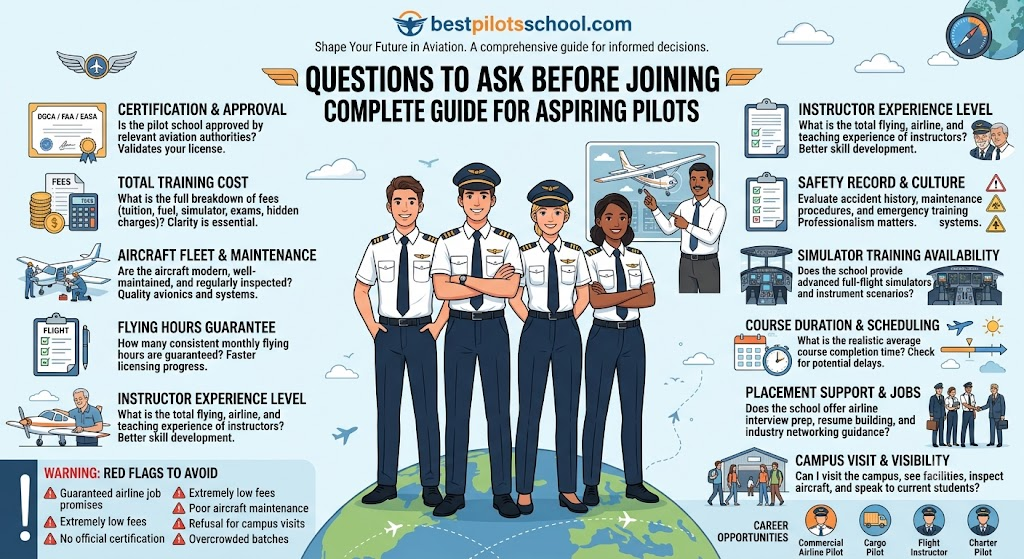
This guide from bestpilotsschool.com explains the most important questions to ask before joining a pilot school so you can make a confident and informed decision.
Why Asking the Right Questions Matters
Pilot training is a high-investment and high-responsibility journey. Unlike other courses, aviation training directly impacts safety and professional eligibility.
Asking the right questions helps you:
- Understand true training quality
- Avoid hidden costs and misleading promises
- Evaluate safety and aircraft standards
- Compare multiple flying schools effectively
- Choose a career-focused training path
A well-informed decision ensures smoother progress toward becoming a commercial pilot.
Essential Questions to Ask Before Joining a Pilot School
Below are the most important pilot school questions every aspiring aviator should ask before enrollment.
1. Is the Pilot School Approved by Aviation Authorities?
Always confirm whether the school is approved by DGCA, FAA, or EASA depending on your country.
Why it matters:
- Ensures your license is valid and recognized
- Confirms compliance with aviation safety standards
- Required for airline eligibility
2. What Is the Total Cost of Training?
Pilot training is expensive, so clarity is essential.
Ask for full breakdown:
- Tuition fees
- Fuel charges
- Simulator costs
- Exam and licensing fees
- Hidden charges
Transparent pricing reflects a trustworthy institution.
3. What Aircraft Are Used for Training?
Aircraft quality directly impacts your learning experience.
Check:
- Aircraft age and condition
- Maintenance standards
- Avionics systems and technology
- Fleet availability
Modern aircraft ensure better skill development.
4. How Many Flying Hours Are Guaranteed?
Flying hours are critical for licensing and skill building.
Ask:
- Monthly flying schedule
- Total training duration
- Aircraft availability ratio
More consistent flying = faster progress.
5. What Is the Instructor Experience Level?
Instructors play a key role in your aviation journey.
Check:
- Total flying experience
- Airline background
- Teaching ability
- Student-to-instructor ratio
Experienced instructors improve learning quality significantly.
6. What Is the Safety Record of the School?
Safety is the foundation of aviation training.
Evaluate:
- Accident history
- Maintenance procedures
- Emergency training systems
- Regulatory compliance
Strong safety standards reflect professionalism.
7. Does the School Provide Simulator Training?
Simulators are essential in modern pilot training.
Look for:
- Advanced flight simulators
- Emergency scenario training
- Instrument flying practice
They help build confidence before real flights.
8. What Is the Average Course Duration?
Training time depends on multiple factors.
Ask about:
- Expected completion timeline
- Weather delays
- Aircraft availability
Realistic timelines are more reliable than promises.
9. Does the School Offer Placement Support?
Job placement is not guaranteed, but support matters.
Check for:
- Airline interview preparation
- Resume building guidance
- Industry networking support
Good schools help you become job-ready.
10. Can I Visit the Campus and Speak to Students?
A campus visit reveals real training conditions.
Observe:
- Aircraft condition
- Classroom environment
- Instructor interaction
- Student satisfaction
If visits are not allowed, consider it a red flag.
Flight School Comparison Checklist
| Factor | High-Quality Pilot School | Average Pilot School |
|---|---|---|
| Certification | Fully approved and compliant | Unclear or missing approval |
| Aircraft | Modern and well-maintained | Old or poorly maintained |
| Flight Hours | Consistent and structured | Irregular scheduling |
| Safety | Strong safety culture | Weak or inconsistent safety |
| Fees | Transparent and detailed | Hidden or unclear charges |
| Instructors | Experienced professionals | Limited experience |
Red Flags to Avoid
Be cautious if you notice:
- Guaranteed airline job promises
- Extremely low training fees
- No official certification
- Poor aircraft maintenance
- Refusal to allow campus visits
- Overcrowded batches
These are warning signs of low-quality training institutes.
Career Opportunities After Pilot Training
After completing training, you can explore several aviation careers:
- Commercial Airline Pilot
- Cargo Pilot
- Flight Instructor
- Charter Pilot
- Corporate Aviation Pilot
A strong training foundation improves your chances of joining top airlines globally.
FAQs: Questions to Ask Before Joining a Pilot School
1. Why should I ask questions before joining a pilot school?
Asking questions helps you understand training quality, safety standards, and costs clearly. It protects you from poor decisions and ensures a better career path in aviation.
2. What is the most important question?
The most important question is about official approval and certification. Without it, your license may not be valid for airline careers.
3. How do I check if a pilot school is good?
Check aircraft condition, instructor experience, safety records, student reviews, and transparency in fees.
4. Should I ask about hidden charges?
Yes, always ask for full cost breakdown including fuel, simulator, exams, and licensing fees.
5. Why are flying hours important?
Flying hours determine your practical experience and readiness for licensing and airline training.
6. Can I visit the flying school before joining?
Yes, visiting helps you understand real training conditions, facilities, and student experience.
7. What if a school refuses campus visits?
This is a serious red flag and may indicate lack of transparency or poor training conditions.
8. Is simulator training necessary?
Yes, simulators are essential for emergency practice and instrument flying training.
9. Do pilot schools guarantee jobs?
No, most schools do not guarantee jobs, but good institutes provide placement guidance and interview preparation.
10. What is the biggest mistake students make?
The biggest mistake is choosing a school based only on low fees without checking safety, approval, and training quality.
Conclusion
Choosing the right pilot school is a life-changing decision that directly impacts your aviation career. Asking the right questions helps you evaluate training quality, safety standards, costs, and career support before committing. It ensures that your investment leads to real skill development and professional opportunities.
Never rush this decision. Take time to research, compare schools, visit campuses, and talk to students. A careful and informed choice today will shape your success as a confident and skilled pilot tomorrow.
