
Introduction
Pilot training is expensive because it involves real aircraft operations, fuel costs, instructor fees, and safety regulations. Unlike many academic courses, aviation training cannot be completed only in classrooms—it requires hands-on flying experience.
Because of these costs, many talented students struggle to enter aviation. Scholarships help bridge this gap by supporting deserving candidates based on merit, financial need, or airline sponsorship programs.
Scholarships not only reduce financial burden but also encourage more students to pursue aviation careers without compromise.
What Are Pilot Training Scholarships?
Pilot training scholarships are financial aid programs designed to support aviation students in covering their training costs. These scholarships may cover:
- Flight training hours
- Ground school fees
- Simulator training
- Examination and licensing fees
- Sometimes even accommodation and living expenses
Unlike loans, scholarships do not need to be repaid, making them one of the most valuable forms of financial assistance for aviation students.
They are typically offered by governments, aviation academies, airlines, and private organizations.
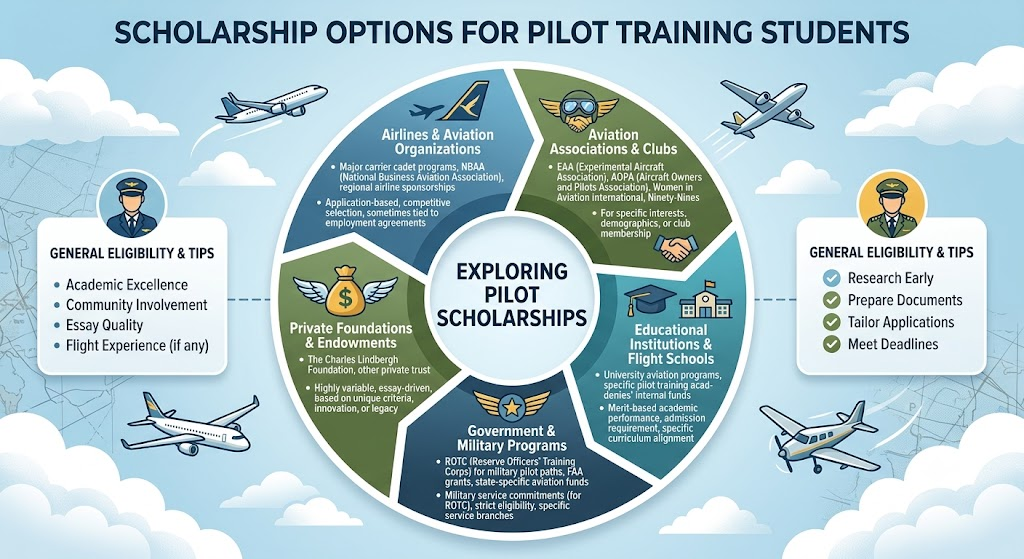
Types of Scholarships for Pilot Training Students
There are several types of scholarships available for aspiring pilots, each with different eligibility criteria and benefits.
1. Merit-Based Scholarships
These are awarded to students with strong academic performance and exceptional aptitude.
- Based on exam scores and performance tests
- Often competitive
- Rewards academic excellence and talent
2. Need-Based Scholarships
These are designed for students from financially weaker backgrounds.
- Based on family income
- Requires financial documentation
- Helps students who cannot afford training otherwise
3. Airline-Sponsored Cadet Programs
Many airlines offer cadet pilot programs that include financial support.
- Partial or full training sponsorship
- Guaranteed job opportunities after training
- Highly competitive selection process
4. Government Aviation Scholarships
Some governments provide funding for aviation education.
- Subsidized training costs
- Support for selected institutes
- Limited seats and strict eligibility
5. Private Aviation Academy Scholarships
Flying schools often provide internal scholarships.
- Discounted training fees
- Performance-based awards
- Limited availability per batch
Eligibility Criteria for Pilot Training Scholarships
Although requirements vary, most scholarship programs follow similar criteria:
- Strong academic background (especially in science or mathematics)
- Age between 17–30 years (varies by program)
- Admission or application to a recognized flying school
- Good medical fitness as per aviation standards
- Proof of financial need (for need-based scholarships)
- Clear communication and aptitude skills in some cases
Meeting these criteria improves the chances of selection significantly.
How to Apply for Pilot Training Scholarships
Applying for scholarships requires careful planning and timely action.
Step 1: Research Available Scholarships
Look for scholarships offered by:
- Airlines
- Aviation academies
- Government aviation departments
- International aviation organizations
Step 2: Check Eligibility Requirements
Ensure you meet academic, financial, and medical requirements before applying.
Step 3: Prepare Required Documents
Common documents include:
- Academic certificates
- Identity proof
- Income certificate (for need-based scholarships)
- Medical fitness certificate
- Admission proof from flying school
Step 4: Submit Application
Complete the application form accurately and submit before deadlines.
Step 5: Selection Process
Some scholarships may include:
- Written tests
- Interviews
- Aptitude assessments
- Medical evaluations
Tips to Increase Your Chances of Getting a Scholarship
Scholarships are highly competitive, but students can improve their chances with the right approach:
- Maintain excellent academic performance
- Apply early before deadlines close
- Choose recognized and reputed flying schools
- Improve communication and aviation knowledge
- Prepare for aptitude and interview rounds
- Write a strong personal statement or motivation letter
Consistency and preparation play a major role in selection success.
Challenges in Getting Pilot Training Scholarships
While scholarships are beneficial, they are not easy to secure.
1. Limited Availability
Only a small number of scholarships are offered each year.
2. High Competition
Thousands of students apply for the same funding opportunities.
3. Strict Eligibility Criteria
Many programs require excellent academic records and strong aptitude performance.
Understanding these challenges helps students prepare better and apply strategically.
Alternatives to Scholarships
If a scholarship is not available, students can still pursue aviation training through other financial options:
1. Education Loans
Banks and financial institutions offer loans specifically for pilot training.
2. Cadet Pilot Programs
Airlines sponsor training in exchange for future employment commitments.
3. Family Financial Planning
Some students combine savings and partial funding to manage costs.
4. Part-Time Training Approach
In some cases, students complete training in phases to spread expenses.
These alternatives ensure that financial limitations do not stop aviation careers.
FAQs
1. What is a pilot training scholarship?
A pilot training scholarship is financial aid that helps students cover aviation training costs without needing repayment.
2. Who can apply for aviation scholarships?
Students with strong academic records, financial need, or admission in recognized flying schools can apply.
3. Are pilot scholarships fully funded?
Some scholarships are fully funded, while others cover only partial training expenses depending on the program.
4. Do airlines offer pilot training scholarships?
Yes, many airlines offer cadet programs that include training sponsorship and job placement opportunities.
5. What documents are required for scholarship applications?
Common documents include academic records, ID proof, income certificate, medical fitness certificate, and admission proof.
6. Is an interview required for scholarships?
Some scholarships include interviews, aptitude tests, or written exams as part of the selection process.
7. Can international students apply for scholarships?
Yes, depending on the scholarship provider and country-specific eligibility rules.
8. What is the biggest challenge in getting a scholarship?
High competition and limited availability make it difficult to secure pilot training scholarships.
Conclusion
Pilot training scholarships play a crucial role in helping aspiring aviators achieve their dreams without being held back by financial limitations. With multiple options available—ranging from merit-based awards to airline cadet programs—students have several pathways to reduce training costs.
The key to success lies in early preparation, strong academic performance, and careful selection of scholarship programs. Even if scholarships are not secured, alternatives such as loans and cadet programs ensure that the journey to becoming a pilot remains achievable.
With the right planning and determination, financial challenges should never stand in the way of a successful aviation career.
