
Introduction
A Student Pilot License is one of the first important steps for anyone who dreams of becoming a pilot. It allows an aviation aspirant to begin formal flight training under approved guidance and helps build the foundation for a future aviation career. Whether your goal is to become a commercial airline pilot, private pilot, flight instructor, or aviation professional, understanding the Student Pilot License process is very important. Many students feel confused about eligibility, medical requirements, documents, training schools, and the next steps after getting this license. This guide explains everything in simple language so beginners can start their pilot journey with clarity and confidence.
What Is a Student Pilot License?
A Student Pilot License, commonly called SPL, is a basic pilot license issued to eligible candidates who want to start flight training. It is not a full professional pilot license, but it gives the student permission to begin learning practical flying under supervision.
The main purpose of an SPL is to ensure that the student understands basic aviation rules, safety procedures, aircraft knowledge, and medical fitness requirements before entering serious flight training. It is the starting point for structured aviation education.
Why Every Pilot Starts With an SPL
Every professional pilot begins with basic training, and the Student Pilot License acts as the entry point. It helps students understand aviation discipline, flight safety, air regulations, and aircraft operations before moving toward advanced licenses.
An SPL is important because:
- It allows students to begin formal flight training
- It builds a strong aviation foundation
- It introduces students to flight rules and safety practices
- It prepares candidates for higher pilot licenses
- It helps aviation schools assess student readiness
Eligibility Criteria for Student Pilot License
The eligibility requirements may vary slightly depending on aviation authority and training school rules, but common requirements include:
- Candidate should meet the minimum age requirement
- Basic educational qualification is required
- Candidate should understand English communication
- Medical fitness is mandatory
- Candidate should be enrolled or associated with an approved flying school
- Required documents must be submitted correctly
Good communication skills are important because aviation uses English for radio communication, training instructions, safety briefings, and technical learning.
Medical Requirements for SPL
Medical fitness is a very important part of pilot training. Before starting the Student Pilot License process, candidates usually need to complete an aviation medical examination through an approved medical examiner.
Medical checks may include:
- Vision test
- Hearing test
- General physical fitness
- Blood pressure check
- Medical history review
- Basic health assessment
Students should not ignore medical fitness. Even small health-related issues should be discussed honestly with the medical examiner. A healthy body and clear decision-making ability are essential for safe flying.
Documents Required for Student Pilot License
Students should keep all documents ready before applying. A proper checklist can save time and avoid delays.
Common documents include:
- Identity proof
- Address proof
- Educational certificates
- Passport-size photographs
- Medical fitness certificate
- Age proof
- Flying school enrollment details
- Application form
- Any additional documents requested by the aviation authority or training school
Always verify document requirements with the selected aviation academy before submission.
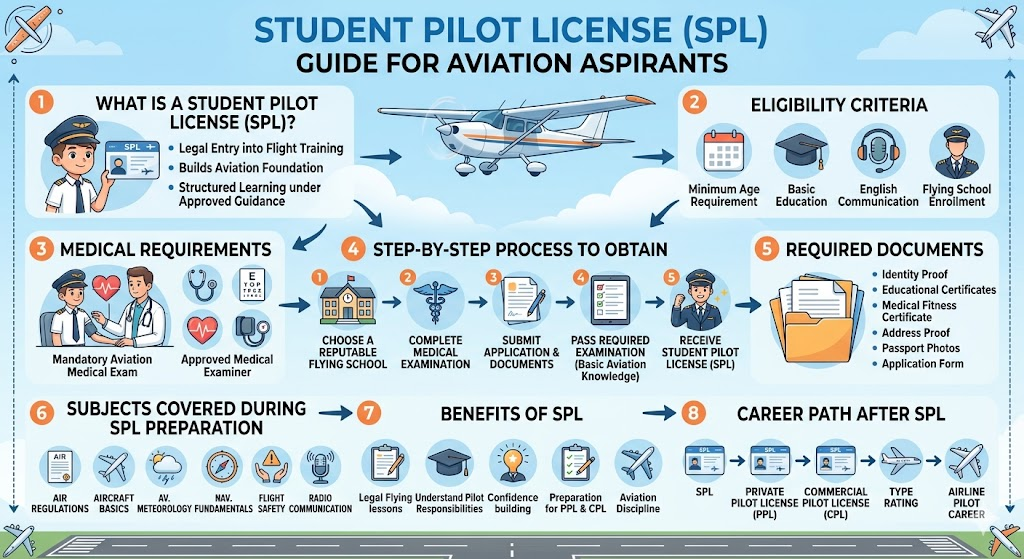
Step-by-Step Process to Obtain a Student Pilot License
Step 1: Choose a Reputable Pilot Training School
The first step is choosing a good aviation training institute. A reliable flying school provides proper ground training, experienced instructors, aircraft availability, safety standards, and guidance for licensing.
While selecting a school, check:
- Training approval status
- Instructor experience
- Aircraft fleet condition
- Safety record
- Ground school quality
- Student support
- Training environment
Step 2: Complete Medical Examination
After selecting a training school, complete the required medical examination. This confirms that you are physically fit to begin pilot training.
Medical fitness should be completed early because it is a key requirement for the SPL process.
Step 3: Submit Application
Once documents and medical certificate are ready, submit the SPL application through the proper process. Your training school may guide you through the paperwork.
Make sure all details are accurate because incorrect information can delay the approval.
Step 4: Pass Required Examination
Students may need to pass an oral or written test covering basic aviation knowledge. This exam checks whether the candidate understands important concepts before starting flight training.
Topics may include air regulations, aircraft basics, weather, navigation, and safety.
Step 5: Receive Student Pilot License
After completing all formalities and passing the required checks, the Student Pilot License is issued. Once you receive it, you can begin structured flying lessons as per training rules.
Subjects Covered During SPL Preparation
SPL preparation introduces students to basic aviation subjects. These subjects help beginners understand how flying works and why safety is the top priority.
Important subjects include:
- Air regulations
- Aviation meteorology
- Aircraft basics
- Navigation fundamentals
- Flight safety
- Radio communication basics
- Airport operations
- Basic aerodynamics
Student Pilot License Fees and Expenses
The cost of obtaining a Student Pilot License depends on the flying school, location, medical examination charges, administrative fees, and training support.
Common expenses may include:
- Application charges
- Medical examination fees
- Ground training fees
- Study material costs
- Documentation charges
- School registration fees
Students should ask for a clear fee breakdown before joining any pilot training academy.
Benefits of Obtaining a Student Pilot License
A Student Pilot License provides many benefits for aviation aspirants. It helps students take their first official step toward a flying career.
Key benefits include:
- Legal entry into flight training
- Strong foundation in aviation basics
- Better understanding of pilot responsibilities
- Preparation for Private Pilot License
- Preparation for Commercial Pilot License
- Confidence before entering advanced flight training
- Exposure to aviation discipline and safety culture
Common Mistakes to Avoid
Many beginners make avoidable mistakes during the SPL process. Careful planning can help save time and money.
Avoid these mistakes:
- Choosing a flying school without research
- Ignoring medical fitness requirements
- Submitting incomplete documents
- Not preparing for basic aviation exams
- Focusing only on cost instead of training quality
- Not asking about aircraft availability
- Delaying important paperwork
Career Path After Student Pilot License
The Student Pilot License is only the beginning. After SPL, students usually move step by step toward higher pilot licenses and professional flying opportunities.
Typical pilot career path:
Student Pilot License → Private Pilot License → Commercial Pilot License → Type Rating → Airline Pilot
Private Pilot License
A Private Pilot License allows pilots to fly for personal or non-commercial purposes. It helps build flying experience and confidence.
Commercial Pilot License
A Commercial Pilot License is required for those who want to work professionally as pilots. This is an important license for airline career aspirants.
Type Rating
Type rating is aircraft-specific training required to operate certain commercial aircraft. Airline pilots usually complete type rating before flying larger aircraft.
Airline Pilot Career
After completing required training, licenses, flying hours, and airline selection procedures, candidates can move toward airline pilot roles.
How BestPilotsSchool.com Helps Aviation Aspirants
BestPilotsSchool.com can help aviation aspirants understand pilot training options, licensing steps, career planning, and flying school selection. For beginners, correct guidance is very important because pilot training involves time, money, discipline, and long-term commitment.
The platform can support students with:
- Pilot training information
- Aviation career guidance
- Flight school selection support
- Licensing awareness
- Beginner-friendly aviation resources
- Career roadmap planning
Frequently Asked Questions
1- What is a Student Pilot License?
A Student Pilot License is an entry-level license that allows aviation students to begin formal flight training. It confirms that the student meets basic eligibility, medical, and knowledge requirements before starting practical flying lessons.
2- What is the minimum age for SPL?
The minimum age requirement may depend on aviation authority rules and training school guidelines. Students should check the latest requirements with an approved flying school before applying.
3- Is medical fitness mandatory for SPL?
Yes, medical fitness is mandatory because flying requires good health, alertness, clear vision, and safe decision-making ability. Students must complete the required aviation medical examination.
4- How long does it take to obtain a Student Pilot License?
The time depends on document readiness, medical examination, training school process, and exam completion. Students who prepare properly can usually complete the process faster.
5- Can I fly alone with a Student Pilot License?
A Student Pilot License allows training under approved conditions. Solo flying depends on instructor approval, training progress, safety readiness, and aviation authority rules.
6- What subjects are included in SPL preparation?
Common subjects include air regulations, aircraft basics, aviation meteorology, navigation fundamentals, flight safety, and radio communication basics.
7- What happens after getting an SPL?
After receiving an SPL, students begin practical flying training and continue their journey toward higher licenses such as Private Pilot License and Commercial Pilot License.
8- Can international students apply for SPL?
International students may apply depending on the country, aviation authority rules, visa conditions, and flying school admission policies. They should verify requirements before enrollment.
9- How much does a Student Pilot License cost?
The cost varies based on the flying school, medical examination, application process, study materials, and ground training charges. It is best to request a detailed fee structure from the academy.
10- Is aviation a good career option?
Aviation can be a rewarding career for students who are disciplined, medically fit, focused, and passionate about flying. However, it requires proper planning, investment, continuous learning, and strong commitment.
Conclusion
A Student Pilot License is the first official step for anyone who wants to enter the world of flying. It introduces students to aviation rules, safety practices, basic aircraft knowledge, and professional training discipline. Before applying, aspirants should carefully check eligibility, complete medical requirements, prepare documents, and choose a reputable flying school. With proper guidance and consistent effort, an SPL can open the path toward Private Pilot License, Commercial Pilot License, type rating, and a successful aviation career. For beginners, BestPilotsSchool.com can be a helpful resource to understand pilot training and plan the journey with confidence.
