
1. Introduction
India is not defined by one landscape, one culture, or one historical period. A journey across the country may take travellers from quiet Himalayan monasteries and colourful desert cities to tropical backwaters, ancient temple towns, wildlife habitats, and spiritual riverbanks.
This variety makes India especially rewarding for travellers who want more than sightseeing. Nature lovers can explore mountains, forests, lakes, waterfalls, wildlife reserves, and coastal landscapes. Culture lovers can experience regional food, crafts, music, festivals, architecture, and traditional ways of life. Heritage travellers can visit forts, palaces, temples, archaeological sites, museums, and historic neighbourhoods.
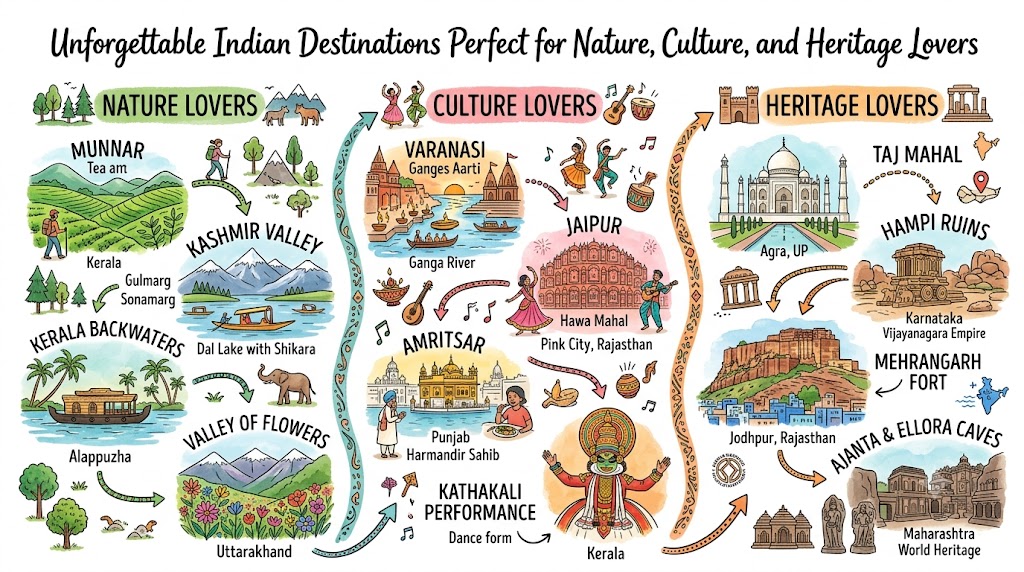
This India Travel Guide introduces unforgettable Indian destinations where nature, culture, and heritage come together. Each place offers a different experience, making the list useful for families, couples, solo travellers, photographers, pilgrims, history enthusiasts, and adventure seekers.
2. Destination Overview
The destinations in this article represent different regions and travel styles.
| Destination | State or Region | Main Attraction | Ideal Duration |
|---|---|---|---|
| Ladakh | Ladakh | Mountains, monasteries and high-altitude landscapes | 6–8 days |
| Meghalaya | Northeast India | Waterfalls, forests, caves and village culture | 5–7 days |
| Kerala Backwaters | Kerala | Waterways, village life and regional traditions | 4–6 days |
| Hampi | Karnataka | Ancient ruins, temples and rocky landscapes | 2–3 days |
| Jaipur and Udaipur | Rajasthan | Forts, palaces, lakes and traditional crafts | 5–6 days |
| Varanasi | Uttar Pradesh | Ghats, spirituality, music and old neighbourhoods | 2–3 days |
| Khajuraho | Madhya Pradesh | Historic temples and detailed stone art | 2–3 days |
| Sikkim | Northeast India | Himalayan nature, monasteries and sacred lakes | 5–7 days |
| Kaziranga | Assam | Wildlife, wetlands and regional culture | 2–4 days |
India has numerous cultural and natural sites recognised internationally, including Hampi, Jaipur, Khajuraho and Kaziranga. The Archaeological Survey of India also identifies Hampi, Rajasthan’s hill forts and several other historic groups among the country’s protected World Heritage properties.
3. Why These Destinations Are Worth Exploring
These destinations provide meaningful experiences because they are not limited to one kind of traveller.
Natural variety
Travellers can see high-altitude deserts in Ladakh, green valleys in Meghalaya, tropical waterways in Kerala, Himalayan scenery in Sikkim, and wildlife habitats in Assam.
Living culture
Many local traditions remain part of everyday life. Markets, religious practices, crafts, food, music, village customs and regional languages help travellers understand a destination beyond its major attractions.
Historic importance
Ancient temples, royal cities, archaeological remains and traditional architecture preserve stories from different periods of Indian history.
Flexible travel options
The destinations can support short weekend visits, family holidays, pilgrimage journeys, photography tours, heritage circuits and longer India Travel Itinerary plans.
4. Best Places to Visit in India for Nature, Culture, and Heritage
4.1 Ladakh: Mountains, Monasteries, and Himalayan Traditions
Ladakh is a high-altitude Himalayan region known for dramatic mountains, wide valleys, Buddhist monasteries, remote settlements and unusual desert landscapes. Leh serves as the main base for exploring nearby cultural and natural attractions.
Important places include Leh Palace, Shanti Stupa, Nubra Valley, Diskit Monastery, Pangong Lake and traditional Ladakhi villages. Nubra Valley combines mountain scenery with settlements, orchards and Buddhist heritage, while Diskit Monastery overlooks the Shyok River region.
Suggested duration: Six to eight days
Best for: Mountain lovers, photographers, spiritual travellers and adventure seekers
Travel tip: Spend your first day resting in Leh. The altitude can affect travellers differently, so avoid heavy activity immediately after arrival.
4.2 Meghalaya: Waterfalls, Forests, Caves, and Community Life
Meghalaya offers green hills, waterfalls, forest trails, caves, rivers, living-root structures and traditional villages. Shillong, Cherrapunji, Mawlynnong, Dawki and Mawphlang are among the best-known areas.
The destination is particularly attractive to travellers interested in village tourism and community-based experiences. Mawphlang is also promoted through India’s rural tourism programme for its landscape and cultural importance. Cherrapunji provides access to waterfalls, root bridges, caves and outdoor activities.
Suggested duration: Five to seven days
Best for: Nature lovers, families, photographers and slow travellers
Travel tip: Rain can occur outside the main monsoon period. Carry quick-drying clothes, suitable footwear and light waterproof protection.
4.3 Kerala Backwaters: Waterways, Villages, and Regional Culture
Kerala’s backwater areas offer a peaceful combination of lagoons, canals, lakes, palm-lined villages and local livelihoods. Alappuzha and Kumarakom are two popular places for experiencing this landscape.
Travellers can choose a houseboat journey, small local boat ride, village walk, birdwatching experience or waterside homestay. Alappuzha’s backwaters form part of a large network of lakes, lagoons and canals, while Kumarakom sits beside Vembanad Lake and is known for its natural surroundings.
Suggested duration: Three to five days
Best for: Couples, families, food lovers and relaxed travellers
Travel tip: Compare houseboats carefully. Check cleanliness, meal arrangements, safety equipment, cruising hours and overnight docking details.
4.4 Hampi: Ancient Ruins Within a Rocky Landscape
Hampi is one of India’s most impressive heritage destinations. Its temples, royal structures, bazaars, gateways, water systems and stone monuments stand within a landscape filled with large granite formations.
Major attractions include the Virupaksha Temple, Vittala Temple Complex, Hampi Bazaar, Lotus Mahal, Hazara Rama Temple and Hemakuta Hill. The monuments were developed during the Vijayanagara period, especially between the fourteenth and sixteenth centuries.
Suggested duration: Two to three days
Best for: History lovers, architecture students, photographers and cultural travellers
Travel tip: The monuments cover a large area. Divide the archaeological zone into sections rather than trying to see everything in one day.
4.5 Jaipur and Udaipur: Royal Architecture and Living Traditions
Jaipur and Udaipur present two different sides of Rajasthan.
Jaipur is known for forts, palaces, planned historic streets, markets and traditional craftwork. Important places include Amer Fort, City Palace, Jantar Mantar, Hawa Mahal and the old bazaars. Jaipur was founded in 1727 and developed as a planned city.
Udaipur offers lakes, palaces, historic neighbourhoods and views of the Aravalli landscape. City Palace, Lake Pichola, Jagdish Temple, local markets and nearby heritage locations can be explored over two or three days.
Suggested duration: Five to six days for both cities
Best for: Families, couples, architecture lovers and craft shoppers
Travel tip: Use a licensed local guide for large forts and palace complexes. Context about architecture, rulers, paintings and local history improves the visit.
4.6 Varanasi: Spiritual Traditions and Life Along the Ganga
Varanasi, also called Kashi or Banaras, is one of India’s most important spiritual and cultural cities. Its identity is closely connected with the River Ganga, riverfront ghats, temples, music, crafts and pilgrimage traditions.
Travellers can take an early morning boat ride, walk through old lanes, attend the evening Ganga Aarti, explore local food areas and visit museums or nearby Sarnath. Dashashwamedh Ghat is closely associated with the evening ceremony, while Assi Ghat hosts morning spiritual and cultural activities.
Suggested duration: Two to three days
Best for: Pilgrims, photographers, cultural researchers and spiritual travellers
Travel tip: Some ghats are connected with cremation practices. Maintain silence, follow local instructions and never photograph private ceremonies without permission.
4.7 Khajuraho: Temple Architecture and Artistic Heritage
Khajuraho is known for a remarkable group of Hindu and Jain temples built during the Chandela period. The remaining monuments display detailed sculpture, architectural planning and artistic themes connected with daily life, spirituality, mythology and human experience.
The Western Group contains several major monuments, while the Eastern and Southern groups provide a quieter experience. Visitors can also explore nearby places such as Raneh Falls, Panna National Park and local villages.
Suggested duration: Two to three days
Best for: Art lovers, heritage travellers, students and photographers
Travel tip: Hire a knowledgeable guide or use an official audio guide. The sculptures are frequently misunderstood when viewed without their wider historical and architectural context.
4.8 Sikkim: Sacred Lakes, Monasteries, and Himalayan Landscapes
Sikkim brings together Himalayan scenery, Buddhist monasteries, forests, waterfalls, mountain villages and sacred natural sites.
Gangtok, Pelling, Yuksom, Tsomgo Lake and the monasteries around these regions provide a balanced cultural and natural journey. Pelling combines mountain views with Pemayangtse Monastery and the ruins of Rabdentse, while Khecheopalri Lake is respected by both Buddhist and Hindu communities.
Suggested duration: Five to seven days
Best for: Nature lovers, spiritual travellers, couples and families
Travel tip: Some high-altitude places require permits and may close because of weather. Check current access conditions before finalising the itinerary.
4.9 Kaziranga: Wildlife, Wetlands, and Assamese Culture
Kaziranga National Park is one of India’s major wildlife destinations and a UNESCO World Heritage property. It is especially known as an important habitat for the greater one-horned rhinoceros.
A visit can include authorised wildlife drives, birdwatching, nearby tea estates, cultural programmes and regional food. Wildlife sightings are never guaranteed, so visitors should focus on the complete habitat rather than one animal.
Suggested duration: Two to four days
Best for: Wildlife lovers, birdwatchers, families and nature photographers
Travel tip: Book only through recognised operators and follow every instruction given by forest staff.
5. Things to Do in India Across These Destinations
Travellers can create a more rewarding journey by mixing famous attractions with local activities.
Nature experiences
- Take a gentle backwater cruise in Kerala.
- Walk through Meghalaya’s forest and waterfall routes.
- Observe Himalayan landscapes in Ladakh and Sikkim.
- Join an authorised wildlife drive in Kaziranga.
- Watch sunrise or sunset from Hampi’s designated viewpoints.
Cultural experiences
- Attend a regional music or dance performance.
- Visit craft workshops and traditional markets.
- Try local dishes in family-run restaurants.
- Stay in a homestay managed by local residents.
- Join a guided neighbourhood or heritage walk.
Heritage experiences
- Explore Hampi’s archaeological zones.
- Visit Jaipur’s forts and historic streets.
- Study temple sculpture in Khajuraho.
- Walk along Varanasi’s ghats.
- Visit monasteries in Ladakh and Sikkim.
6. Suggested India Travel Itinerary
Because these destinations are spread across India, travellers should not try to include all of them in one short holiday. The following twelve-day plan focuses on culture and heritage in North and Central India.
Twelve-Day Heritage and Cultural Itinerary
| Day | Destination | Suggested Plan |
|---|---|---|
| 1 | Jaipur | Arrival, rest and evening market walk |
| 2 | Jaipur | Amer Fort, City Palace and Jantar Mantar |
| 3 | Jaipur | Hawa Mahal area, craft markets and local food |
| 4 | Udaipur | Travel to Udaipur and relaxed lakeside evening |
| 5 | Udaipur | City Palace, old city and Lake Pichola area |
| 6 | Udaipur | Local crafts, nearby heritage site or village visit |
| 7 | Varanasi | Travel day and evening orientation walk |
| 8 | Varanasi | Sunrise boat ride, old lanes and evening Aarti |
| 9 | Varanasi | Sarnath or museum visit, followed by local food |
| 10 | Khajuraho | Travel and evening temple-area walk |
| 11 | Khajuraho | Western, Eastern and Southern temple groups |
| 12 | Khajuraho | Raneh Falls or village experience, then departure |
Transport schedules between these cities change, so keep one flexible half-day and verify connections before booking.
Separate nature-focused alternatives
For a nature journey, choose one compact regional route:
- Kerala: Kochi–Kumarakom–Alappuzha–Munnar
- Meghalaya: Shillong–Cherrapunji–Mawlynnong–Dawki
- Sikkim: Gangtok–Pelling–Yuksom
- Ladakh: Leh–Nubra Valley–Pangong region
7. Best Time to Visit India’s Nature and Heritage Destinations
India’s climate changes significantly by region. There is no single best season for the entire country.
| Destination | Generally Suitable Period | Important Consideration |
|---|---|---|
| Ladakh | May to September | High routes may be inaccessible outside the main season |
| Meghalaya | October to April | Monsoon offers greener scenery but heavier rain |
| Kerala | October to March | Monsoon travel can be beautiful but less predictable |
| Hampi | October to February | Midday heat can be strong during warmer months |
| Rajasthan | October to March | Desert areas can be cold at night |
| Varanasi | October to March | Major festivals can create heavy crowds |
| Khajuraho | October to March | Outdoor monument visits are easier in cooler weather |
| Sikkim | March to May; October to December | High roads remain weather-dependent |
| Kaziranga | Mainly during its open tourism season | Access is restricted during seasonal closure |
Government tourism information recommends October to March for several Kerala backwater locations and identifies May to September as a practical period for many Ladakh journeys. Cherrapunji is often easier to explore during the relatively drier winter period.
Always confirm current weather, road access, wildlife-park opening dates and local conditions before departure.
8. How to Reach These Destinations
By air
Major travel bases such as Jaipur, Udaipur, Varanasi, Leh, Khajuraho, Kochi, Guwahati and Bagdogra have airport connections. Flight frequency varies by destination and season.
By train
Rail travel is suitable for Rajasthan, Varanasi, Khajuraho, Kerala and the Hampi region. Himalayan destinations usually require additional road travel after the nearest practical railway station.
By road
Road travel is essential within Ladakh, Meghalaya, Sikkim and many rural areas. Mountain journeys may take longer than map estimates because of weather, road repairs and permit checks.
Planning advice
Do not arrange important flights immediately after a long mountain-road journey. Keep extra time for delays, especially during monsoon or winter travel.
9. Local Transportation
Common local transport options include:
- App-based taxis in larger cities
- Prepaid airport taxis
- Auto-rickshaws
- Local buses
- Shared jeeps in mountain areas
- Rental cars with drivers
- Bicycles in selected heritage zones
- Boats in Kerala and Varanasi
- Walking tours in historic neighbourhoods
Agree on fares before using transport without a meter. In environmentally sensitive or protected areas, use only authorised vehicles.
10. Accommodation and Homestays
Accommodation ranges from hostels and guesthouses to heritage hotels, nature lodges and family-run homestays.
Choosing the right stay
Budget travellers
Look for clean guesthouses, hostels and simple homestays close to public transport.
Families
Choose properties with reliable road access, meals, family rooms and clear safety arrangements.
Cultural travellers
Select heritage properties or homestays offering regional food, craft visits or community interaction.
Nature travellers
Choose authorised eco-lodges, farm stays or village homestays that follow responsible waste and water practices.
The Best Homestays in India are not necessarily the most luxurious. A good homestay should provide cleanliness, transparent prices, respectful hosts, clear meal arrangements and a safe location.
11. Local Tour Guides and Authentic Experiences
Local Tour Guides in India can provide historical context, language assistance and access to experiences that independent visitors may overlook.
A guide may help with:
- Monument interpretation
- Heritage walks
- Village visits
- Food tours
- Wildlife information
- Photography locations
- Pilgrimage customs
- Mountain routes
- Local transport coordination
Before booking, ask about the guide’s experience, language skills, route, total duration, charges and what is included. At protected monuments and wildlife areas, choose authorised guides.
12. Village Tourism and Community Experiences
Village Tourism in India allows travellers to understand agriculture, food, crafts, architecture and everyday regional life.
Meaningful options may include:
- Mawphlang and other community areas in Meghalaya
- Anegundi near Hampi
- Backwater villages in Kerala
- Ladakhi homestay settlements
- Craft villages in Rajasthan
- Rural communities around Sikkim and Assam
India’s official rural tourism listings include destinations such as Mawphlang in Meghalaya and Kadamakkudy in Kerala, showing the growing importance of locally rooted travel experiences.
Ask before photographing people, homes, ceremonies or workplaces. Buy local products at fair prices and avoid treating residents as tourist displays.
13. Pilgrimage and Spiritual Experiences
Pilgrimage Tours in India can be combined with cultural and nature travel.
Important spiritual experiences include:
- Ghats and temples in Varanasi
- Virupaksha Temple and other sacred sites in Hampi
- Buddhist monasteries in Ladakh
- Monasteries and sacred lakes in Sikkim
- Hindu and Jain temples in Khajuraho
Visitors should dress respectfully, remove footwear where required, follow photography restrictions and avoid disturbing prayers. Some religious sites restrict entry to particular areas, so follow displayed rules without argument.
14. Adventure Activities in India
These destinations also support several outdoor activities.
| Activity | Suitable Destination | General Difficulty |
|---|---|---|
| Trekking | Ladakh, Meghalaya and Sikkim | Easy to challenging |
| Caving | Meghalaya | Moderate to challenging |
| Cycling | Hampi and rural Rajasthan | Easy to moderate |
| Wildlife drives | Kaziranga | Easy with authorised operator |
| Kayaking or boating | Kerala | Easy to moderate |
| Village walks | Kerala, Meghalaya and Rajasthan | Easy |
| Mountain-road journeys | Ladakh and Sikkim | Physically demanding |
| Nature photography | All listed destinations | Easy to moderate |
Use trained guides for trekking, caving and unfamiliar mountain routes. Check weather forecasts, carry water and avoid activities outside your physical ability.
15. Local Food and Shopping
Food and crafts are important parts of Indian cultural travel.
Ladakh
Try local breads, soups, dumplings and warm beverages. Markets sell woollen products, traditional crafts and regional food items.
Meghalaya
Look for regional rice dishes, local vegetables and community-prepared meals. Ask about ingredients when you have dietary restrictions.
Kerala
Kerala offers rice-based meals, seafood, vegetable curries, coconut-based dishes and regional snacks.
Rajasthan
Popular shopping choices include textiles, block printing, pottery, jewellery, leatherwork and miniature-style artwork.
Varanasi
The city is known for vegetarian food, sweets, snacks and Banarasi textiles.
Khajuraho and Madhya Pradesh
Travellers can explore regional meals, local handicrafts and small markets near the temple areas.
Buy directly from craftspeople or recognised cooperatives when possible. Avoid products made from protected wildlife, coral, rare plants or archaeological material.
16. Estimated Travel Budget
The following figures are broad planning estimates per person, per day. They are not live prices and may change during festivals, holidays and peak travel periods.
| Travel Style | Accommodation | Food and Local Travel | Estimated Daily Total |
|---|---|---|---|
| Budget | ₹800–₹2,000 | ₹1,000–₹2,000 | ₹2,000–₹4,500 |
| Mid-range | ₹2,500–₹6,000 | ₹2,000–₹4,000 | ₹5,000–₹10,000 |
| Comfortable | ₹7,000–₹15,000 | ₹4,000–₹8,000 | ₹12,000–₹25,000+ |
Mountain transport, wildlife drives, private guides, houseboats and domestic flights can increase the total cost.
Set aside an additional amount for:
- Monument and park entry
- Guide services
- Permits
- Shopping
- Medical needs
- Weather-related delays
- Last-minute transport changes
17. Travel Tips, Safety, and Responsible Tourism
Plan according to the region
Do not use one packing list for every Indian destination. Ladakh requires cold-weather preparation, while Kerala and Meghalaya may require rain protection.
Respect local customs
Wear suitable clothing at religious sites and traditional communities. Ask permission before entering private areas.
Protect heritage
Never touch delicate carvings, write on monuments, remove stones or climb restricted structures.
Reduce waste
Carry a reusable bottle where safe refilling is available. Avoid leaving plastic waste in mountain, village and wildlife areas.
Stay within marked areas
Do not leave designated paths inside wildlife parks, archaeological zones, caves or mountain environments.
Keep documents ready
Carry identification, permits, booking confirmations and emergency contact details.
Check health needs
High-altitude destinations require special care. Travellers with existing medical concerns should seek professional advice before planning physically demanding journeys.
Support local communities
Choose local guides, family-run stays, independent restaurants and genuine craft sellers whenever practical.
18. Frequently Asked Questions
1. Which Indian destination is best for both nature and heritage?
Hampi offers ancient architecture within a dramatic natural landscape. Sikkim and Ladakh also combine mountain scenery with monasteries and living spiritual traditions.
2. How many days are needed for a cultural journey across India?
A regional trip usually requires five to eight days. A journey covering several distant states may need two or three weeks because travel between regions takes time.
3. Which destination is suitable for first-time visitors to India?
Jaipur, Udaipur and Kerala are practical choices because they provide varied accommodation, established transport services and a balanced mix of attractions.
4. Is Ladakh suitable for senior travellers?
Some senior travellers visit Ladakh comfortably, but high altitude requires caution. Medical advice, proper acclimatisation and a slow itinerary are important.
5. Which destination is best for village tourism?
Meghalaya, Kerala, Rajasthan, Sikkim and the Hampi region offer meaningful rural experiences. Select community-led visits rather than staged or intrusive tours.
6. Can families visit Kaziranga National Park?
Yes, families can visit during the park’s tourism season. Children must remain supervised and everyone must follow the instructions of forest staff and authorised guides.
7. Are local guides necessary at heritage monuments?
They are not always compulsory, but a knowledgeable guide can explain architecture, history and symbolism that may not be clear from signs alone.
8. What is the best season for a multi-destination India trip?
October to March is generally convenient for many plains, heritage cities and southern destinations. Ladakh usually requires a separate warmer-season plan.
9. Are homestays safe for solo travellers?
Many are suitable, but travellers should check recent reviews, location, host communication, transport access and booking terms before confirming.
10. How can travellers protect India’s natural and cultural heritage?
Follow local rules, avoid littering, respect religious customs, use authorised services, remain on marked trails and never damage or remove cultural objects.
19. Conclusion
India rewards travellers who slow down and look beyond a simple checklist of famous attractions. The country’s most memorable journeys often come from experiencing how landscapes, history and daily life are connected.
Ladakh and Sikkim show how communities have developed spiritual and cultural traditions within demanding Himalayan environments. Meghalaya demonstrates the relationship between forests, rainfall and village life. Kerala’s backwaters reveal how waterways influence transport, food and local livelihoods.
Hampi and Khajuraho preserve extraordinary architectural achievements, while Jaipur and Udaipur present the royal, artistic and craft traditions of Rajasthan. Varanasi offers a deeply spiritual journey shaped by ritual, music and life along the Ganga. Kaziranga reminds visitors that India’s natural heritage deserves the same respect and protection as its monuments.
Travellers do not need to visit every destination during one holiday. A slower regional journey usually creates more meaningful experiences, reduces travel fatigue and allows greater interaction with local people.
HolidayLandmark can support this planning process by helping travellers explore the Best Places to Visit in India, understand the Best Time to Visit India, build practical itineraries, discover local guides, compare homestay experiences and learn about cultural, pilgrimage and adventure activities. Careful planning, responsible behaviour and respect for local communities can turn an ordinary holiday into an unforgettable Indian journey.
